Two United States service members were killed and one remains unaccounted for after Iranian ballistic missiles and drones struck a Jordanian air base used by American forces, US Central Command said, in the first announced American combat deaths since the current round of fighting between the United States and Iran began.
CENTCOM said the personnel "were killed in action" as American and partner forces defended against the attack, according to Al Jazeera's account of the statement. Four other service members were evacuated to Jordanian hospitals and have since been discharged. The command said the attack took place on July 17.
What the US military has said
The military has not released the names of the dead, following the standard practice of withholding identities until 24 hours after next of kin are notified. CENTCOM has not given a public damage assessment for the base, and it has not said what circumstances led to one service member being listed as missing.
Iran's Islamic Revolutionary Guard Corps has said it struck the facility with ballistic missiles. Those claims have not been independently verified, and the US military has not confirmed the extent of any damage.
The base
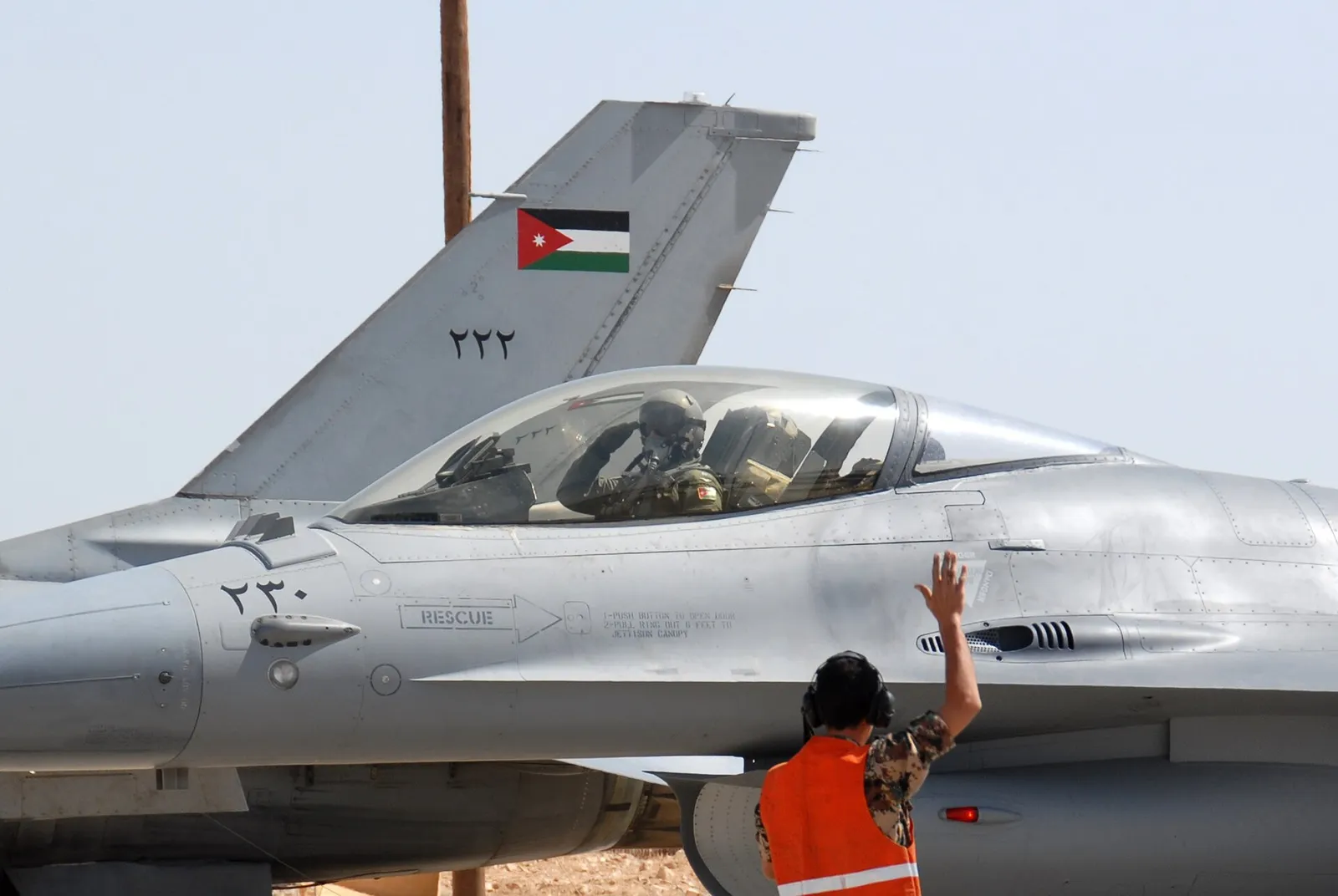
Iranian statements identified the target as Muwaffaq Salti Air Base, a Royal Jordanian Air Force installation at Azraq, in Jordan's Zarqa Governorate roughly 100 kilometers east of Amman. The base has hosted US aircraft since the campaign against the Islamic State group, and the US Air Force's 332nd Air Expeditionary Wing has operated from it. Jordan has not published a detailed account of the strike or of casualties on its territory.
The Jordanian armed forces have said during the current escalation that their air defenses have intercepted Iranian missiles crossing into Jordanian airspace. The number intercepted on any given night has varied between accounts, and figures reported by different parties have not been reconciled.
A widening confrontation
The deaths come during a sustained exchange of strikes between the United States and Iran that followed the collapse of an earlier understanding that had paused hostilities. Both sides have expanded the range of targets they are hitting.
Iranian attacks in recent days have extended to Gulf states hosting American forces. The head of the Gulf Cooperation Council has described Iranian strikes on Jordan, Kuwait and Bahrain as a "war crime" and a "highly dangerous escalation," Al Jazeera reported. Iran, for its part, has accused the United States of striking civilian infrastructure, an accusation Washington disputes.
Iran's supreme leader, Mojtaba Khamenei, said US attacks showed that President Donald Trump's signature was "worthless and invalid," a reference to the collapsed agreement.
No sign of talks
Neither government has publicly signaled a return to negotiations. Iranian state broadcasting has carried warnings that Tehran will move to what it calls full-scale offensive operations if American strikes continue, while the United States has continued its campaign against Iranian missile, drone and coastal defense sites.
The Strait of Hormuz, through which a substantial share of the world's seaborne oil passes, remains the most consequential flashpoint. Any sustained disruption there would carry economic consequences well beyond the region.
The American deaths introduce a new element into the confrontation. US administrations have historically faced pressure to respond forcefully to the killing of service members, and the announcement is likely to sharpen debate in Washington over the scope and duration of the campaign.