Beneath the western Pacific, north of the Solomon Islands, lies the largest single outpouring of lava known in the past 200 million years. The Ontong Java Plateau covers roughly 1.5 million square kilometers of sea floor, and the volume of magma involved is estimated in the tens of millions of cubic kilometers.
How it formed, about 120 million years ago in the Early Cretaceous, has been studied for decades through the rocks themselves. A harder question is what all that magma did to the oceanic plate it passed through on the way up. A study using seismic waves argues the answer is: a great deal.
Listening to the plate
A team led by Azusa Shito of Okayama University of Science examined high-frequency seismic waves, known as Po and So waves, recorded by seismometers on the ocean floor around the plateau and on nearby islands. The work was published in Geophysical Research Letters in 2025.
The technique exploits a simple idea: waves passing through rock are altered by what they travel through, so the pattern of arrivals carries information about structure that no drill has reached. The researchers found that Po waves crossed the plateau roughly as expected, while So waves behaved unusually, weakening in a way a uniform plate would not explain.
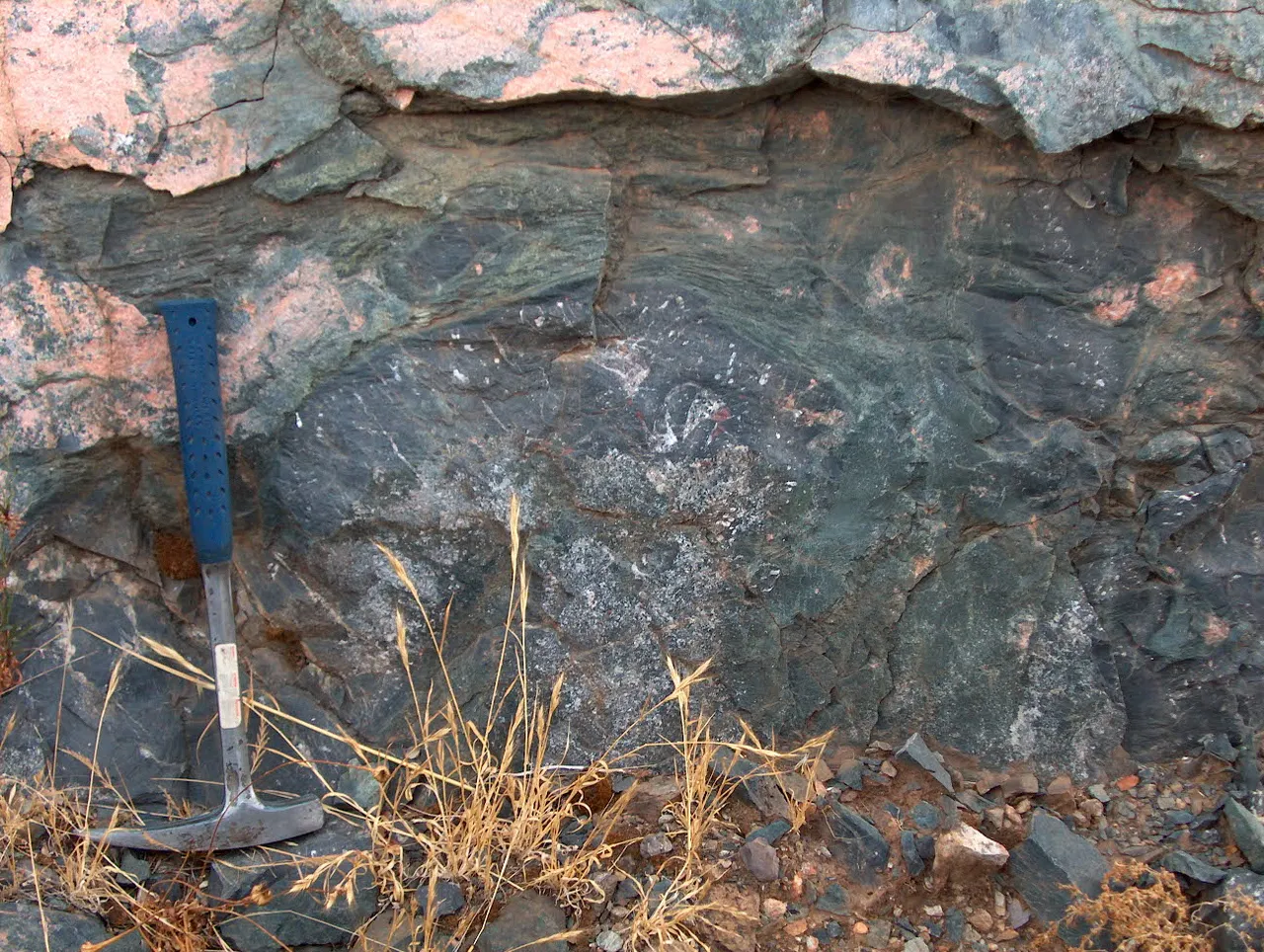
Modeling the waveforms, they concluded the plate beneath the plateau is not simply layered. It appears to combine horizontal layering with swarms of near-vertical sheets, the intrusions geologists call dikes, formed where magma forced open fractures and then solidified in them.
Refertilized rock
The researchers go further, proposing that the magma did not only fill cracks but chemically changed the rock around them, as summarized by Phys.org.
Mantle rock becomes chemically depleted when partial melting draws off its most easily melted components. Refertilization is the reverse: fresh melt moving through depleted rock reintroduces some of those components. Because such changes alter the speed at which seismic waves travel, the lower velocities measured beneath the plateau are consistent with alteration on a large scale.
The proposed source is a thermochemical plume, a rising column of mantle that is both hotter than its surroundings and different in composition. Separate modeling work published in Nature Geoscience has also favored a thermochemical plume as the best explanation for the plateau's unusually thick crust and its position below sea level, an independent line of argument that does not depend on the seismic data.
What the evidence does not settle
The main limitation is inherent to the method. Seismic waves reveal velocity, and velocity is interpreted as structure and composition. Nothing here is a direct sample. The rate at which refertilization happened, and how much of the plate it affected, are not established by these measurements.
There is also a longer-running debate about the plateau's environmental consequences that this work does not resolve. The eruptions overlap in time with a period of widespread ocean oxygen depletion in the Early Cretaceous, and researchers have proposed links running through volcanic carbon dioxide, ocean acidification and nutrient supply. Whether the plateau caused that event, contributed to it, or merely coincided with it remains contested.
What the seismic picture adds is narrower but useful. Large igneous provinces have generally been treated as material added on top of a plate. If this interpretation holds, the plate underneath is not a passive floor but part of the structure the eruption produced, reworked from within.