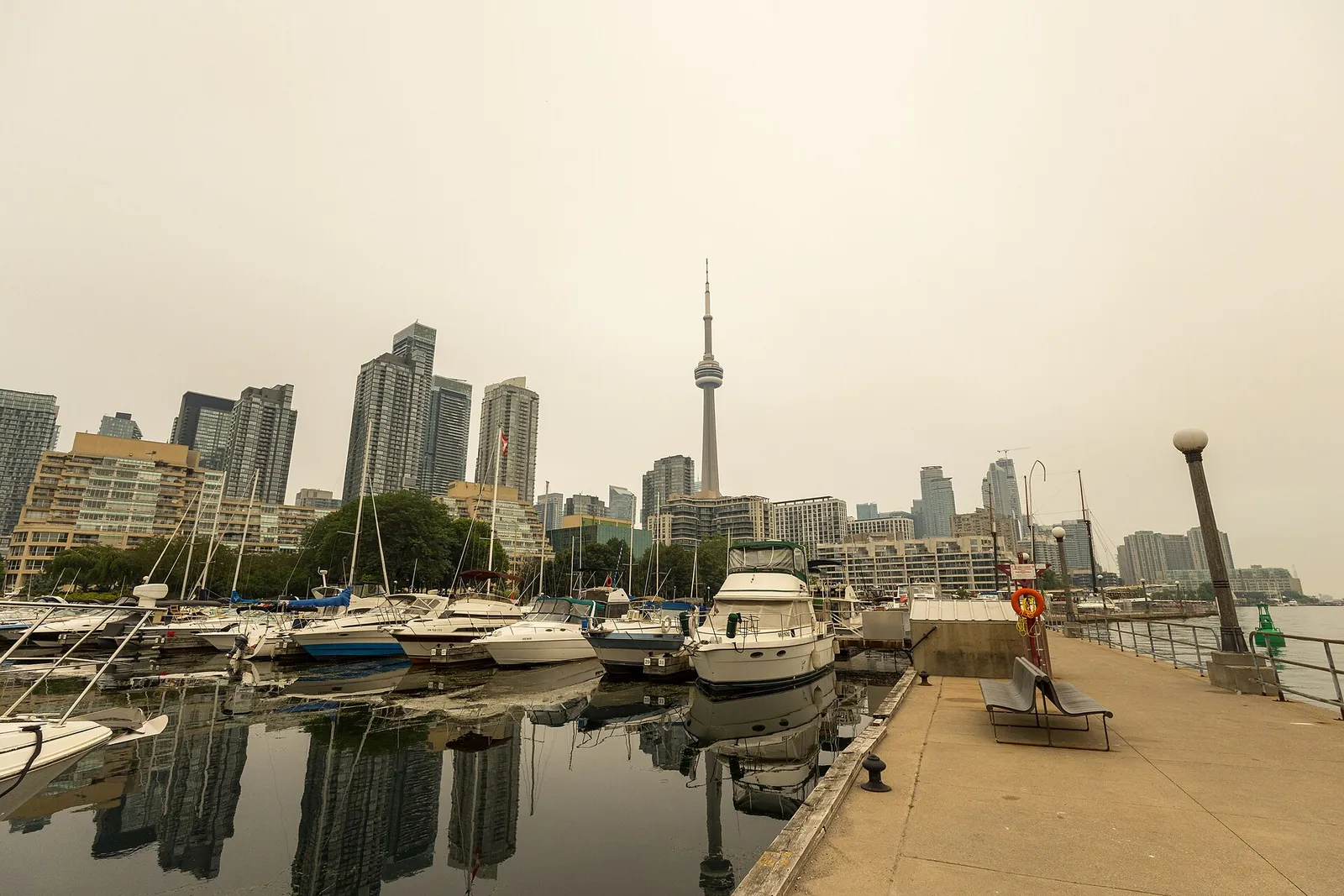
Smoke from wildfires burning in northwestern Ontario has settled over southern Ontario and parts of the northeastern United States this week, at times giving Toronto the worst measured air quality of any major city in the world.
Toronto ranked worst globally for much of Wednesday on the live ranking published by the air quality monitoring company IQAir, CTV News reported. The city was third worst on Thursday and, at one point on Friday morning, fourth worst, according to CP24, as conditions improved and then deteriorated again with shifting winds.
Where the smoke is coming from
Much of the smoke originated in northwestern Ontario, where eight fires grew significantly on July 13 and 14. Surface-level smoke then spread across parts of Ontario and Quebec, turning skies orange and yellow and cutting visibility, and drifted east and south into US cities.
The pattern is one of episodes rather than a single continuous event. Air quality in Toronto returned to healthy levels at points during the week before smoke moved back in overnight, a cycle driven by wind direction and by how much of the plume stays aloft rather than descending to street level.
Why it matters for health
The pollutant of concern in wildfire smoke is PM2.5, particulate matter fine enough to travel deep into the lungs and, in part, to pass into the bloodstream. Short-term exposure is associated with irritation, coughing and shortness of breath. The risk is higher for older people, young children, pregnant people, and anyone with asthma, other respiratory conditions or cardiovascular disease.
An air quality warning remained in effect in Toronto as smoke drifted south. The city shut outdoor programs and facilities, including public pools, during the worst of the conditions. Standard public health advice in these episodes is to limit strenuous outdoor activity, keep windows closed and use filtration indoors where it is available.
A recurring summer pattern
Severe smoke episodes reaching major North American cities have become a familiar feature of recent Canadian fire seasons, most prominently in 2023, when smoke from Quebec fires turned New York's sky orange. Research since then has focused on the health burden of these events, which extends well beyond the fire zone itself.
Attribution scientists have generally found that the hot, dry conditions that drive extreme fire behavior are made more likely by a warming climate, though the size of that effect varies by region and by event, and individual fires still depend heavily on ignition sources and local weather.
What comes next
Forecasters expect conditions to ease as wind patterns shift and disperse the plume. That relief is likely to be provisional. As long as fires in northwestern Ontario remain active, further episodes are possible whenever the wind turns back toward the south.