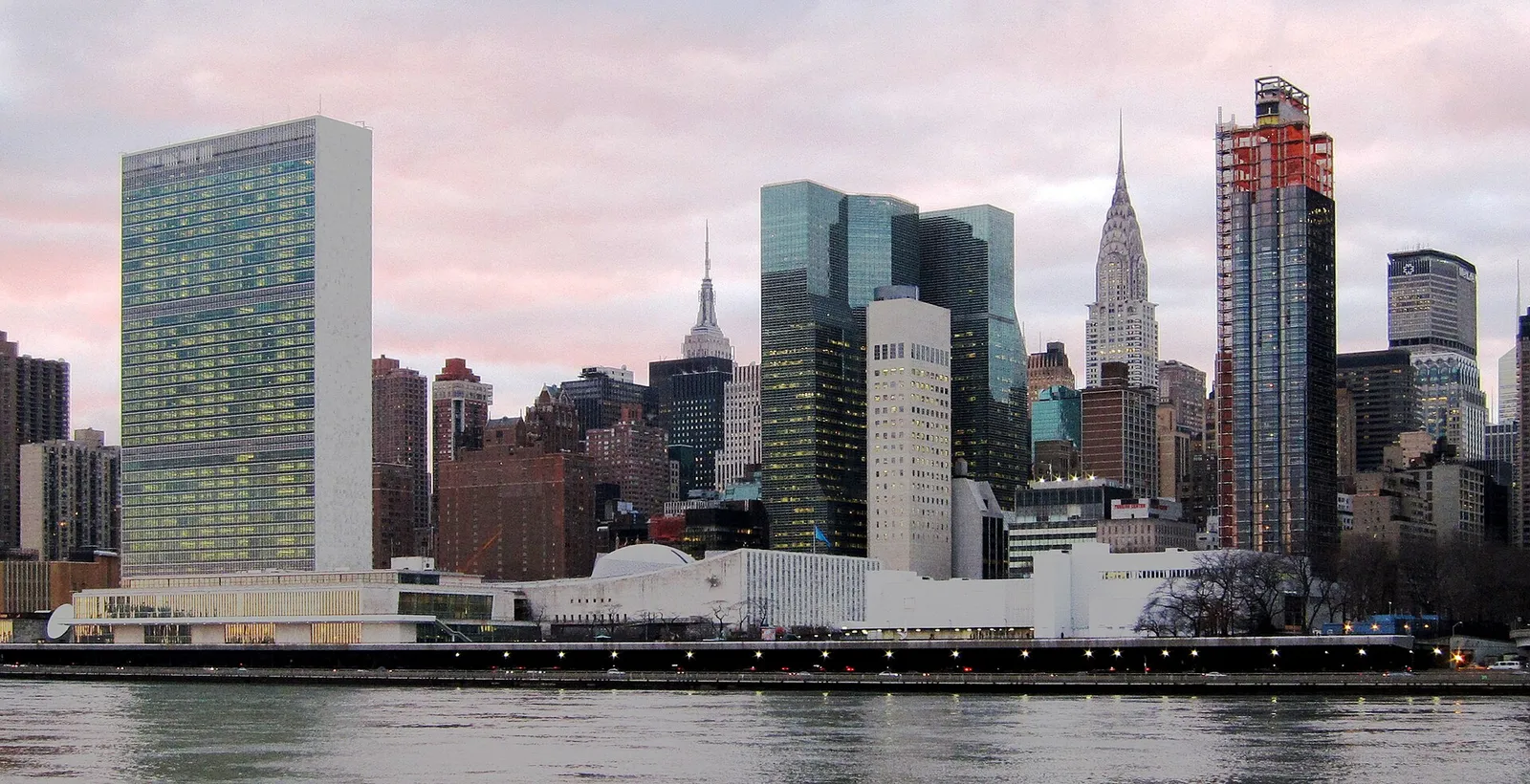
Eighty-one years ago today, with World War II not yet fully over, delegates from fifty nations gathered in San Francisco to sign the founding document of the United Nations — one of the most ambitious experiments in the history of international relations.
A hall full of hope
The Charter of the United Nations was signed on June 26, 1945, the day after it was adopted at the close of the San Francisco Conference, formally the United Nations Conference on International Organization, the UN's history records. Fifty countries signed that day; Poland, whose postwar government was not yet recognized, signed later to become the 51st original member.
The gathering was vast — hundreds of delegates and thousands of staff and journalists — and the stakes were plain. The League of Nations, created after World War I to keep the peace, had failed to prevent a second global catastrophe, the US National Archives notes. Its shadow hung over every delegation.
Years in the making
The idea had been building through the war. The 1941 Atlantic Charter, agreed by Franklin Roosevelt and Winston Churchill, spoke of a "permanent system of general security"; the term "United Nations" was first used officially on January 1, 1942, for the wartime alliance. Later conferences — the 1943 Moscow Declaration, Dumbarton Oaks in 1944, and Yalta in early 1945 — worked out the shape of the new body, including the contentious question of how the Security Council would vote.
What the Charter promised
The document committed signatories to maintain international peace and security, develop friendly relations based on equal rights and the self-determination of peoples, and cooperate on economic, social and humanitarian problems. It explicitly invoked human rights — months after Allied forces uncovered the Nazi camps. It created a General Assembly giving every member a voice and a Security Council with five permanent members — the United States, Britain, France, the Soviet Union and China — each wielding a veto, alongside elected rotating members.
The Charter did not take effect immediately: it required ratification by the five permanent members and a majority of others, a threshold crossed on October 24, 1945, now marked annually as United Nations Day.
A mixed legacy
Eight decades on, the record is genuinely double-edged, and reasonable people weigh it differently. UN agencies such as the World Health Organization, UNICEF and UNESCO have delivered vaccines, schooling and relief to hundreds of millions; peacekeepers have helped hold fragile ceasefires; and the 1948 Universal Declaration of Human Rights set a global benchmark.
Critics counter that the Security Council veto has repeatedly blocked action when a permanent member's interests are at stake, that peacekeeping has sometimes failed to protect civilians, and that a structure designed to secure great-power buy-in in 1945 fits awkwardly with today's conflicts. Defenders respond that an imperfect forum for cooperation among sovereign states is better than none.
What is not disputed is the ambition of that afternoon in San Francisco. The Charter opens with three words that remain the measure by which admirers and critics alike judge the institution: "We the peoples."