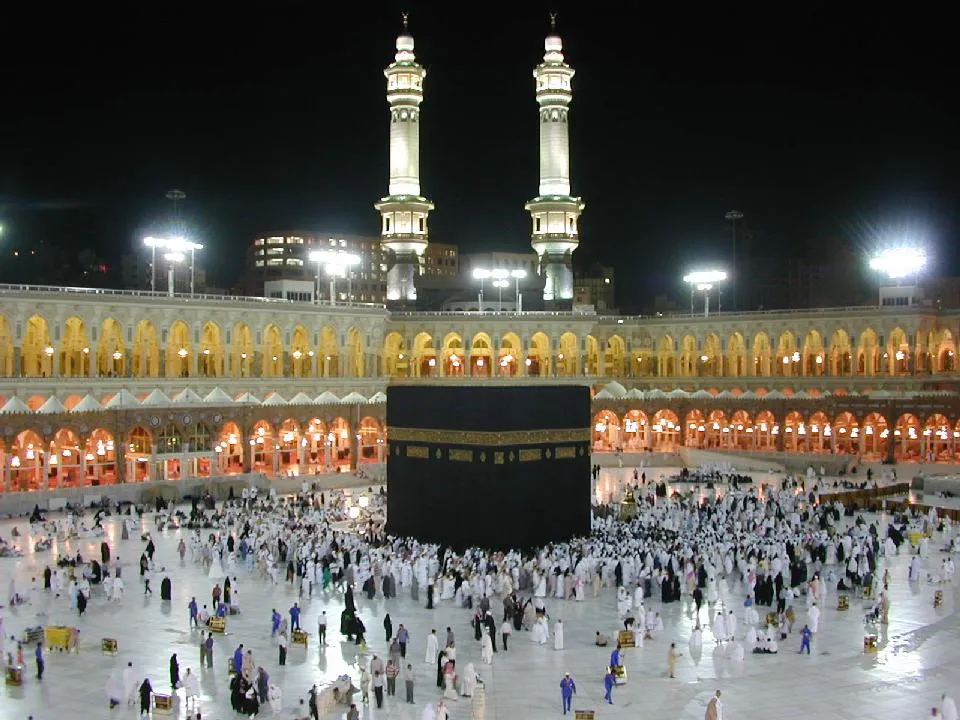
Each year, in the Islamic month of Dhu al-Hijjah, more than a million people from nearly every nation gather in and around the city of Mecca in western Saudi Arabia. They wear the same simple garments, walk the same paths and perform the same ancient rites. This is the Hajj, the annual Islamic pilgrimage, and it ranks among the largest recurring human gatherings in the world.
A pillar of the faith
The Hajj is one of the Five Pillars of Islam — the core acts of worship that frame a Muslim's religious life, alongside the declaration of faith, daily prayer, almsgiving and fasting during Ramadan. According to Encyclopaedia Britannica, the pilgrimage is obligatory at least once in a lifetime for every adult Muslim who is physically and financially able to undertake it.
Because Islam follows a lunar calendar, the Hajj does not fall on a fixed Gregorian date. It takes place during Dhu al-Hijjah, the final month of the Islamic year, and shifts roughly 11 days earlier each year relative to the Western calendar. The main rites unfold over several days in the middle of the month.
Mecca and the Kaaba
The pilgrimage centers on Mecca, the holiest city in Islam and, according to tradition, the birthplace of the Prophet Muhammad. At its heart stands the Masjid al-Haram, or Grand Mosque, which houses the Kaaba — a cube-shaped structure that Muslims regard as the house of God and toward which they orient their prayers worldwide.
Pilgrims begin by entering a state of ritual consecration known as ihram. Men typically don two seamless white cloths, a deliberate leveling that erases distinctions of wealth and status; women observe modest dress. In this state, pilgrims abstain from certain everyday acts as they prepare for the rites ahead.
The rites of the pilgrimage
Several rituals form the core of the Hajj. Pilgrims perform the tawaf, circling the Kaaba seven times counterclockwise. They also carry out the sa'i, walking seven times between the small hills of Safa and Marwah — retracing, in Islamic tradition, Hagar's search for water for her son.
The spiritual climax comes on the plain of Arafat, where pilgrims stand in prayer and reflection in what is widely considered the essential moment of the Hajj. Afterward, at Mina, pilgrims perform the symbolic stoning of pillars, casting pebbles in a rite that represents the rejection of temptation. The pilgrimage coincides with Eid al-Adha, the Festival of Sacrifice, marked by Muslims around the world and observed with the ritual slaughter of livestock, the meat often shared with the poor.
Not to be confused with the umrah
The Hajj is distinct from the umrah, sometimes called the lesser pilgrimage. The umrah involves some of the same rites — ihram, tawaf and sa'i — but it can be performed at any time of year and completed in a matter of hours. It is not one of the Five Pillars and does not substitute for the Hajj, which remains a separate religious obligation tied to its specific season.
A logistical undertaking of vast scale
Managing the gathering is a formidable task for Saudi authorities. The Kingdom's General Authority for Statistics reported that 1,673,230 pilgrims performed the Hajj in 2025, of whom more than 1.5 million arrived from outside Saudi Arabia; the figure for 2024 was higher still, around 1.83 million. Such totals should be treated as approximate.
Moving so many people through a confined set of sites under intense heat carries real dangers. In June 2024, the pilgrimage coincided with extreme temperatures; Human Rights Watch reported that high heat contributed to many deaths, with later tallies cited by news organizations exceeding 1,300, a large share of them among unregistered pilgrims who lacked access to authorized cooling facilities. The worst single disaster in Hajj history came in 2015, when a crowd crush at Mina killed many pilgrims: Saudi authorities officially reported 769 deaths, while independent counts compiled by news agencies put the toll above 2,000. Saudi Arabia has since invested heavily in crowd-management systems, infrastructure and registration controls.
For those who complete it, the Hajj remains a deeply personal milestone — a duty fulfilled and a moment of unity with millions of fellow believers, drawn together each year to the same small city in the desert.