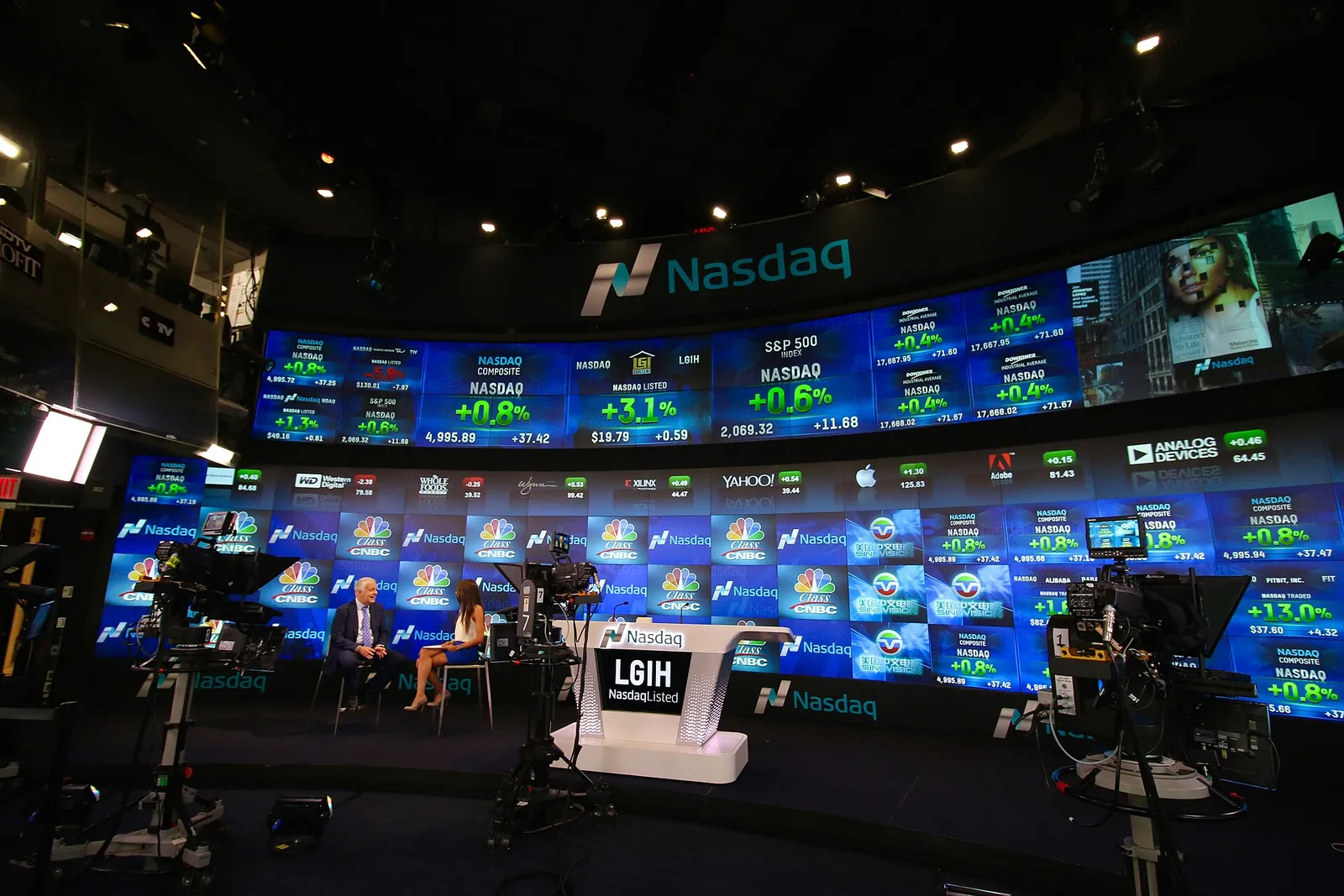
SK Hynix, the world's second-largest maker of memory chips, has raised roughly $26.5 billion in a share sale on New York's Nasdaq market, a deal that bankers describe as the biggest US listing ever by a foreign company. The offering, reported by Bloomberg, gives investors in the United States a way to buy directly into a company that has become central to the boom in artificial intelligence.
The deal
The South Korean company sold 177.9 million American depositary receipts, each representing a fraction of a Seoul-listed share, at $149 apiece, raising about $26.5 billion, the Korea Herald reported. That total surpasses the roughly $25 billion Alibaba raised in its 2014 New York debut, making it the largest first-time US share sale by a foreign issuer on record. Demand ran well ahead of supply, with the offering reported to be more than seven times oversubscribed. The receipts began trading on a "when-issued" basis under the ticker SKHYV, with regular trading due to start in the coming days under the symbol SKHY.
Why a US listing
For years, SK Hynix and other South Korean companies have traded at valuations below those of comparable American firms, a persistent gap that investors and officials in Seoul call the "Korea discount." Listing in New York is, in part, an attempt to narrow it: it opens the company to a far larger pool of US institutional investors who can now hold the stock directly, in dollars, rather than through the Seoul exchange, the Korea JoongAng Daily reported. The company has said it will use the proceeds to fund new plants and equipment as it races to expand production.
The AI connection
SK Hynix's rise is bound up with a single, increasingly valuable product: high-bandwidth memory, or HBM, the specialized chips that sit alongside the processors used to train and run AI systems. The company is a leading supplier of that memory to Nvidia, whose chips dominate the AI market, and demand has outstripped what the industry can make. That scarcity has turned memory, long a boom-and-bust commodity business, into one of the most sought-after corners of the semiconductor world, and has lifted SK Hynix's valuation toward the trillion-dollar mark.
The competition and the risks
The company does not have the field to itself. It competes with its larger South Korean rival Samsung and with the American firm Micron, and together the three account for the overwhelming majority of the world's memory production. Samsung, in particular, is pushing to regain ground in high-bandwidth memory, and the intensity of that contest is one of the clearer risks hanging over SK Hynix's prospects. So too is the cyclical history of the memory business, which has swung sharply between glut and shortage before. For now, though, the scale of the New York offering, and the rush of investors to take part in it, is a measure of how much the market is betting that the AI-driven demand for memory has further to run.