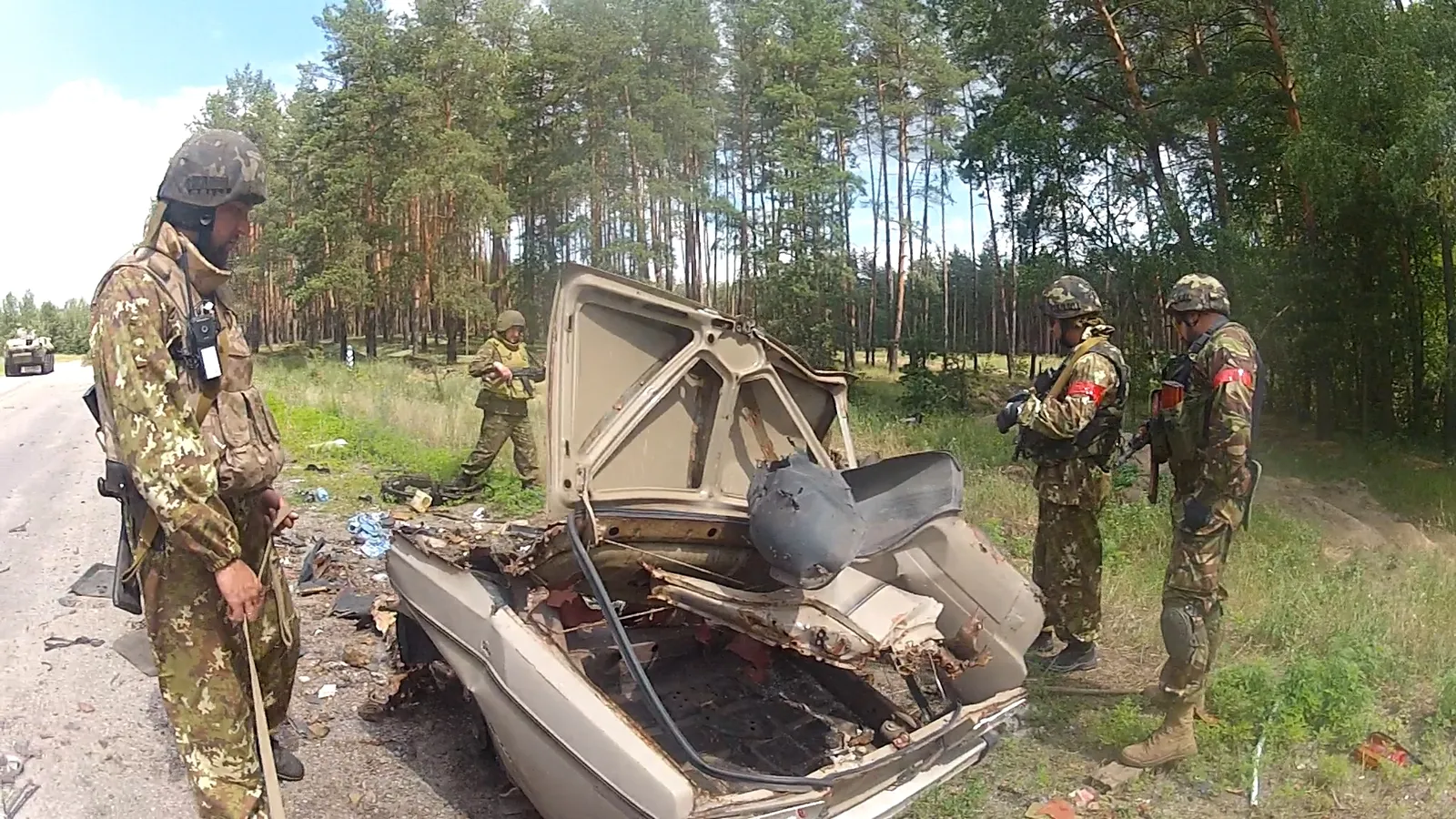
Russia and Ukraine offered starkly different accounts on Friday of who controls Kostiantynivka, a fortified city in the eastern Donetsk region that has become one of the most fought-over points on the front line. Moscow said the town had fallen; Kyiv said its soldiers were still holding it.
Moscow's claim
Kremlin spokesman Dmitry Peskov told reporters on July 3 that Russian forces had taken Kostiantynivka, delivering the news during President Vladimir Putin's visit to a military command post. According to Peskov, Putin described the reported capture as the "first, but very important, stage" in seizing the wider Sloviansk-Kramatorsk defensive hub, the administrative and logistical heart of Ukraine's defenses in the east.
Kostiantynivka sits roughly 24 kilometers (15 miles) southeast of Kramatorsk and had a pre-war population of about 67,000. Its position makes it a gateway toward the larger cities Russia has sought to encircle for much of the war.
Kyiv's denial
Ukrainian officials rejected the claim outright. "Of course, that is not true," Zelensky said, calling it "just another Russian lie, an attempt to generate some kind of a news story," according to The Moscow Times. Ukraine's General Staff said units of its 19th Army Corps "continue to conduct defensive operations" inside the town and along its approaches.
Neither side presented evidence that could confirm its version of events, and independent verification of front-line claims remains difficult amid continuous fighting. Analysts have long cautioned that both governments have reasons to announce gains or play down losses, and that the situation on the ground can diverge sharply from official statements.
Why the city matters
Kostiantynivka is often described as an anchor of Ukraine's so-called "fortress belt," a line of fortified towns shielding the Donetsk region that Ukraine has reinforced over more than a decade. Capturing it would give Russian forces a firmer platform to press north toward Kramatorsk and Sloviansk.
The broader picture, however, is one of slow, costly progress rather than rapid advance. In its July 1 assessment, the Institute for the Study of War reported that Russia's rate of advance around Kostiantynivka had slowed markedly, with fighting settling into grinding, attritional combat that has exacted heavy losses on both sides.
Ukraine has meanwhile continued striking Russian supply lines and logistics in an effort to blunt the offensive. Whether Kostiantynivka has truly fallen, or whether the battle for it is still underway, is likely to become clearer only in the coming days as the front stabilizes or shifts again.