
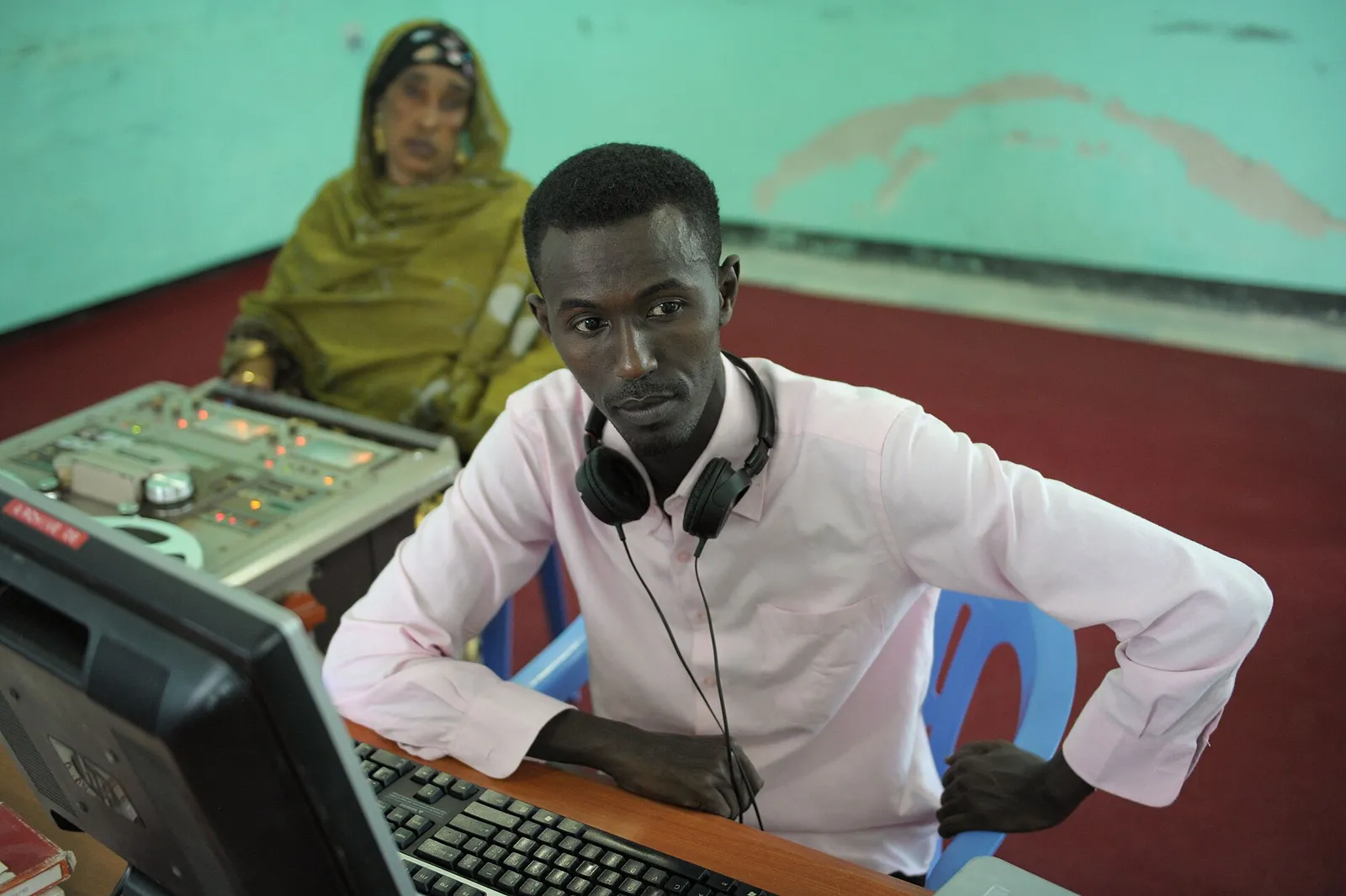
Radio Mogadishu holds roughly 45,000 tapes containing an estimated 400,000 hours of recorded material, and about 10 percent of it has been digitized, Al Jazeera reported. The remainder is analogue, stored without reliable climate control in a hot and humid city, and degrading.
More than 85 percent of the tapes are still playable. Around 10 percent has deteriorated with age, and more than 5 percent is destroyed or damaged beyond use. Those percentages are the reason the work is urgent rather than merely desirable: the material that has not yet been transferred is on a clock.
What is on the tapes
The archive runs from the early 1950s and covers news bulletins, speeches, music, radio drama, religious programming and the station's foreign-language services in Italian, Somali, Swahili, Oromo, English and Arabic.
Its musical holdings are the part with no substitute. Somalia's recording industry was largely state-connected, and for a great deal of the country's popular music of the 1960s and 1970s, the broadcaster's reels are where the recordings live. That period produced work by bands and singers whose reputation has grown internationally in recent years through reissues, and for some of it the archive is effectively the master copy.
The collection also documents things the written record does not. Radio was the dominant medium in a society with strong oral traditions and, for much of this period, low literacy, so a great deal of Somali public life happened on air and exists only as sound.
Why the archive is fragile
The station was founded in 1951, under the Italian trusteeship administration that governed the territory before independence.
Its collection has already survived several attempts at destruction. When the state collapsed in 1991 and civil war followed, the station's premises passed between armed factions, and parts of the archive were damaged during fighting in the years that followed. Foreign-language holdings suffered particularly badly. A fire caused further losses more recently.
What is left faces a slower threat. Magnetic tape sheds its coating, binders absorb moisture and fail, and playback machines for obsolete formats become harder to source and repair than the tapes themselves. Digitization is a race between the transfer rate and the decay rate, and it has to be done once, properly, because a tape can often only be played reliably a limited number of times.
Who is doing it
The preservation effort is being run by Somalia's information ministry with UNESCO's regional office for Eastern Africa, working toward inclusion in UNESCO's Memory of the World programme, which catalogues documentary heritage of international significance.
Al Jazeera names the archivist leading the digitization as Abdiqadir Geedi Robleh, the station's director as Abdi Jeite, and Guilherme Canela as the senior UNESCO official overseeing the project. Among those the broadcast reached, the historian Iman Mohamed of the University of Minnesota and Hassan Dahir, a former journalist at the station, spoke about what the collection represents.
African holdings are heavily underrepresented in the Memory of the World register relative to the continent's share of the world's documentary heritage, which is part of the argument for the listing.
The wider point
Sound archives are among the most vulnerable categories of cultural record. Paper can survive centuries of neglect; magnetic tape generally cannot survive decades of it. Broadcasters across Africa, Asia and Latin America hold comparable collections in comparable conditions, and the equipment needed to read them is leaving the market.
For a Somali listener, the immediate stake is more specific. A generation grew up during and after the war with limited access to the recorded culture that preceded it. What is being transferred, tape by tape, is the part of that record that still plays.