For years, quantum computing has been described as a coming revolution. The technology is real, the science is advancing — and, for now, the machines remain largely impractical. Understanding the gap between the two is the key to making sense of the hype.
What a quantum computer is
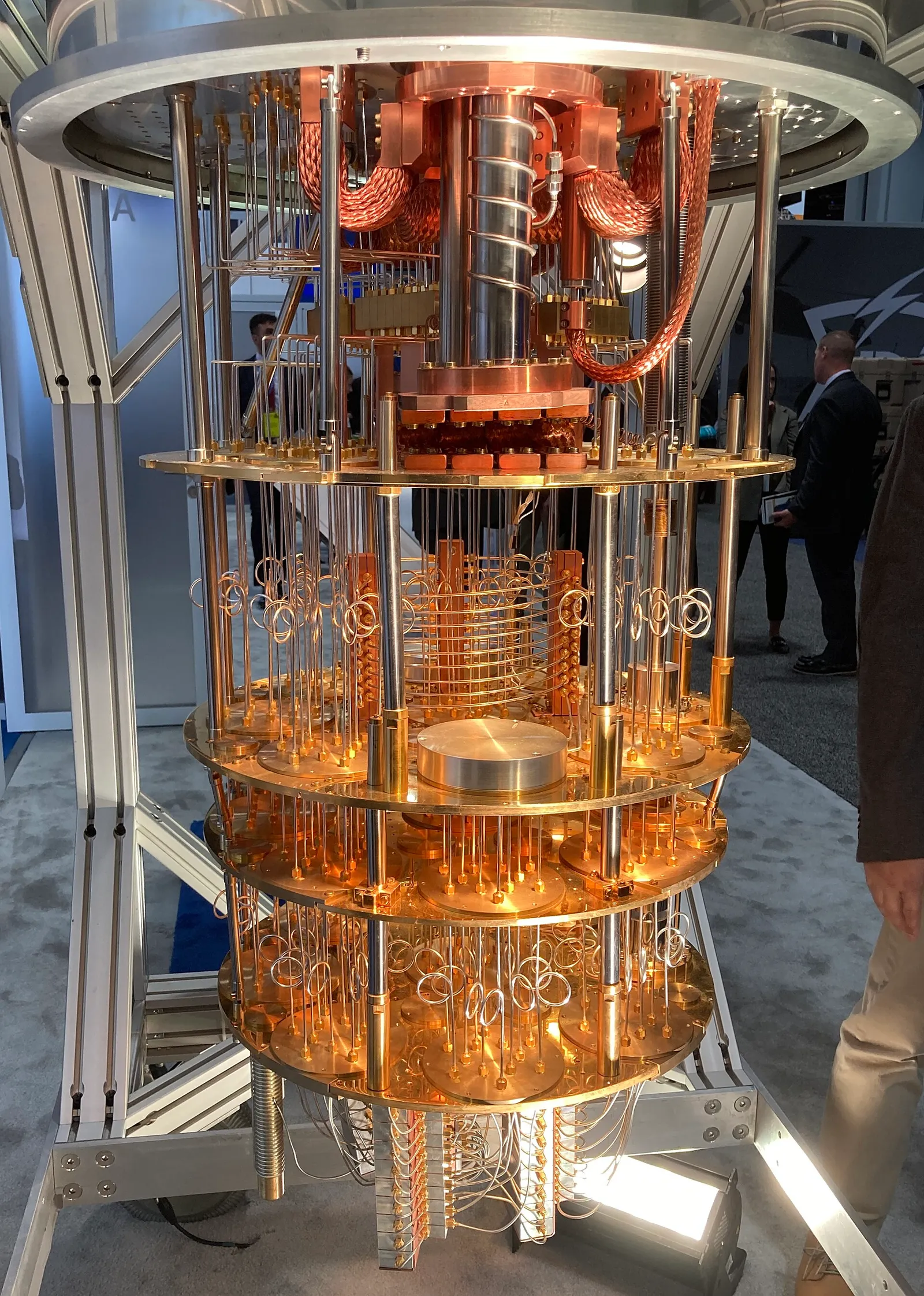
An ordinary computer stores information in bits, each a 0 or a 1. A quantum computer uses "qubits," which exploit the strange rules of quantum physics — "superposition," in which a qubit can represent 0 and 1 at once, and "entanglement," in which qubits become linked. In principle, this lets a quantum machine explore many possibilities at once and solve certain narrow classes of problems far faster than any conventional computer.
The difficulty is that qubits are exquisitely fragile. They quickly "decohere," losing their quantum state and introducing errors, and correcting those errors is the central, decades-old challenge of the field.
Real progress, real caveats
Recent milestones are genuine but easy to overstate. Google's Willow chip showed that error rates could fall as a system was scaled up — a long-sought sign that the error problem might be tamed — and ran a benchmark in minutes that the company said would take a conventional supercomputer an almost unimaginable span of time. But that benchmark was a contrived test designed to flatter quantum hardware, not a useful real-world calculation.
Microsoft has pursued a different path with "topological" qubits, which it argues could be more stable, but its claims have met open skepticism from physicists. IBM, meanwhile, has published a roadmap toward larger, "fault-tolerant" machines later this decade. These are ambitions and engineering bets, not accomplished facts.
What it might eventually be good for
If the hurdles are cleared, quantum computers could prove transformative in a few specific areas: simulating molecules to speed the discovery of drugs and new materials, and tackling certain optimization problems. For most everyday computing — email, video, even training today's artificial-intelligence models — they are likely to remain irrelevant.
The encryption wrinkle
One concern is more concrete. A sufficiently powerful future quantum computer could break the encryption that protects much of today's online data. That prospect has driven a push for "post-quantum cryptography": the U.S. standards agency NIST finalized its first such standards in 2024, and companies including Google and Apple have begun rolling out quantum-resistant protections — a rare case of acting now against a threat that does not yet exist.
Money meets physics
Governments are betting big regardless. The U.S. Commerce Department announced around $2 billion in support for quantum companies, and the White House has issued executive orders on the technology, moves driven in part by rivalry with China. But money cannot simply buy a breakthrough. The field's core problems are matters of physics, not funding, and they have resisted solution for thirty years.
The honest verdict is a balanced one. Quantum computing holds real long-term promise, and the latest results show steady progress on the hardest problems. Yet the distance between a laboratory milestone and a quantum computer doing something genuinely useful remains vast — and the marketing, as ever, is running well ahead of the machines.