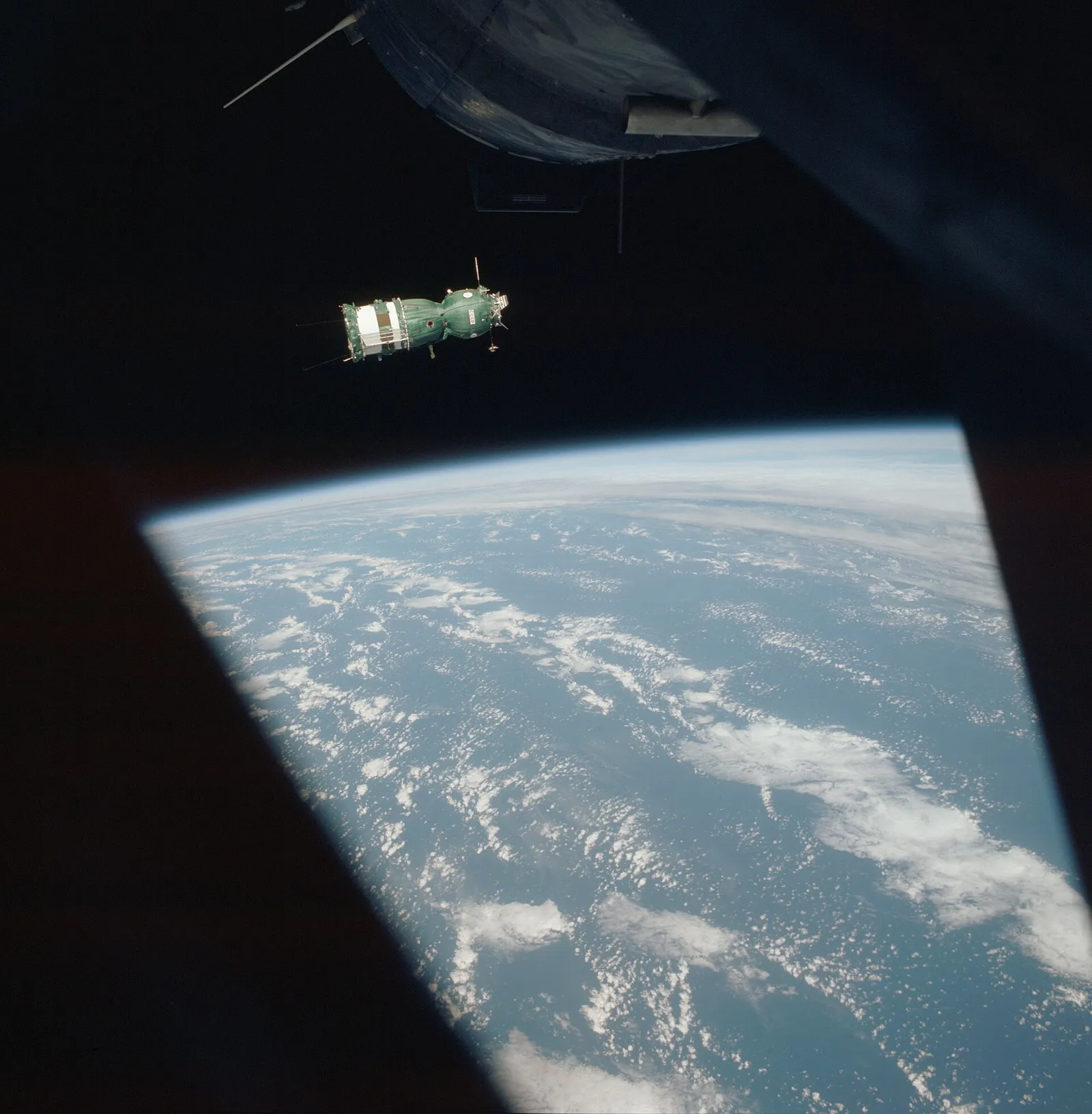
The US Space Force is increasingly turning to private companies not just to build its spacecraft but to operate them on live missions — and a recent exercise shows what that looks like in practice. In June, two commercially built and commercially flown spacecraft carried out a rapid-response operation to find and inspect a satellite in orbit, TechCrunch reported.
To be clear about terms: these are not astronauts. The spacecraft are uncrewed, flown by teams of operators on the ground — the "pilots" of a new kind of orbital mission — with a high degree of onboard autonomy.
A chase in orbit
The mission, known as Victus Haze, paired two companies. Rocket Lab, an established launch and spacecraft firm, built and launched a satellite called Puma to act as a target. The startup True Anomaly supplied a spacecraft called Jackal, already in orbit, to hunt it down.
The point of the exercise was speed and maneuver. Rocket Lab launched Puma on short notice — within roughly 17 hours of being told to go, according to TechCrunch — a pace meant to mimic a real-world scramble. True Anomaly's Jackal then detected the new object from a great distance, closed the gap, and flew around it to capture imagery. "This is probably the most complex rendezvous and proximity operation between two spacecraft in modern history," True Anomaly's chief executive, Evan Rogers, told TechCrunch, noting that both vehicles were moving at roughly 17,500 miles per hour.
Those maneuvers — approaching, circling and imaging another object in orbit — are known in the field as rendezvous and proximity operations. They are delicate: a small error at orbital speeds can cause a collision, and the same techniques used to inspect a satellite could, in principle, be used to interfere with one.
Why the military wants this
The capability the Space Force is after is essentially orbital reconnaissance — the ability to move a spacecraft up to another country's satellite and see what it is and what it is doing. As more nations, including China and Russia, launch increasingly capable and sometimes secretive satellites, the US military wants to be able to inspect them quickly, and to do so with hardware it does not have to build and run entirely in-house.
Outsourcing that work to commercial providers has clear attractions: private firms can often move faster and more cheaply than traditional defense programs, and a competitive market of suppliers spreads both cost and risk. The Space Force, a young service still defining how it operates, has leaned into that model.
The questions it raises
Handing live military space missions to private companies also raises questions that will take time to work through. Proximity operations are inherently dual-use — the line between inspecting a satellite and threatening one is a matter of intent, not just capability — which makes such maneuvers potentially destabilizing if other powers read them as hostile. And relying on commercial operators for national-security missions concentrates sensitive work in private hands, with the accountability and oversight questions that follow.
None of that is unique to space; militaries have long depended on contractors. But orbit is a contested and lightly governed domain, and the norms for what is acceptable behavior between satellites are still unsettled. Missions like Victus Haze are, in effect, helping to write those norms in real time.
A shift underway
For now, the significance is less any single flight than the pattern it represents. The image of a private startup's spacecraft chasing down and photographing a target satellite, on the military's behalf and at the military's speed, captures a broader shift: the business of operating in orbit, once the near-exclusive preserve of governments, is increasingly a shared enterprise between the state and a growing commercial space industry.
Where that leads — how far the military outsources, and how the rules of orbital conduct evolve to keep pace — is one of the defining questions of the new space age. Victus Haze is one early, concrete answer.