
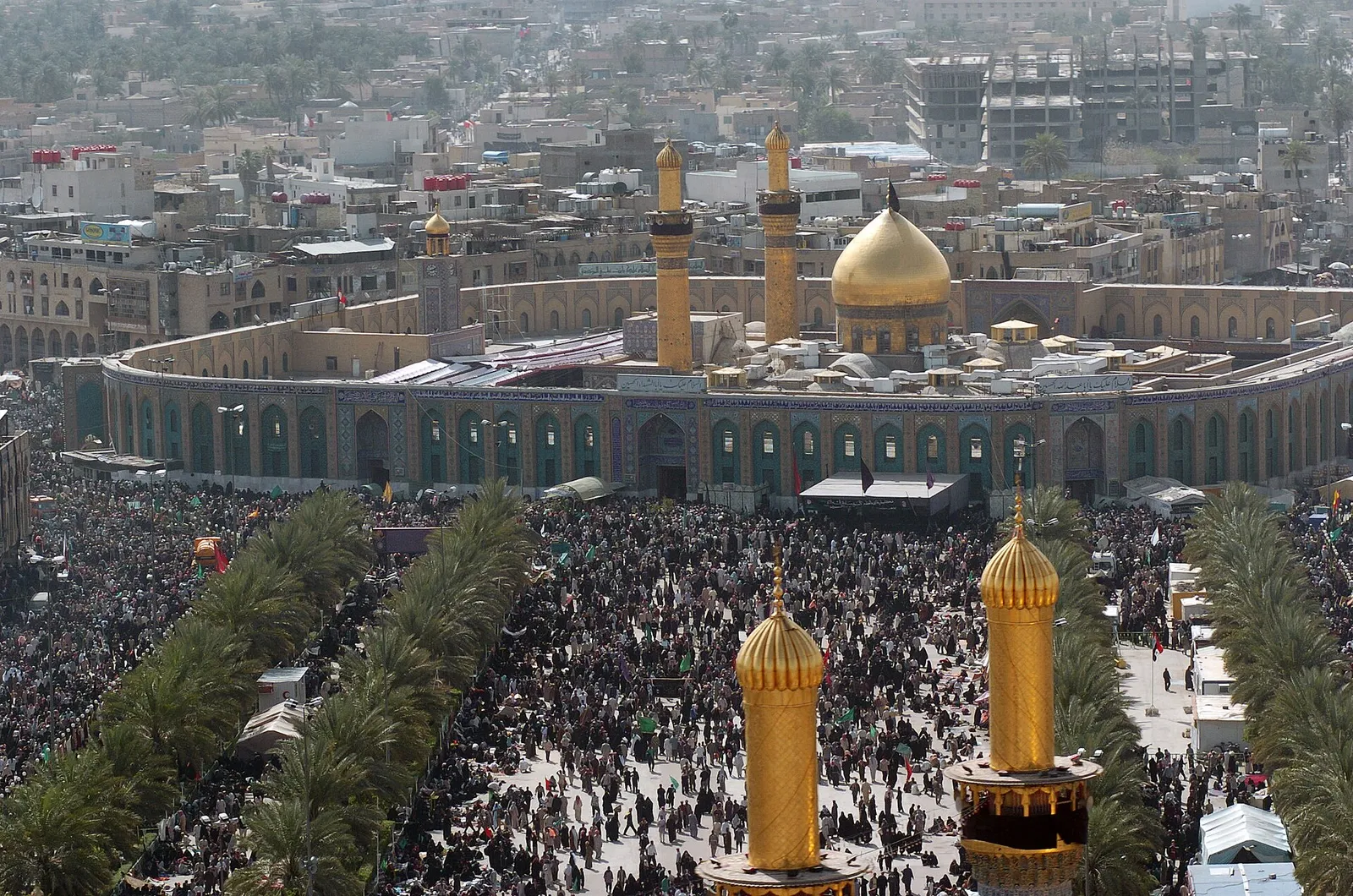
Pilgrims have filled the Iraqi city of Karbala to mark Ashura, the day Shia Muslims set aside each year to mourn the death of Imam Hussein — an occasion that draws some of the largest religious gatherings in the world.
What Ashura commemorates
Ashura falls on the tenth day of Muharram, the first month of the Islamic lunar calendar. It commemorates the killing of Imam Hussein ibn Ali — a grandson of the Prophet Muhammad and, for Shia Muslims, the third imam — at the Battle of Karbala in 680 CE, as Middle East Eye explains. Hussein had refused to pledge allegiance to the Umayyad caliph Yazid, and, vastly outnumbered, he and a small band of companions were killed near the Euphrates. For Shia Muslims, the stand has come to symbolize sacrifice in the face of injustice.
A city in mourning
In the days before Ashura, black mourning flags lined Karbala's streets as pilgrims of all ages converged on the city, Al Jazeera reported. The focal points are the golden-domed Shrine of Imam Hussein and the nearby Shrine of his half-brother Abbas, who died defending him — among the holiest sites in Shia Islam. Officials described the expected turnout as in the millions; precise crowd figures were not independently confirmed.
How it is observed
The day is marked by mourning gatherings featuring elegies and retellings of the events at Karbala, by processions of participants dressed in black carrying banners, and by rhythmic chest-beating known as latm as an expression of communal grief, Shafaq News reported. Communal meals and the distribution of food to pilgrims are also central. A minority in some communities practice more intense forms of mourning, including self-flagellation with blades, a practice that senior Shia clerics — among them Iraq's Grand Ayatollah Ali al-Sistani — have discouraged; it is not representative of mainstream observance.
Security and significance
Karbala's importance makes Ashura a major security operation, and Iraqi authorities deploy large numbers of personnel to manage the crowds and protect pilgrims; the event has been targeted in the past, though safety has improved in recent years. Ashura is observed across the Muslim world, including by many Sunni Muslims, who often mark it differently — commonly by voluntary fasting, a tradition framed as thanksgiving rather than mourning. That divergence reflects deeper historical and theological differences between Islam's two main branches, even as the day holds a shared place at the start of the Islamic year.