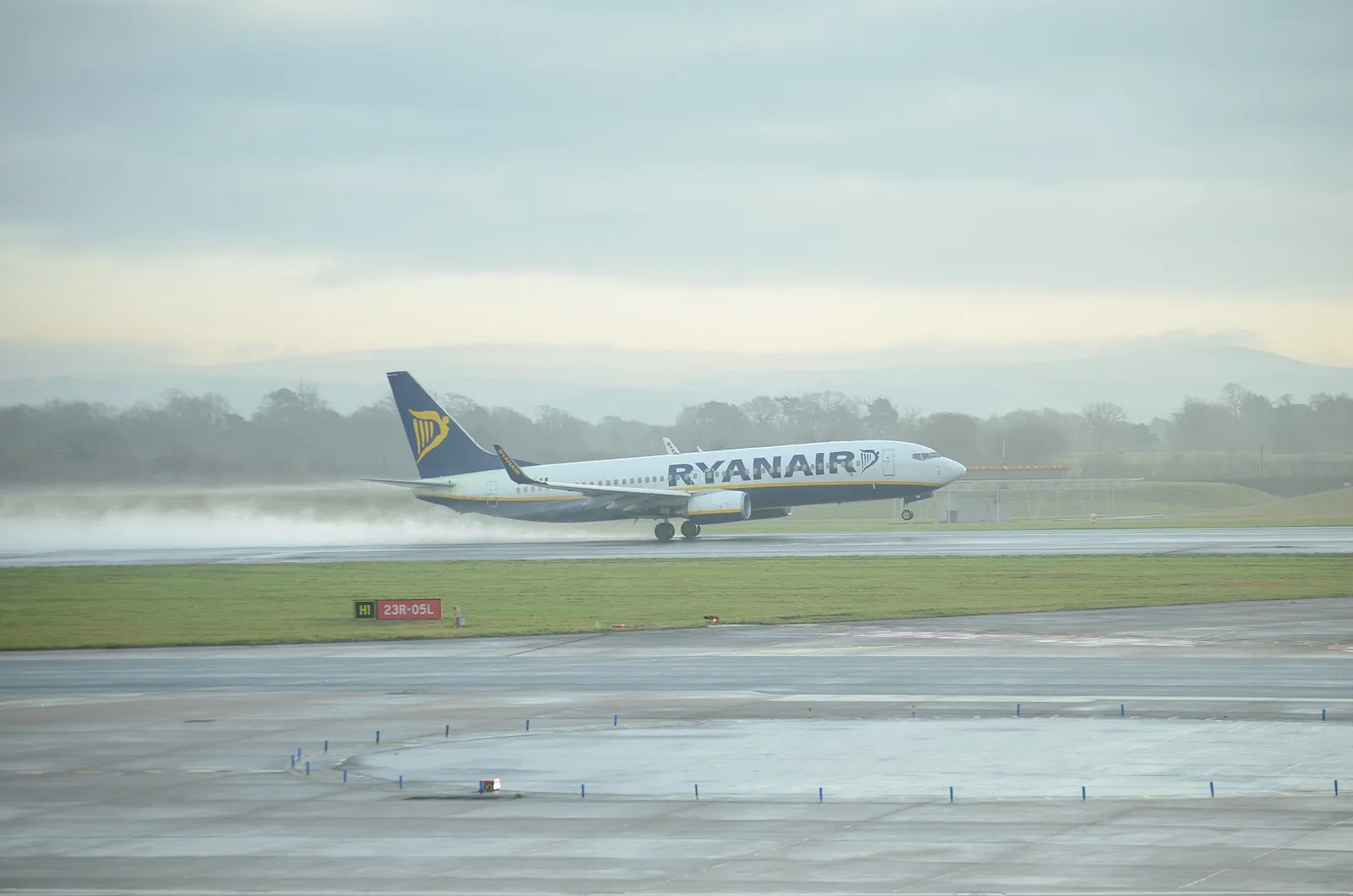
A window failed on a Ryanair flight shortly after it took off from Thessaloniki, in northern Greece, on Friday, causing a sudden drop in cabin pressure and a frightening few minutes for those on board before the plane turned back and landed safely. One passenger was taken to hospital with friction burns; the cause of the failure is being investigated, France 24 reported.
What happened
The flight, bound for Memmingen in Germany, was climbing through around 15,000 feet, roughly eight minutes after departure, when a window on the right side of the cabin gave way. The loss of pressure deployed the oxygen masks, and the man sitting beside the window was, by passengers' accounts, partly pulled toward the opening, his head briefly through it, before his companions and other travelers dragged him back into his seat, RTÉ reported. That he had kept his seatbelt fastened is credited with helping to hold him in place.
The injuries
The passenger, a 61-year-old man described in reports as a tourist from Serbia, was taken to hospital in Thessaloniki with friction burns but was said to be otherwise in a stable condition. Several other passengers were taken for medical checks as a precaution. The crew brought the aircraft, a Boeing 737, back to Thessaloniki, where it landed less than an hour after taking off. Ryanair arranged a replacement plane to take passengers on to their destination later in the day.
The cause, unconfirmed
What made the window fail is not yet established. Greek media reports, cited by international outlets, suggested that debris shed from one of the aircraft's engines may have struck and broken the window, but that account has not been officially confirmed, and investigators will examine the aircraft to determine what happened. Aviation authorities in Greece, and European safety regulators, are the bodies that would normally lead such an inquiry. Until it reports, the mechanism of the failure remains a matter of reporting rather than confirmed fact.
The wider context
Failures that breach an aircraft cabin in flight are rare, which is part of why this one drew such attention, and modern airliners are designed and crewed to handle a sudden loss of pressure: masks drop, and pilots descend quickly to a safe altitude, as happened here. The episode nonetheless underlines how quickly a routine short-haul flight can turn alarming, and why the coming investigation matters. Its findings, on what failed and why, will determine whether this was a freak event or something with wider implications for the aircraft type or its maintenance.