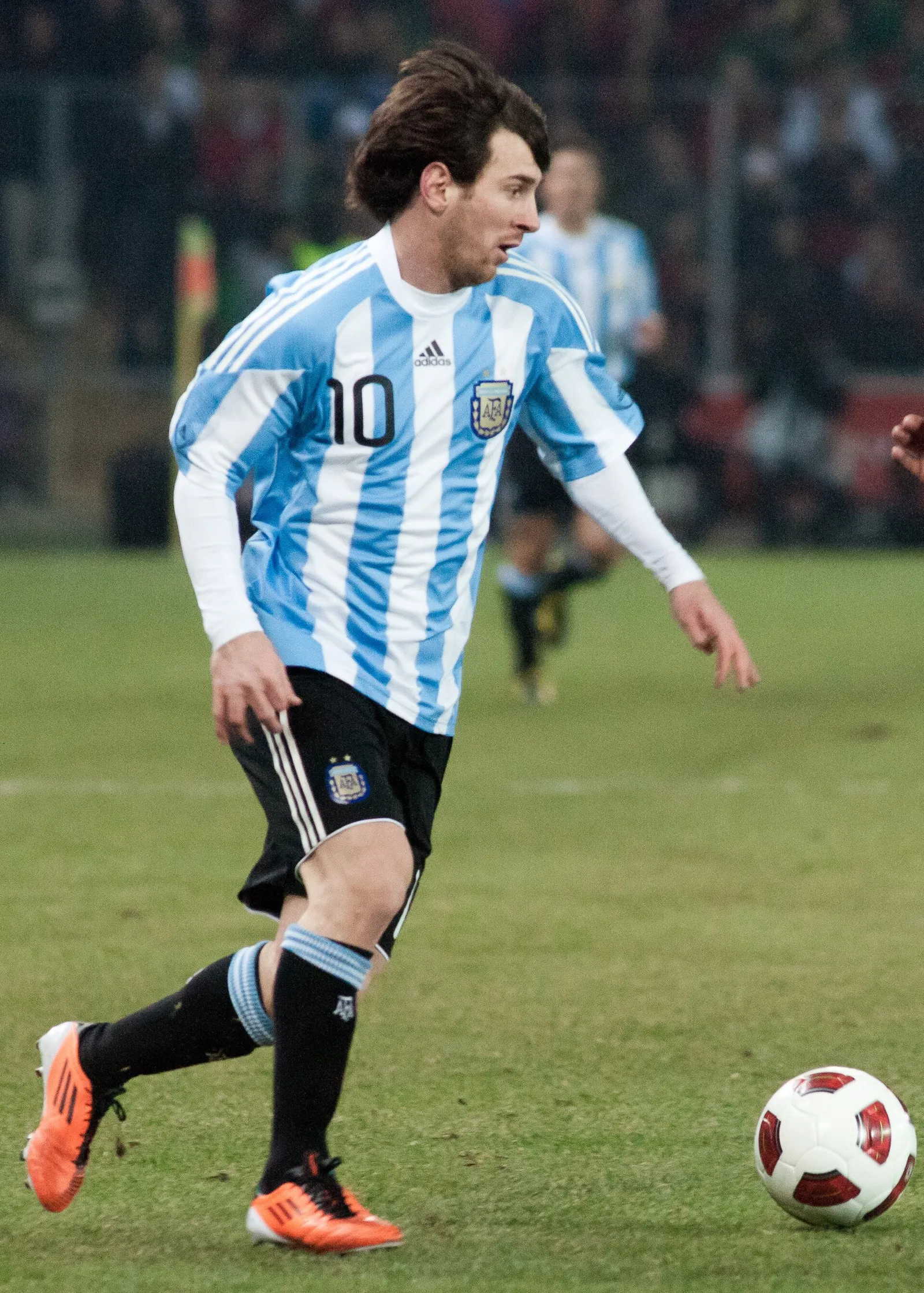
Lionel Messi has rewritten the World Cup record books once more. On Monday in Arlington, Texas, the 38-year-old captain scored twice as Argentina defeated Austria 2-0, moving past Germany's Miroslav Klose to become the all-time leading scorer in men's World Cup history.
The first goal, struck in the 38th minute, was the record-breaker — Messi's 17th career World Cup goal, one clear of Klose's long-standing mark of 16, ESPN reported. A second goal, added deep in stoppage time, lifted his tally to 18.
Precisely which record
The distinction matters. Messi set the men's tournament's all-time goalscoring mark — not a record for appearances or for Argentina alone. He had entered the match level with Klose on 16, having scored a hat-trick in Argentina's opening 3-0 win over Algeria, Al Jazeera noted. His 18th goal also moved him past the women's World Cup top scorer, Brazil's Marta, who has 17.
Scoring against Austria also made Messi just the third player in World Cup history to score in six consecutive games, after France's Just Fontaine in 1958 and Brazil's Jairzinho in 1970, PBS reported.
A rocky start, then mastery
The afternoon did not begin smoothly. Messi missed a penalty in the early stages, dragging his effort wide. He recovered to finish a cutback for the opener and, with the game already won, swept in a second in stoppage time.
"Today there was a moment where I was very angry about the penalty because I missed it, I kicked it very badly," Messi said afterward, per ESPN. "Luckily we were able to turn that situation around." He framed the night in collective terms: "We're happy to have picked up six points and to have already qualified," he said, according to Al Jazeera.
Argentina march on
The result, in Group J, secured Argentina's place in the round of 32 with a match to spare. Lionel Scaloni's side has built its play around channelling possession through a player who, even approaching 39, remains the squad's creative fulcrum as much as its finisher. Messi's first goal came not from individual improvisation but from a worked move, the ball arriving via a teammate's cutback before he applied the finish.
Why he still belongs among the greats
Records are a blunt measure of a career as layered as Messi's, but the symbolism is hard to ignore. He turns 39 on June 24, two days after the match. To set a scoring record at a World Cup at that age, in a tournament he first played as a teenager in 2006, underscores a longevity with few parallels in the men's game.
Klose's 16 goals were spread across four tournaments; Messi reached the summit across six, having become the first player to feature in six different editions of the men's competition. For now his place atop the list is secure — and with a knockout run ahead, the figure of 18 may yet climb higher.