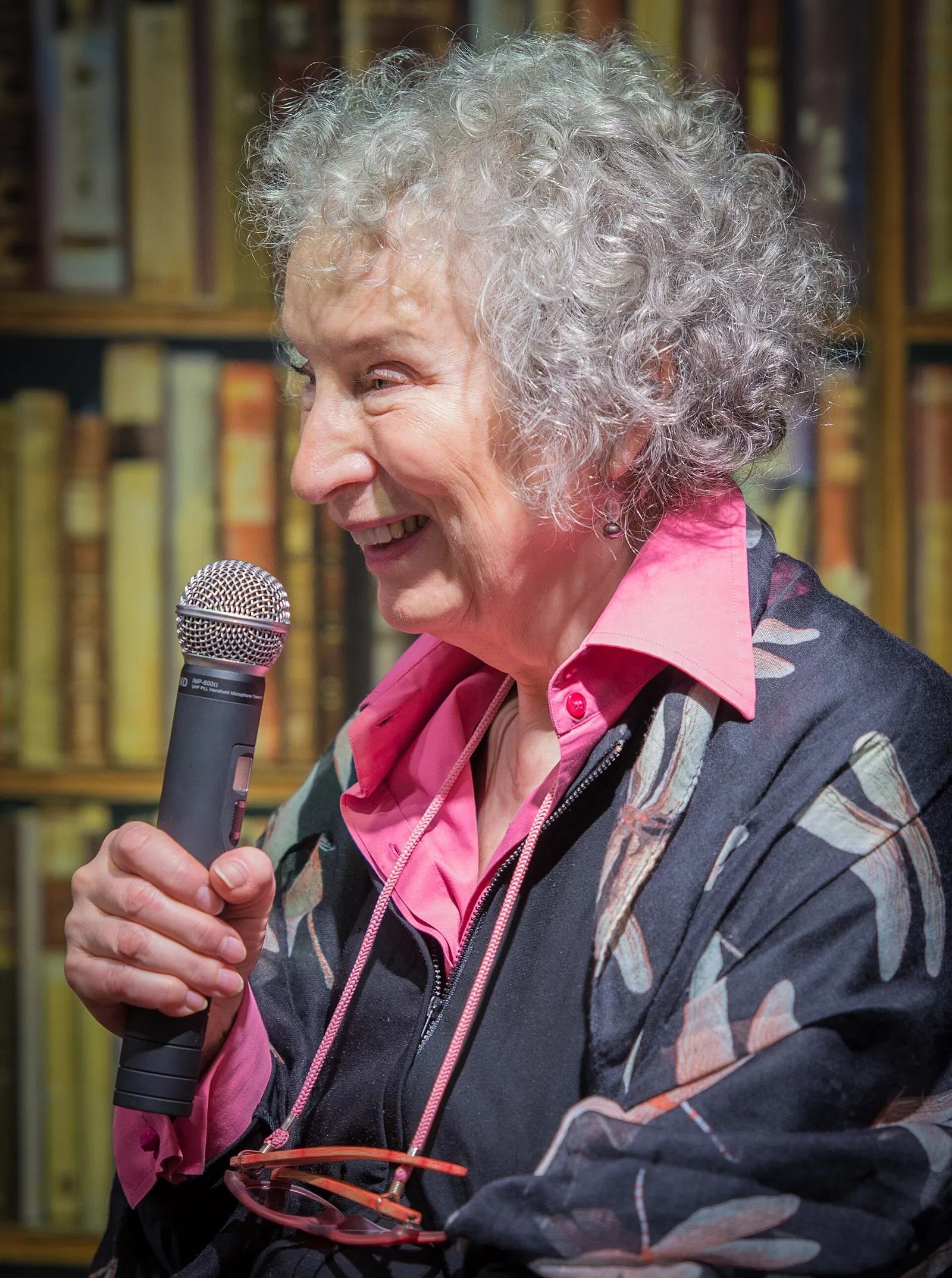
Margaret Atwood came to the inaugural Babell Literary and Cultural Festival in Porto, Portugal, mainly to discuss her new memoir. But the 86-year-old author of The Handmaid's Tale did not leave artificial intelligence alone for long.
A blunt verdict
"The thing about AI is that it's garbage in, garbage out," Atwood told the audience, according to Deadline. She said she had tried a chatbot exactly once, asking it for a plot spoiler from the British detective series Father Brown. It gave her the wrong answer, she said — likely because it had been trained on television reviews, which rarely reveal endings. The lesson, she suggested, applied to everyone: "Even people who use it for business reasons have to check it because it makes mistakes."
On creativity, Atwood was more dismissive still. AI, she has argued, "likes formulas" and can produce competent work in mass-market genres, but cannot yet manage genuine originality or the inner life of a character — what she called the missing "soul" behind the writing.
Training data is the argument
Atwood's slogan points at a live grievance: much of what large language models ingest to function is the copyrighted work of living writers, used without their consent. That objection sits at the center of a wave of litigation. The Authors Guild and individual writers have sued AI companies since 2023, the Guild notes, alleging their books were copied to train models.
One case has already produced a landmark result. In Bartz v. Anthropic, a federal judge ruled in 2025 that using legally obtained books to train AI could qualify as fair use, but that pirated copies did not — and Anthropic later agreed to pay about $1.5 billion to settle, the largest copyright settlement in US history, over books it had downloaded from "shadow libraries." Other suits against major AI firms remain unresolved.
The counterargument
AI's defenders contest Atwood's premise. They argue that training a model on text is broadly analogous to a human writer reading widely before finding a voice, and they point to real utility in research and accessibility, and to tasks where stylistic originality is beside the point. On reliability, developers note that models have improved quickly and that human professionals also make mistakes that require checking. Some researchers add that the line between "formula" and "originality" is harder to draw than Atwood allows.
A question publishing can't dodge
What makes Atwood's intervention notable is less its novelty — she has been skeptical for years — than its setting: a festival devoted to the written word, where she crystallized the tension now facing writers, publishers and platforms. The same human creativity that makes AI outputs worth generating is the creativity those systems are accused of taking without asking.