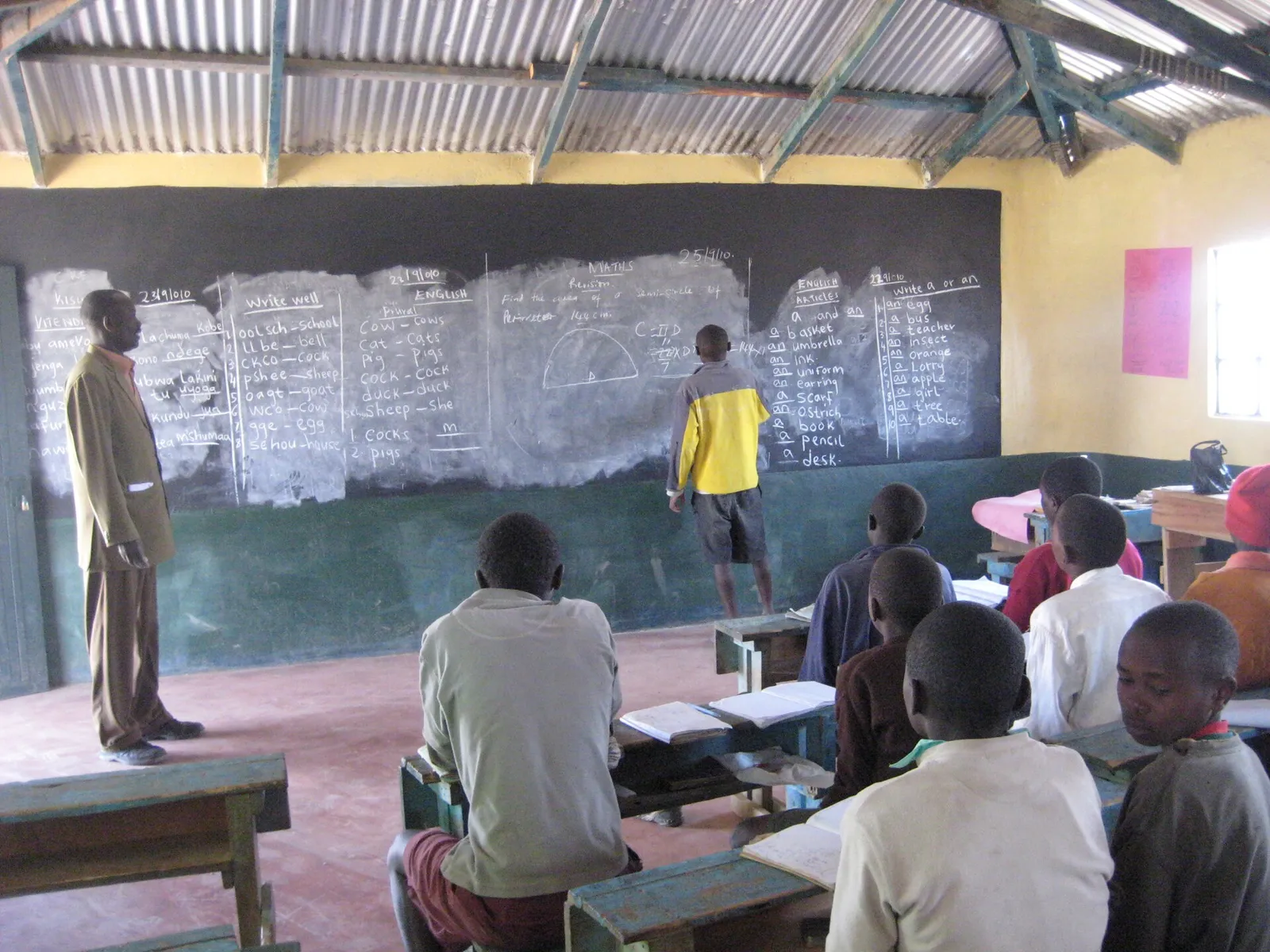
Every morning across Kenya, children sit down to lessons that, by official policy, should be delivered in the language they speak at home. In practice, that rule is honored more in the breach — and the question of which language children should learn in has become one of the country's most consequential education debates.
A rule loosely kept
Kenya's framework, rooted in a 1976 directive and carried into the current Competency-Based Curriculum, holds that rural lower-primary pupils (Grades 1–3) should be taught in the local "language of the catchment area," urban pupils in Kiswahili, with English taking over from Grade 4 — and serving as the language of national exams. But teachers often switch to English or Kiswahili early, and teaching materials in many of Kenya's more than 40 indigenous languages barely exist, Al Jazeera reported.
The case for the mother tongue
Decades of research support early instruction in a familiar language. UNESCO and the World Bank have found that children grasp foundational concepts better in a language they already speak, and that early literacy transfers to later languages. UNESCO estimates that around 40 percent of learners worldwide are taught in a language they do not understand well at home. For supporters, the appeal is also cultural: the Kenyan writer Ngugi wa Thiong'o spent decades arguing that the dominance of colonial languages amounts to cultural loss, and Kenya's 2010 constitution recognizes the value of indigenous languages. Students who experienced mother-tongue teaching describe its impact simply; one, Lona Chepkemoi, told Al Jazeera the familiar language "made me feel happy because I understood the concept quite well."
The pull of English
The counter-arguments are grounded in hard realities. Kenya has dozens of languages and no single local tongue commands a national majority, so English and Kiswahili serve as the shared infrastructure that lets Kenyans across regions work and govern together. In cities where communities are interwoven, a strict mother-tongue rule raises an immediate question: whose mother tongue? And because English is the language of exams and higher education, many parents want it introduced as early as possible. Teacher supply complicates things further: an instructor may be posted to a school where the local language is not their own, often without training in mother-tongue methods.
The classroom reality
The result is an improvised bilingualism, with teachers "code-switching" between English, Kiswahili and local languages as they judge what is working. The literacy picture is sobering: surveys cited by Education News Kenya suggest large shares of pupils cannot read English passages pitched below their grade, and there is a stark urban-rural divide, with literacy rates well above 80 percent in Nairobi but far lower in some arid counties.
A wider debate
Kenya's dilemma echoes across sub-Saharan Africa, where most countries inherited colonial-language schooling and have wrestled for decades with the balance between indigenous languages and global opportunity. Studies of Ethiopia, which extended mother-tongue instruction through primary school, have reported encouraging results. Kenya's curriculum body has signaled it will continue developing indigenous-language materials for the early grades — but whether that reaches classrooms, retrains teachers and shifts the views of parents who see English as the surest path forward remains, for now, unresolved.