
Some dates seem to gather history around them. June 28 is one of them — the day a single assassination set the great powers marching, and, exactly five years later, the day they signed the peace that ended the war and helped sow the next one.
A shot in Sarajevo
On the morning of June 28, 1914, Archduke Franz Ferdinand, heir to the Austro-Hungarian throne, and his wife Sophie rode in an open motorcade through Sarajevo, capital of a Bosnia that Austria-Hungary had annexed six years before. A cell of young nationalists was waiting along the route. One threw a grenade that bounced off the archduke's car and wounded others; Franz Ferdinand survived and insisted on visiting the injured. When his car took a wrong turn and stopped to reverse near the Latin Bridge, a 19-year-old Bosnian Serb named Gavrilo Princip stepped up and fired twice. The archduke and his wife were dead within the hour.
Princip belonged to the Young Bosnia movement, and the plotters had been armed with help from the Black Hand, a secret Serbian nationalist society linked to elements of Serbia's military. The killing lit a fuse: within weeks, a cascade of ultimatums and mobilizations pulled Austria-Hungary, Serbia, Russia, Germany, France and Britain into a war that would kill millions.
A peace in the Hall of Mirrors
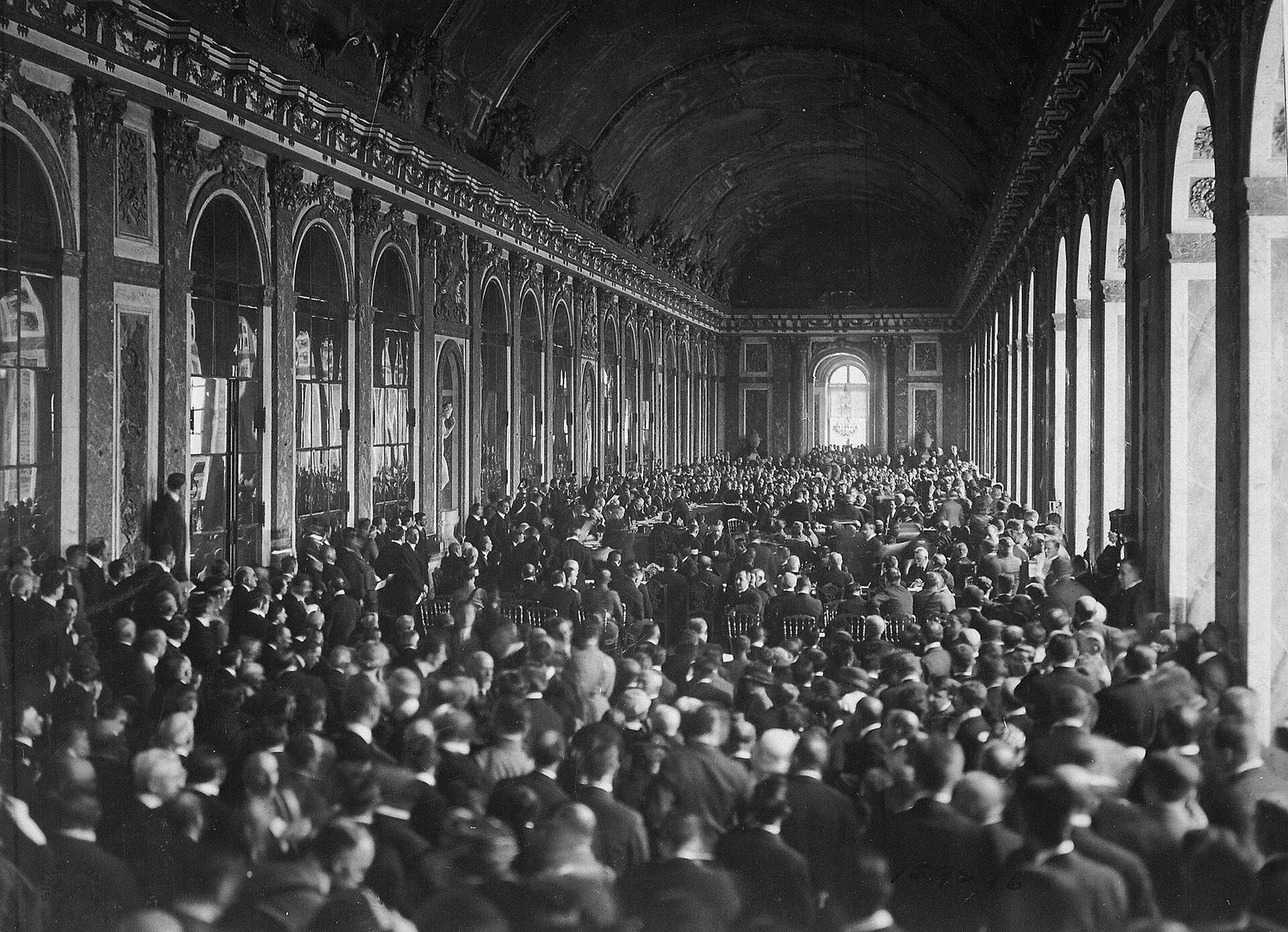
Five years to the day later, on June 28, 1919, the victorious Allied powers gathered in the Hall of Mirrors at the Palace of Versailles to sign the treaty formally ending the war with Germany. The date was chosen deliberately — a reminder to the German delegation of where the catastrophe had begun.
The terms were severe. Germany lost about 13 percent of its territory and a tenth of its population, saw its military gutted and its colonies redistributed, and under the "war guilt" clause was made to accept responsibility for the war and a vast reparations bill. Germans widely regarded the treaty not as a negotiated settlement but as a Diktat imposed upon them. The resentment and economic strain that followed became fuel for the politics that Adolf Hitler would exploit in the years ahead — which is why historians so often link Versailles to the conditions that produced the Second World War.
The logic of a single date
Signing the peace on the anniversary of the assassination bound the two events together in memory as opening act and final reckoning of the same disaster. The setting added its own echo: the Hall of Mirrors, built to glorify Louis XIV, had also been where the German Empire was proclaimed after France's defeat in 1871 — a humiliation now answered in the same room.
One more June 28
The date carries other memories too. In the early hours of June 28, 1969, a police raid on the Stonewall Inn, a gay bar in New York's Greenwich Village, met unexpected and sustained resistance. The uprising that followed over the next several days is widely seen as the catalyst of the modern LGBTQ rights movement. No date holds a single meaning across the centuries — but June 28 has carried more than its share: a shot that began a world war, a signature that ended it, and, decades later, a night of defiance that began a movement.