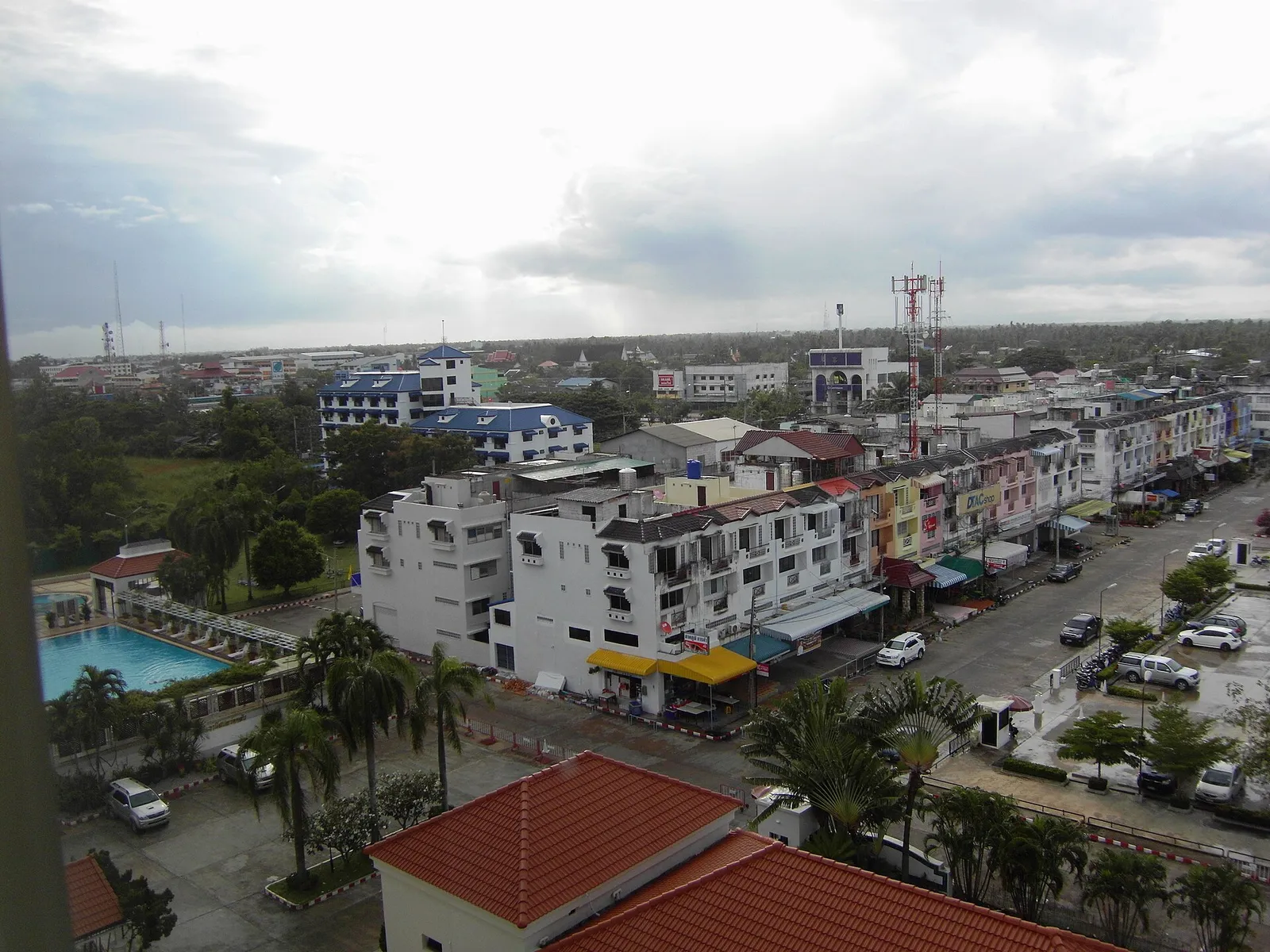
Fifty-one coordinated arson and incendiary attacks were carried out across Thailand's southern border provinces late on Saturday, between roughly 8pm and midnight local time, according to Al Jazeera. Most were in Narathiwat, with others in Yala and Pattani.
Three people were wounded, all in a roadside bombing in Narathiwat: two women aged 45 and 46 and a man of 21. All three were taken to hospital in stable condition. Nobody was killed.
What was hit
The targets were infrastructure and administration rather than people: local government offices, vehicles, telecommunications towers, electrical poles, railway tracks, a 7-Eleven and a subdistrict administrative organisation office.
That list is worth reading carefully, because it describes the character of the night. Fifty-one attacks in four hours, aimed overwhelmingly at things rather than persons, producing three injuries and no deaths, is a demonstration rather than a massacre. Whoever did it was showing an ability to act simultaneously across three provinces.
Nobody has claimed it
No group has claimed responsibility.
That is normal here, and it is one of the defining features of this conflict. Thailand's southern border provinces, which are majority Malay Muslim in a majority Buddhist country, have seen a low-intensity insurgency for decades in which attacks are rarely claimed and attribution is therefore contested by default.
The Internal Security Operations Command, the military body responsible for the region, described what happened without naming anyone: "Multiple coordinated incidents aimed at creating unrest occurred in various locations across the southern border provinces."
We are not going to supply a label the authorities did not use. Readers should note both that the region has an organised insurgency and that no evidence has been published connecting this particular night to any named group.
The intelligence question
The most uncomfortable detail comes from the army itself.
Norathip Poinok, the army commander, said: "We had intelligence reports for about two months that there would be attacks on local offices."
Two months of warning, and fifty-one attacks proceeded anyway. That is not necessarily a failure, since intelligence that something will happen somewhere is not the same as knowing where and when, and defending every government office across three provinces is not possible. But it is a statement that will be examined, and it invites the question of what was done with those two months.
The response
An overnight curfew was imposed in Narathiwat from Saturday night until 6am on Sunday. Railway services on affected routes were suspended, and checkpoints and security checks were set up.
Boonchuay Homyamyen, the governor of Narathiwat, said the relevant agencies were investigating the attack sites.
The report also notes that Thanut Suvarnananda, the head of the National Intelligence Agency, has been seeking to change the approach to the peace process. Saturday night is the context in which that effort now proceeds.
We verified this account from a single publication.