
Reusable rockets were a recurring theme at this year's VivaTech, Europe's largest technology fair in Paris, where the continent's space industry made the case that it is finally getting serious about a technology that has transformed the economics of spaceflight.
Why reusability matters
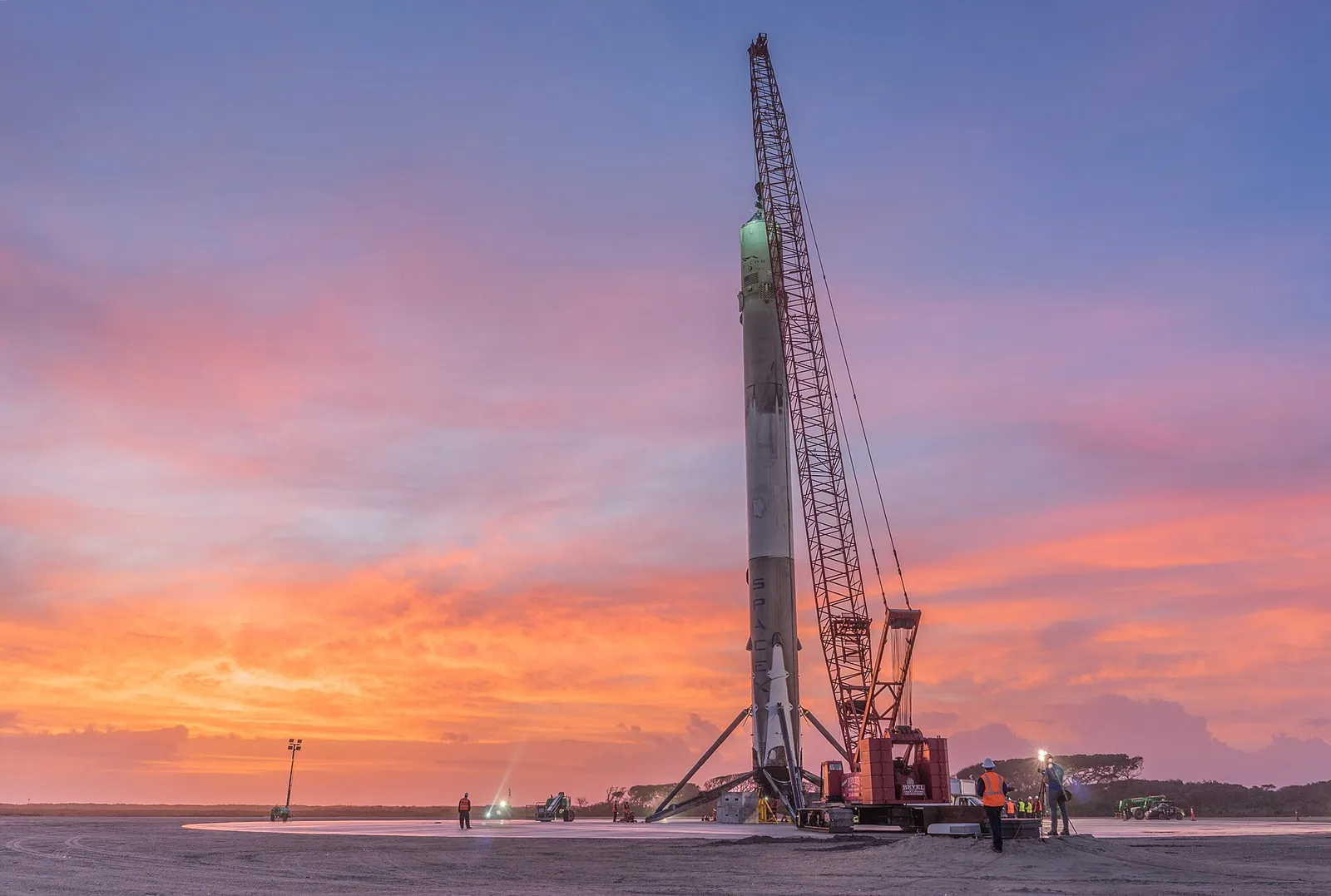
For more than a decade, SpaceX's Falcon 9 has shown that recovering and reflying a rocket's first stage — rather than discarding it after a single launch — can sharply cut the cost of reaching orbit. Europe spent much of that period relying on expendable vehicles, and the mood in Paris suggested that is changing, with executives openly framing the goal as closing the cost gap with SpaceX. Blue Origin founder Jeff Bezos, who appeared at the event, made a broad case for driving down launch costs through reusability and scale.
Europe's contenders
Several European efforts are at different stages. The Exploration Company, a German startup, showed its Nyx capsule — designed to be refuelled and reused for cargo trips to orbit — in VivaTech's innovation gallery. MaiaSpace, an ArianeGroup subsidiary, is building a partially reusable mini-launcher in Normandy; its chief executive, Yohann Leroy, has said the company's challenge is "to approach the costs per kilogram of SpaceX's Falcon 9," and it has pushed its first flight to 2027, Euronews reported. ArianeGroup and the European Space Agency are separately testing Themis, a reusable demonstrator that was moved to a launch site in northern Sweden and is slated for an initial low-altitude "hop," backed by additional EU funding, SatNews reported. The French startup Latitude is also developing a small launcher in Reims. These timelines are company and agency targets and have slipped before.
Cost and sovereignty
Two forces are driving the push. One is money: reusability has reshaped launch pricing, and European satellite operators feel that pressure. The other is sovereignty — the ability to put satellites in orbit without relying on others, a concern sharpened after the loss of access to Russia's Soyuz and delays with the new Ariane 6. As one MaiaSpace representative candidly acknowledged, Europe does not yet have the technology to land a first stage vertically; the company's plan is to start flying commercially and add recovery step by step.
A changed industry
What VivaTech underlined is how far the sector has shifted from a government preserve toward private ambition, in Europe as elsewhere. ESA astronaut Thomas Pesquet also appeared at the show. None of Europe's reusable vehicles has yet matched what SpaceX does routinely — but for the first time in years, European industry is treating that as a gap to be closed rather than a lead to be conceded.