For a cuisine of such richness and originality, the food of Myanmar — known also as Burma — has been strikingly absent from the world's restaurant scenes. That is beginning to change. As the country's prolonged political crisis pushes cooks, restaurateurs and food writers abroad, Burmese dishes are appearing on menus from London to Sydney, and a wider public is discovering a cuisine that has spent decades out of view.
A crossroads on the plate
Burmese cooking sits at one of the great culinary intersections of Asia. The country borders China, India, Bangladesh, Thailand and Laos, and its food draws on all of them while staying firmly its own. Chinese stir-frying and tofu, Indian breads and spices brought during colonial rule, and New World ingredients such as chili and peanuts have all been absorbed into a distinctive whole, often described through a balance of sour, salty and spicy.
Two features tend to surprise newcomers. Burmese curries generally use no coconut milk, building richness instead from garlic, shallots, ginger and turmeric fried slowly in oil. And many dishes are anchored by ngapi, a pungent fermented fish or shrimp paste that supplies a deep savory backbone unfamiliar to many Western palates but central to the cuisine's identity.
Mohinga, eaten before dawn
Ask people from Myanmar which dish most says "home," and the answer is usually mohinga: thin rice noodles in a fish broth thickened with toasted rice or chickpea flour, scented with lemongrass and shallots, and topped with boiled egg, crisp fritters and a squeeze of lime. Widely regarded as the national dish, it is a breakfast food, sold by street vendors who set up before sunrise. Its preparation varies by region — richer with fish paste in some areas, lighter elsewhere — and in diaspora kitchens it is often the dish cooks say their compatriots most want, and the hardest to reproduce with unfamiliar local fish.
The ceremony of eating tea
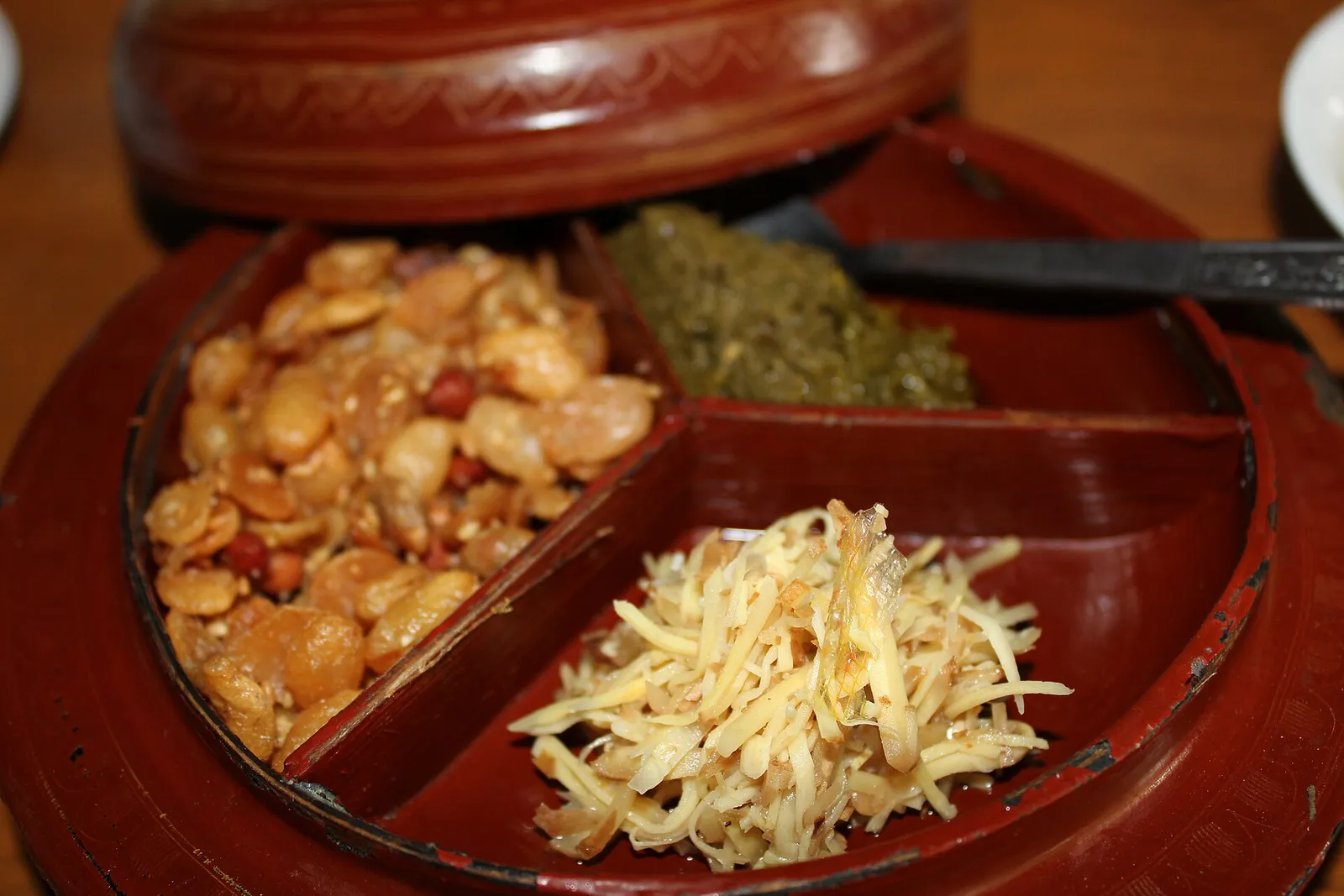
If mohinga is comfort, lahpet is ritual. Myanmar is one of very few cultures where tea leaves are eaten rather than only brewed: fermented for weeks, the soft, faintly bitter leaves are tossed with fried beans, peanuts, garlic, sesame, tomato and chili into a salad that is crunchy, sour and savory at once. Lahpet has long carried social meaning, served at ceremonies and, historically, offered as a token of peace. Presenting it to a guest is a gesture of genuine welcome — which is partly why several Burmese restaurants abroad have taken the dish's name, signaling an intent to offer cultural depth rather than a passing novelty.
Why it stayed hidden
Given that complexity, the scarcity of Burmese restaurants outside Asia until recently invites explanation. Myanmar spent much of the period from 1962 under an isolated military government that limited travel, investment and contact with the outside world. That insularity, which protected the culture at home, also kept its food from circulating internationally the way Thai, Vietnamese or Japanese cuisine did during more open decades. There was no early restaurant-opening wave abroad to establish a foothold, and the cuisine's reliance on assertive fermented ingredients asked for a more adventurous audience than many newcomers, working on thin margins, could at first cultivate.
Cooking as continuity
The upheaval that followed the military's seizure of power in February 2021 changed the equation. A larger and more professionally varied wave of people left the country, among them cooks and restaurateurs who had built businesses during Myanmar's brief opening in the 2010s. Many landed in cities with established food cultures and diners increasingly curious about cuisines beyond the familiar. For those cooks, the work is partly practical — restaurants to run, rent to pay — and partly something larger: to keep a cuisine, and the culture around it, visible and understood, one bowl at a time.