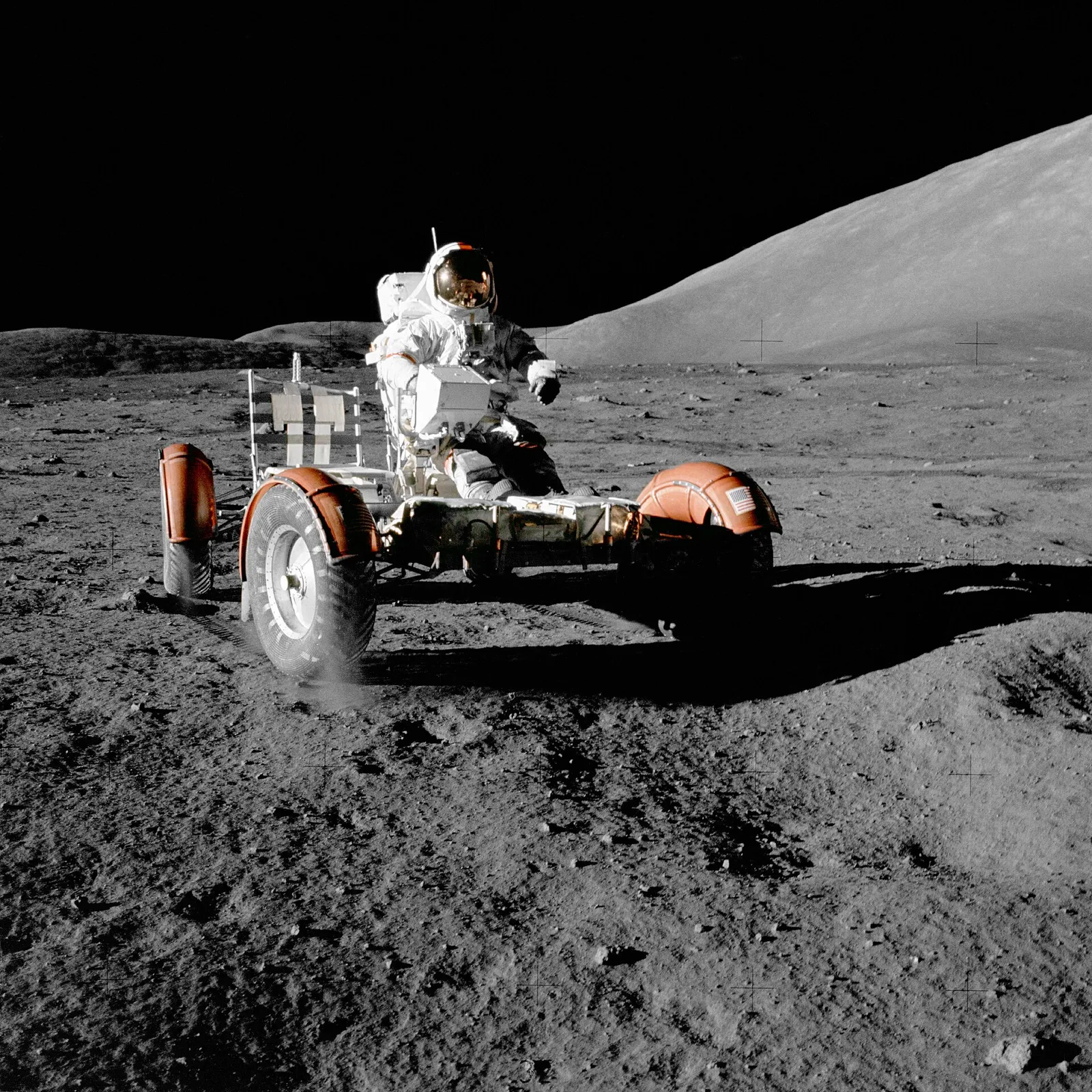
A new electric-vehicle startup is betting that the future of personal transport looks less like a Tesla and more like a moon buggy. Amble, based in Portugal, has unveiled the Amble One — an open-frame electric buggy whose design borrows directly from NASA's Apollo lunar rover, according to the company's announcement.
The team
Amble's pitch leans heavily on its founders' pedigree. The company says its design is led by Julian Hoenig, an industrial designer who previously worked at Apple — where the company credits him with work on the Apple Watch and Vision Pro — and earlier at Audi. The chief executive, Adrien Roose, co-founded the design-focused electric-bicycle company Cowboy, and other founders bring backgrounds in hospitality and at Ford's advanced design studio. Backers, the company says, include a co-founder of SolarCity and a former Airbnb executive.
What it is
The Amble One is not a conventional car, by design or by law. At under about 990 pounds, it qualifies in Europe as an L7e "quadricycle," a lightweight class that can be driven on public roads without the engineering of a full passenger vehicle. The company lists a 15-kilowatt motor, a 12-kilowatt-hour battery, a range of more than 60 miles and a top speed of about 40 mph, with a starting price of €20,000 (roughly $25,000), as reported by HiConsumption.
The aesthetic is the point. Echoing the Apollo rover's exposed tubular frame, the buggy wears almost no bodywork; its skateboard-style platform is left visible, with oversized screws flagging parts meant to be removed or swapped. Materials lean toward natural and durable rather than glossy: a cork-wrapped steering wheel (a nod to Portugal's cork industry), a marine-grade canvas roof, an aluminum frame and leather seats meant to age rather than wear out, Designboom reported. "No doors to close you in, no unnecessary screens to pull you away," Hoenig said of the philosophy.
Resorts first
Amble is taking an unusual route to market. Rather than chase mass buyers, it is courting luxury resort operators first — naming destinations such as Amangiri in Utah and the Six Senses group — with hospitality deliveries planned for 2027 and consumer orders following in 2028. A second, more road-oriented model with removable doors is sketched for later. "Cars are engineered for speed, distance and efficiency. Yet many journeys are short," Roose said.
A crowded graveyard
The caveat is the one that hangs over every EV startup: ambition is cheap, production is hard. Well-funded names such as Rivian and Lucid have burned through billions chasing profitability, and Fisker, Lordstown and Arrival have gone bankrupt. Amble's narrow niche — a lifestyle quadricycle priced like a premium e-bike or a high-end golf cart — sidesteps a head-to-head with Tesla, but it also limits how big the company can get. Whether the Amble One becomes a fixture at exclusive resorts or another stylish concept that never scales will, as ever in this industry, come down to whether it actually reaches production on time.