
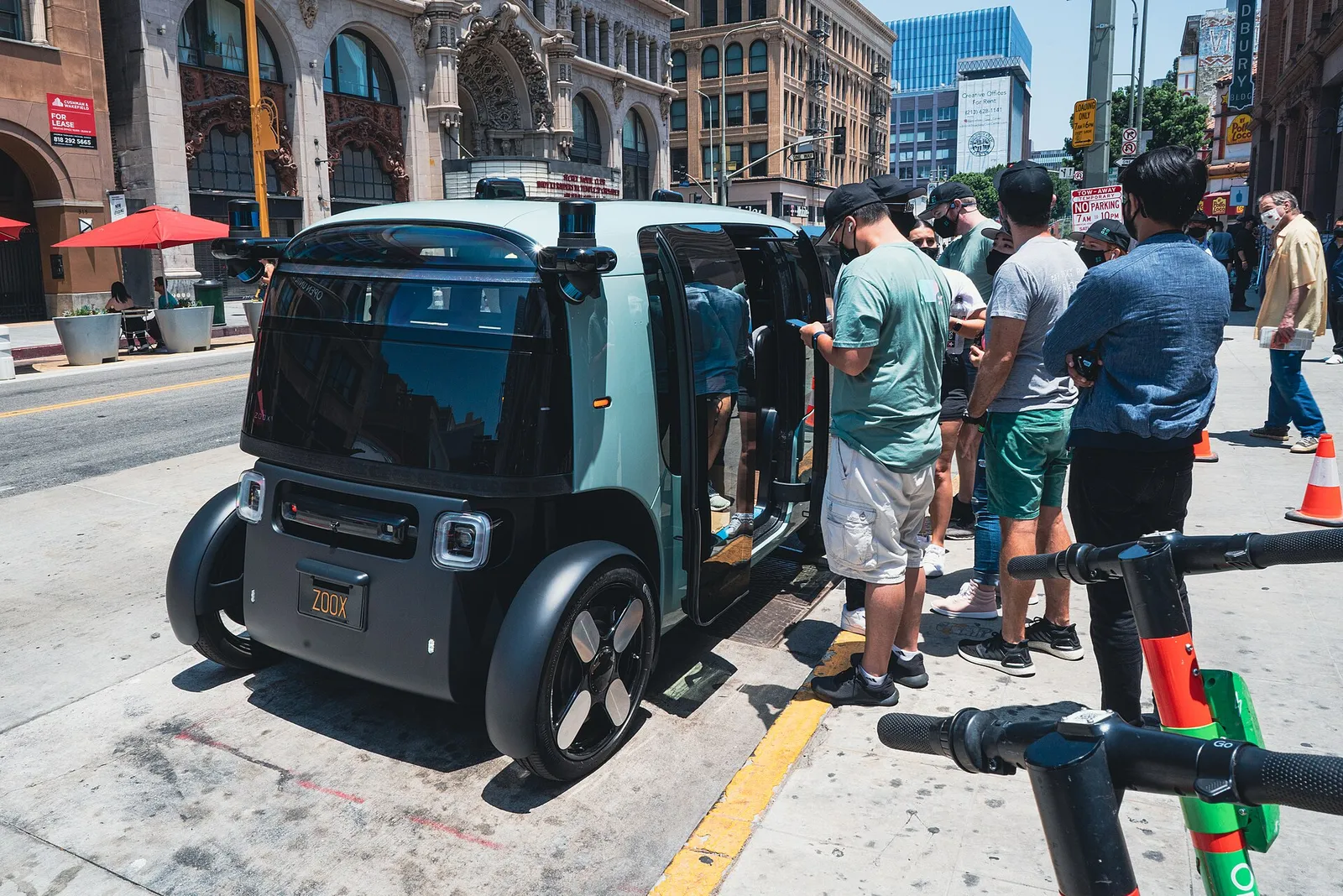
Zoox has given its driverless taxi a makeover. The Amazon-owned company announced a set of upgrades to its purpose-built robotaxi this week as it edges toward charging passengers for rides for the first time.
A cabin tuned to riders
The changes are incremental but rider-focused: softer, contoured seating, larger cupholders, a charging pad redesigned so phones stop sliding around, a more visible touchscreen, and a new door-mounted speaker and microphone that lets passengers talk to support staff. On the outside, Zoox repositioned its reflectors. The vehicle itself, however, is unchanged — and that is the company's central bet.
Built without a steering wheel
Unlike most rivals, which retrofit conventional cars, Zoox designed its robotaxi from the ground up with no steering wheel, no pedals and no driver's seat. The pod-shaped vehicle seats four passengers facing one another, can drive in either direction without turning around, and relies on a suite of cameras, radar and lidar to navigate.
That design carries a regulatory cost. Because the vehicle does not meet federal safety standards written for human-driven cars, Zoox needs an exemption from the National Highway Traffic Safety Administration before it can sell rides. Regulators granted a demonstration exemption in August 2025; a separate approval needed for paid service is still pending.
Free rides for now
While it waits, Zoox is offering free public rides in several US cities and has built up a large waitlist, Reuters reported. The company has also announced a partnership with Uber to offer its vehicles through that app, with Las Vegas targeted as an early commercial market. Amazon acquired Zoox in 2020.
Racing to catch Waymo
Zoox is moving into territory that Alphabet's Waymo already dominates. Waymo is currently the only US operator running fully driverless paid rides at scale, completing hundreds of thousands of trips a week across several cities, and it has announced plans to expand further in 2026. Tesla has also begun offering robotaxi rides, though in many cases still with a human safety operator on board.
Zoox's pitch rests on its distinct vehicle: it argues that a car built specifically for autonomy, without the compromises of human-driver hardware, can offer a different kind of ride. Whether regulators clear it for paid service — and whether passengers prefer the experience — will determine how quickly that argument is tested in the market.