The conflict between the United States and Iran has entered a more dangerous phase, Al Jazeera reports, with the US president threatening a major new attack and Iran saying it has struck back at American forces across the Gulf. newsparlor is reporting each side's claims as claims, and does not take a side in this war.
What each side says
The escalation is being driven by statements and actions from both governments.
According to Al Jazeera, Trump told Axios on Wednesday that he was "considering a massive attack" on Iran, describing it as "bigger than ever before," and adding: "I am close to making a decision." That is a threat of further escalation, not yet an action.
On the Iranian side, Al Jazeera reports that Iran launched missile and drone strikes on Wednesday against what its Islamic Revolutionary Guard Corps (IRGC) said were US military assets in Jordan and Kuwait, and targets in Bahrain. The IRGC said a strike on a telecommunications tower in Kuwait was retaliation for US attacks on Iran's own telecommunications infrastructure, and Kuwait also reported drone attacks on its Abdali border crossing with Iraq. Iran's foreign minister, Abbas Araghchi, warned of "an eye for an eye" retaliation, and an army spokesperson, Mohammad Akraminia, said Iranian attacks would continue as long as US strikes on Iranian infrastructure did.
These are the two governments' own accounts of their intentions and actions, and we present them as such. The article does not report casualty figures for Wednesday's strikes, and we will not supply numbers that have not been reported.
Where this sits in the war
For readers who have not followed it closely, this is an escalation within an already-running war, not its start.
Al Jazeera reports that the United States and Israel launched military operations against Iran in late February 2026, that an interim peace deal signed the previous month has effectively collapsed, and that the US has now conducted twelve consecutive nights of attacks on Iran, striking bridges and tunnels according to Iranian media. Wednesday's developments, a US threat of a bigger strike and Iranian attacks on three Gulf states, mark a widening of the conflict beyond Iran's own territory and into the wider Gulf region.
That widening is the significant part. A war fought on Iranian soil is dangerous; a war in which Iran is striking targets in Jordan, Kuwait and Bahrain, states that host US forces, risks pulling more countries and more infrastructure directly into the fighting.
The economic shockwave
The war is no longer only a security story; it has become a global economic one.
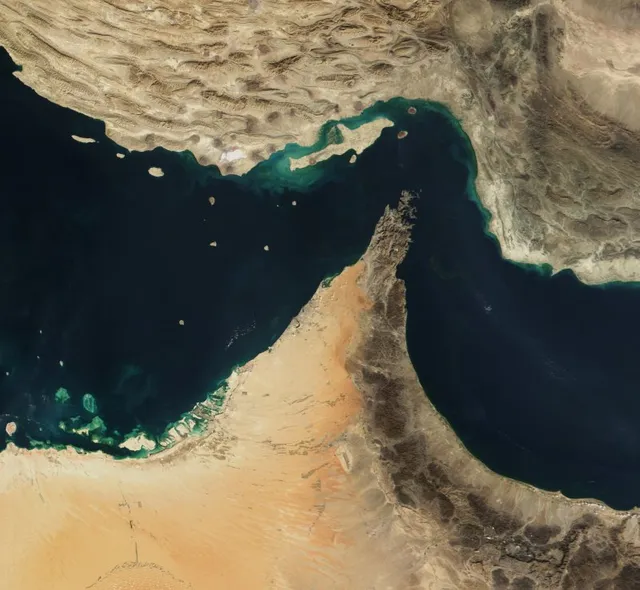
As we reported earlier, the disruption to Gulf shipping, including Houthi attacks on Saudi oil tankers in the Red Sea and the effective closure of the Strait of Hormuz, has pushed the price of Brent crude above $100 a barrel for the first time since May. That is the mechanism by which a conflict in the Gulf reaches households far from it: through the price of energy, and everything energy touches.
What to watch
The immediate question is whether Trump's threatened "massive attack" materializes, and how Iran responds if it does.
An exchange of a US escalation and Iranian retaliation, each justified as an answer to the other, is the pattern the two sides have described, and it is the pattern that could keep widening the war. Whether there is any diplomatic off-ramp is not evident in the current reporting. For now, the verified picture is stark enough on its own: a president threatening his biggest strike yet, a government promising "an eye for an eye," attacks spreading across the Gulf, and an oil price climbing on the fear of what comes next.