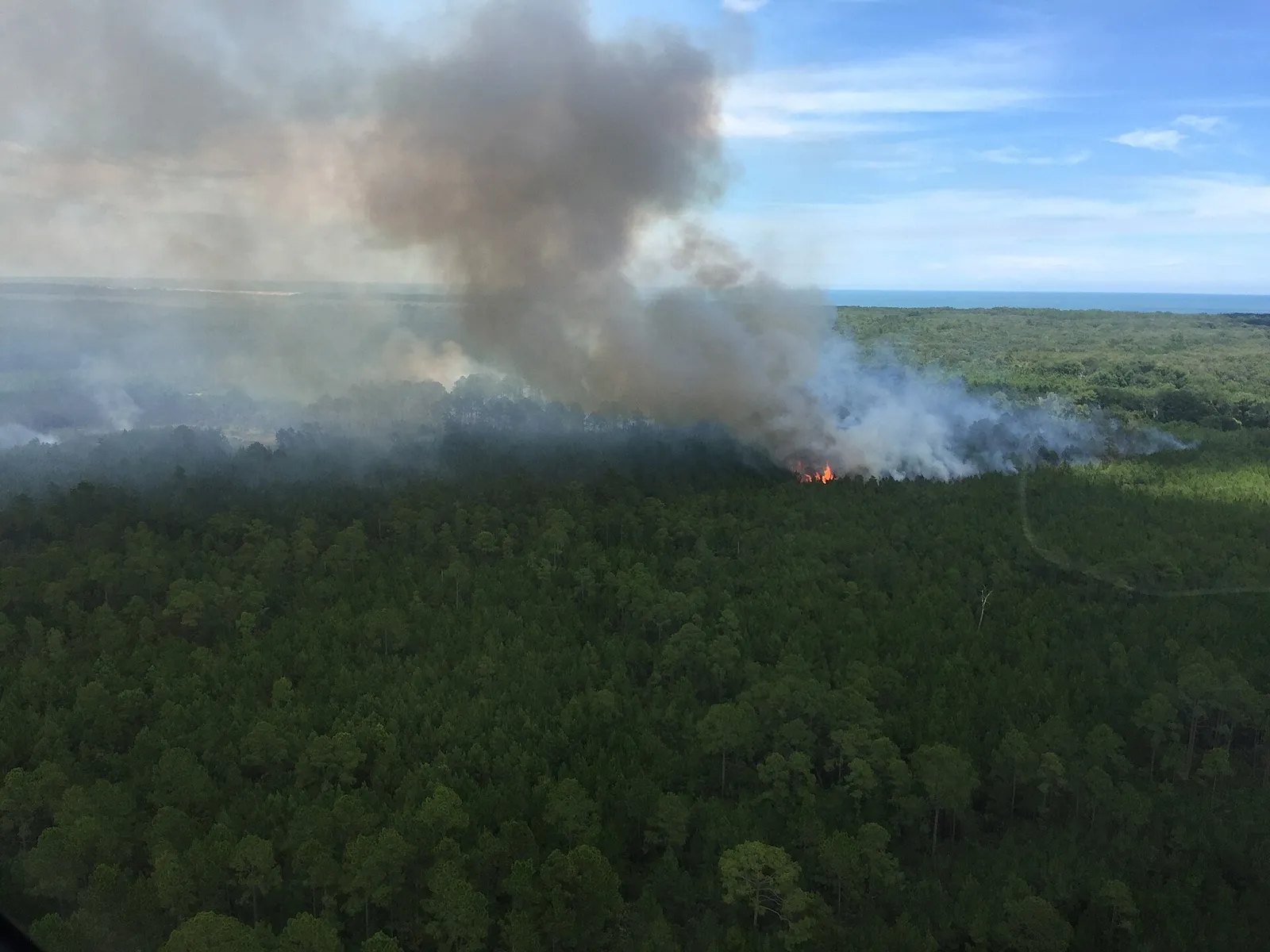
More than 20,000 people have been evacuated from a popular French coastal resort as a wildfire spreads through the surrounding pine forest, Al Jazeera reports. It is the latest and largest evacuation in a summer of fires across southern Europe that we have been tracking.
What is happening
The fire is threatening a place built for summer crowds, which is why the evacuation is so large.
According to Al Jazeera, the blaze forced the evacuation of over 20,000 residents and holidaymakers from Lège-Cap-Ferret, a tourist town about 50 kilometers west of Bordeaux, in southwest France, known for its sand dunes and oyster shacks. The fire has burned around 3,400 hectares. It began in the village of Saumos on Wednesday before advancing toward the coast; Al Jazeera reports that three houses have been damaged and a caravan destroyed.
Casualties and cause
The human toll so far is limited among those evacuated, but not absent from the wider firefighting effort.
Al Jazeera reports no deaths among the evacuees. It notes, however, that two firefighters died this week while battling a separate fire near Bordeaux airport, a reminder that the danger of these blazes falls heavily on the people sent to fight them. The cause of this particular fire, Al Jazeera reports, was traced to a brush-clearing machine, an ordinary spark that, in the current conditions, was enough to start a major fire.
Those conditions are the crux. France has endured three successive heatwaves since May, with temperatures above 30 degrees Celsius, drying out the landscape until it burns easily. The mayor of Lège-Cap-Ferret, Philippe de Gonneville, summed up the difficulty: "The weather is not on our side. We have temperatures above 30 degrees Celsius, with winds that have shifted to the east and northeast."
The response
The scale of the firefighting effort matches the threat.
Al Jazeera reports that around 800 firefighters, along with hundreds of gendarmes and soldiers, have been deployed, and that aircraft have been dropping water on the blaze since it broke out. The European Union sent three additional water-bombing aircraft, an example of the cross-border assistance that southern European countries increasingly lean on during a fire season that regularly overwhelms national resources.
The bigger picture
This fire is one instance of a pattern we have reported repeatedly this summer.
Southern Europe is enduring a season of extreme heat and large, fast-moving wildfires, from Spain to France, and the evacuation of a tourist town at the height of the holiday season shows how directly these fires now intersect with ordinary life. The immediate story is 20,000 people moved to safety and a fire still burning. The recurring one, which the heatwaves and the mounting toll underline, is that this kind of summer emergency is becoming a fixture rather than an exception for the region, and that the resources to fight it are stretched thinner each time it returns.