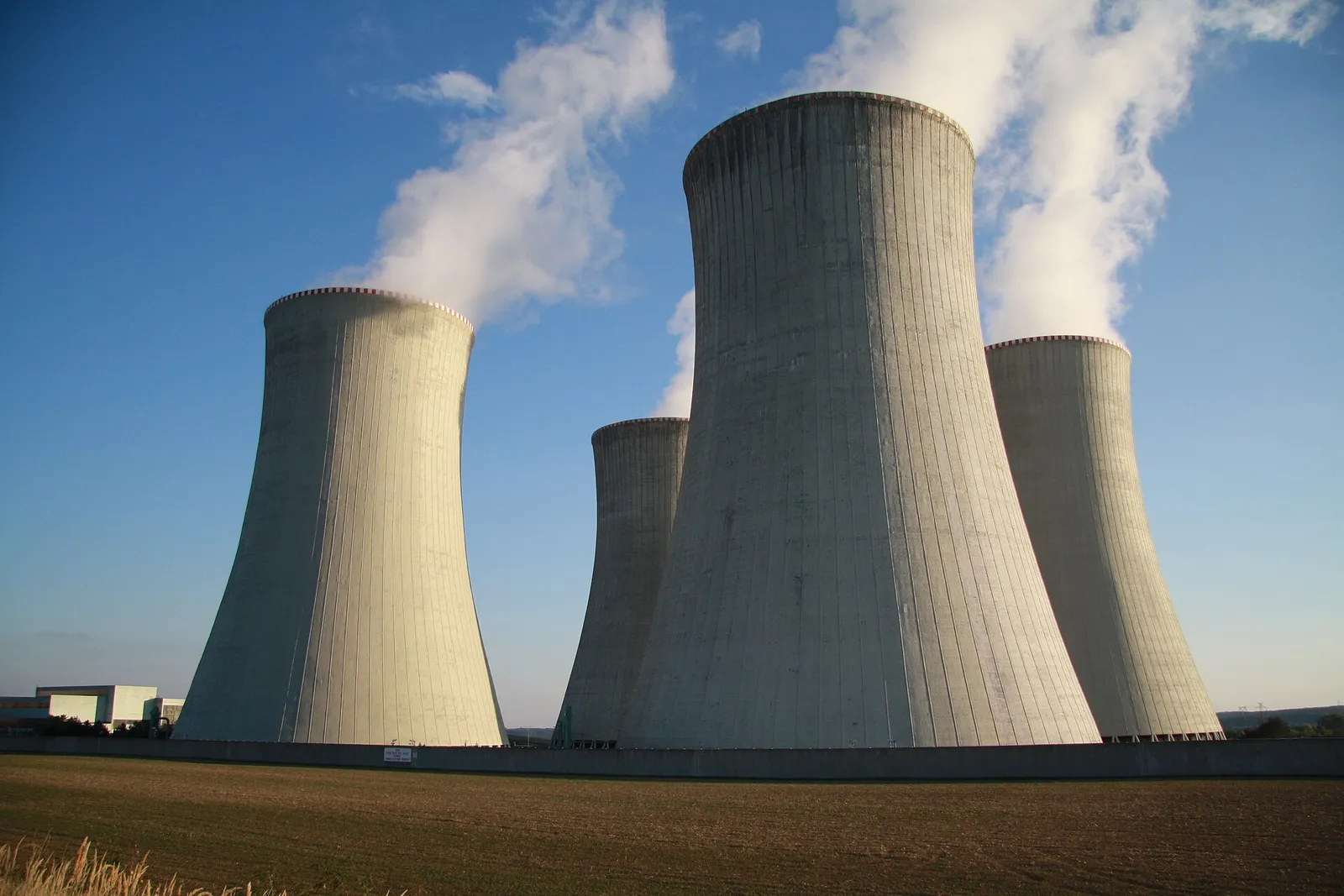
The US government is putting up $17.5 billion in loans to accelerate the construction of new nuclear power plants, the Energy Department announced, in one of the most concrete steps yet in the Trump administration's effort to revive the American nuclear industry, as PBS reported.
What was announced
The money is being offered on a conditional basis — as many as five loans to utilities and energy companies that would each build two large reactors, for up to 10 in total, according to CNBC. The funds are aimed largely at the long-lead components that take years to manufacture. The reactor maker Westinghouse, whose AP1000 design would be used, has signed preliminary agreements with several potential partners, who would commit substantial sums of their own up front. Construction could begin around 2030, with the plants coming online in the mid-2030s.
It is part of a wider push. President Trump has set a goal of roughly quadrupling US nuclear output over the next 25 years and signed executive orders intended to speed development, including pressing the Nuclear Regulatory Commission to move faster on licensing.
The case for
Backers argue the expansion is necessary and overdue. Electricity demand is climbing after years of being flat, driven in particular by the enormous power needs of artificial-intelligence data centers, and nuclear plants supply steady, round-the-clock power without burning fossil fuels. Nuclear is already the largest single source of carbon-free electricity in the United States. Proponents also frame the effort in competitive terms — reclaiming American leadership in a technology where rivals, including China and Russia, have been building aggressively.
The concerns
Critics do not dispute the demand so much as the pace and the safeguards. Some have warned that pressing regulators to license reactors faster, and reshaping the agencies that oversee them, risks weakening the safety culture that has underpinned US nuclear power — pointing to departures of experienced staff from the regulator, as NPR has reported. They argue that careful, independent oversight is precisely what makes nuclear power tolerable to the public.
There is also a hard-headed worry about money and time. The last big US nuclear project, Plant Vogtle in Georgia, came in years late and many billions of dollars over budget — a cautionary tale that hangs over every promise of faster, cheaper reactors.
What's next
The loans are conditional, and turning letters of intent into operating power plants will take the better part of a decade, assuming the projects clear financing, licensing and construction without the overruns that have dogged the industry. Whether the buildout ultimately bolsters US energy security or repeats old mistakes is, for now, an open question — one the next several years will begin to answer.