
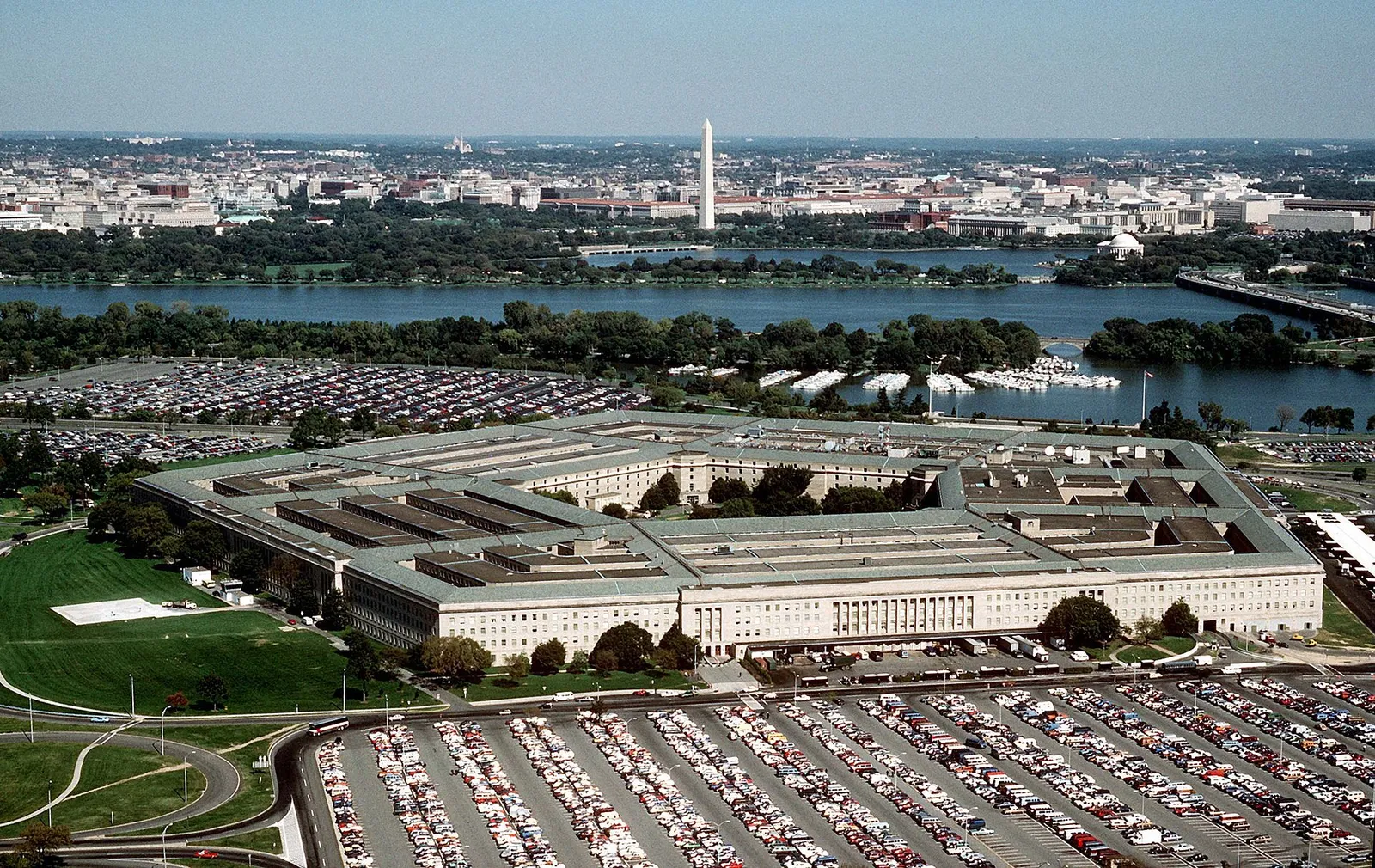
Erik Slavin, the editor-in-chief of Stars and Stripes, says he was dismissed on Friday by a notice of separation sent by the Pentagon.
He attributes it to a specific act: he says he was fired for stating in a CBS interview that hypothetical censorship of news for service members would constitute a red line. Slavin said he stands by the principle that "Stars and Stripes must remain editorially independent, as required by law".
That last clause is the substance of the dispute, and it is not rhetorical.
An unusual newspaper
Stars and Stripes is paid for by the Department of Defense and reports on the Department of Defense. It has done so since the American Civil War, and in its modern form since the Second World War, distributed to service members and their families at bases around the world.
The arrangement only works because of a legal guarantee. Congress has provided for the paper's editorial independence, which means its funder is statutorily barred from directing its coverage. It is an odd arrangement, and the reason it exists is that troops posted abroad have historically had few other sources of news about the institution they serve in.
Previous administrations have tried to close it. A proposal to end its funding in 2020 was reversed after objections from members of Congress of both parties.
The Pentagon's side
The Department of Defense has not publicly explained the dismissal.
What exists instead is a letter from Navy Captain William Urban, the newly appointed deputy publisher, praising the paper's wartime independence while criticizing current management as slow to embrace digital storytelling and promising modernization. It does not address Slavin's departure.
That is a familiar shape of explanation and it is not, in itself, evidence of anything. Editors are replaced for performance and for strategy, and a publication that has been slow to adapt online is a real thing rather than a pretext by definition. Slavin's account and the deputy publisher's letter describe the same decision in incompatible terms, and only one of them offers a reason.
Earlier this year a Pentagon spokesman, Sean Parnell, described the aim as returning the paper "to its original mission: reporting for our warfighters".
The coverage in the background
The paper recently reported from the USS Abraham Lincoln, profiling sailors who described suicidal thoughts or attempts to go overboard during an extended deployment.
No one has publicly connected that coverage to the dismissal, and it should not be assumed. It is relevant because it illustrates precisely the kind of story a Defense Department paper can publish only if the independence provision holds, and precisely the kind a funder might prefer unwritten.
Why it matters beyond one job
The question raised is narrow and consequential: whether a statutory guarantee of editorial independence means anything when the guarantor also controls the payroll.
Slavin's account, if accurate, describes an editor removed for saying publicly that he would refuse to be censored, which is a different thing from being censored and arguably a more effective way of achieving the same end. The Pentagon's silence leaves that account unrebutted.
Members of Congress have previously intervened to protect the paper. Whether they do so again is the thing to watch.