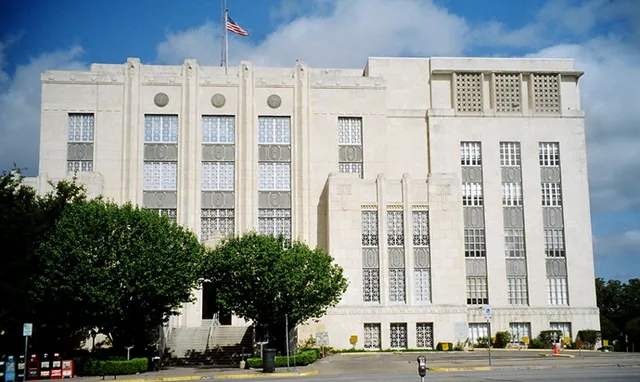
The Texas Third Court of Appeals has reduced the damages Alex Jones owes Neil Heslin and Scarlett Lewis from $50 million to $1.5 million, in a unanimous opinion issued on Friday. Their six-year-old son was among the children murdered at Sandy Hook Elementary School in Newtown, Connecticut, in 2012, and Jones spent years telling his audience the shooting had been staged.
The ruling does not disturb the finding that he defamed them. It concerns how much he must pay.
What the court decided
The court held that Heslin and Lewis had "not provide[d] enough evidence of harassment to pass the state's $750,000 cap on damages".
Texas, like many US states, limits punitive damages by statute, with exceptions that allow a jury award to exceed the cap in defined circumstances. The appeals court found the evidence in this case did not meet the threshold for one of those exceptions, and brought the award back within the limit. That is a ruling about the sufficiency of proof against a statutory standard, not a reassessment of whether the claims Jones made were false or whether they caused harm. Both of those were settled below.
Jones described the outcome as a victory for the First Amendment. The reasoning as reported does not rest on free speech grounds, and a cap on punitive damages applies regardless of what the underlying speech was.
Why it may change very little
The reduction affects two of nineteen claims, and leaves in place a separate Connecticut judgment of $1.25 billion against him.
Mark Bankston, who represents the families, put it bluntly: Jones "still faces over a billion dollars of liability, so this changes absolutely nothing". Arithmetically he is right. Removing $48.5 million from a total north of a billion does not alter what Jones can realistically pay or what the families can realistically collect.
Jones says he will appeal to the Texas Supreme Court seeking dismissal of what remains, and said his lawyers "are not backing down".
The gap between judgment and payment
The wider fact about this litigation is that enormous verdicts have produced very little money. Jones filed for bankruptcy protection, and relinquished control of the Infowars brand in April, while continuing to broadcast on the social platform X.
That is the pattern in cases of this kind. A jury can assess damages at any figure it finds justified. Collecting them requires assets that exist, are locatable, and are not shielded by bankruptcy, and the process runs for years after the headlines have moved on.
For the families, the case was never solely about money. They sued because Jones's audience acted on what he told them, and some of them harassed parents who had buried their children. A court finding that this happened, and that he was responsible for it, is the part of the record that a damages cap does not touch.
The bankruptcy proceedings and the Connecticut judgment continue.