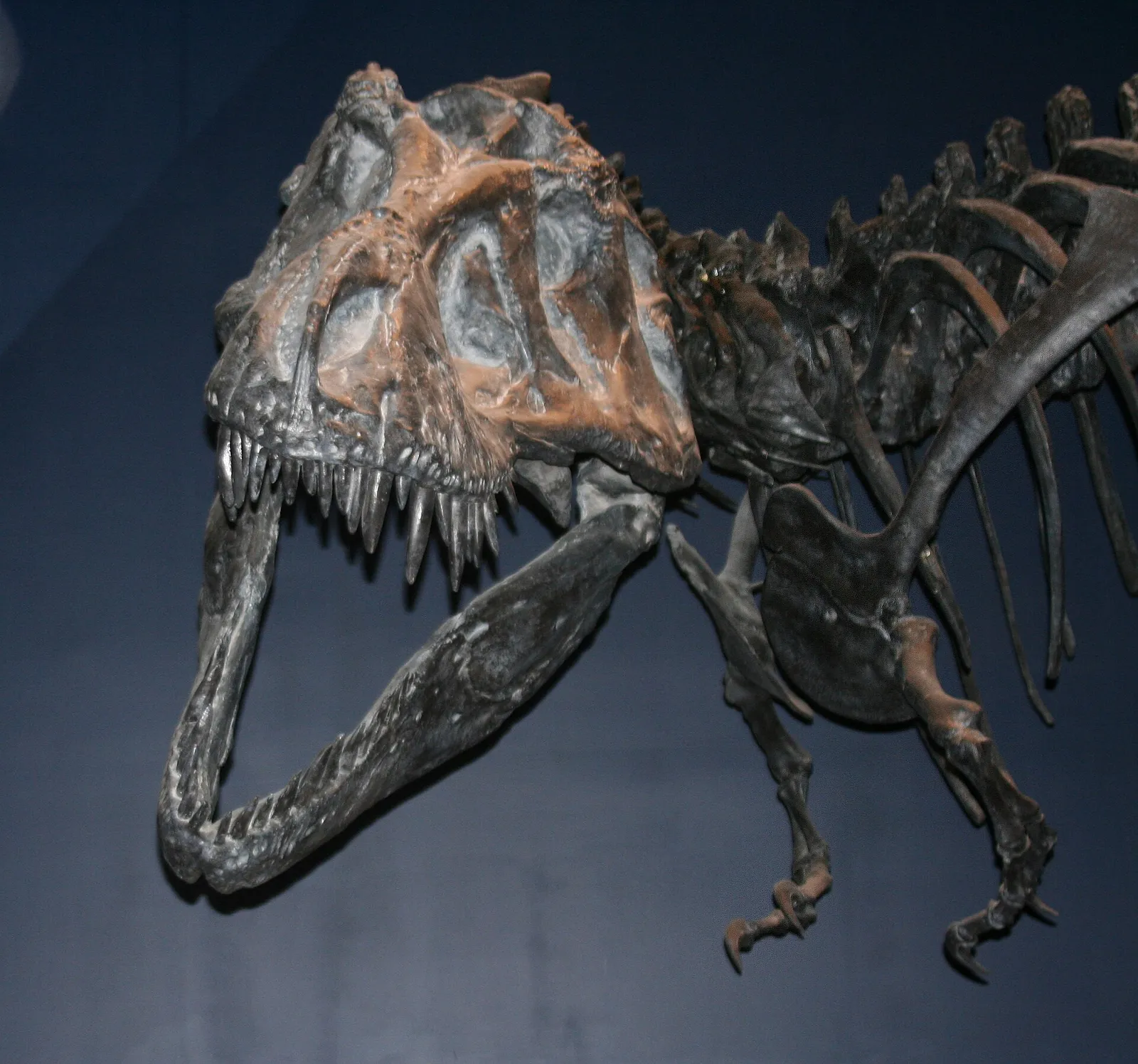
A Tyrannosaurus rex skeleton has become the most expensive dinosaur fossil ever sold at auction, fetching $50.1 million at Sotheby's in New York and reigniting concern among scientists about specimens disappearing into private collections.
The skeleton, nicknamed Gus and unearthed in Harding County, South Dakota, sold on Monday after a lengthy bidding contest, Sotheby's said. The auction house had estimated the specimen at $20 million to $30 million before bidding pushed the price well beyond that. The buyer's identity has not been disclosed.
An exceptional specimen
Gus is one of the more complete T. rex skeletons known, made up of well over 100 fossil bone elements and dating to roughly 67 million years ago. Beyond its size, researchers say the skeleton carries scientific value in its details: healed fractures that show the animal survived injuries, and bite marks on the skull thought to have been left by scavengers after death, offering clues to life and death in the late Cretaceous.
Breaking the previous record
The sale eclipsed the previous auction record for a dinosaur, set in 2024 when a Stegosaurus named Apex sold for $44.6 million. That fossil was bought by the hedge-fund billionaire Ken Griffin, who later lent it to the American Museum of Natural History for display and study. Whether Gus's new owner will make the skeleton available in a similar way is not yet known.
The scientific access debate
For many paleontologists, the record price is less a cause for celebration than for worry. Leading scientific journals generally decline to publish research based on privately held fossils, because continued access for study and re-examination cannot be guaranteed. When a specimen vanishes into a private collection, its scientific value can be effectively lost.
"There have been many cases where specimens have been in private collections, and there's been a scientific description of them, and [that has] gone in the skip," the paleontologist Susannah Maidment told Smithsonian Magazine, warning that important fossils can be thrown away when owners lose interest.
Auction houses push back on that view. Sotheby's has argued that sales can serve science by rescuing fossils that might otherwise never be recovered or studied at all. The disagreement reflects a deeper tension in paleontology, as soaring prices driven by wealthy collectors put landmark specimens beyond the reach of the museums and universities that would make them public.