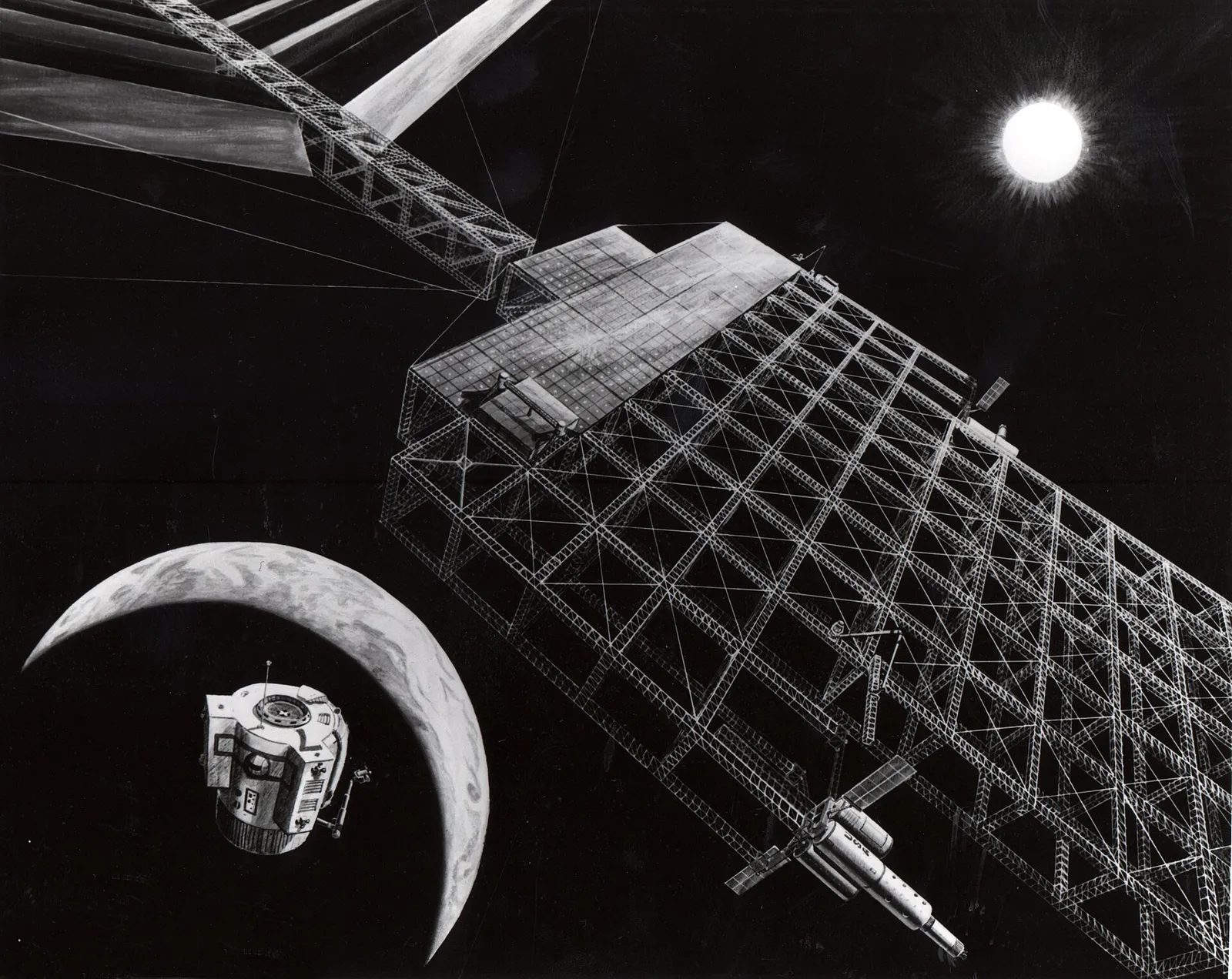
The pitch is seductive: lift AI data centers into orbit, tap uninterrupted sunlight, escape the grid bottlenecks choking expansion on Earth, and scale computing toward the heavens. Elon Musk has floated the idea as a natural extension of SpaceX's Starship and xAI's compute ambitions, and he is not alone — Google is planning a small orbital test of its AI chips, and at least one startup has already put an Nvidia GPU in orbit, TechCrunch reported. But a chorus of skeptics says the physics and the economics are far less forgiving than the vision implies.
The appeal — and the doubters
The draw is real: in orbit the sun delivers steady power without night cycles or permitting fights, an attractive prospect for an industry straining electricity grids. Yet SoftBank chief executive Masayoshi Son questioned whether orbital data centers could deliver meaningful capacity in a commercially useful timeframe, telling an industry gathering that the "next few years will be far more important than what might happen a decade or so from now," per TechCrunch. OpenAI's Sam Altman has voiced similar doubts. Observers also note the competing interests at play: SoftBank has bet tens of billions on terrestrial data centers, while SpaceX — which controls most of the commercial launch market — would book launch revenue from any orbital build-out.
The cooling problem
The most counterintuitive obstacle is heat. Space is cold, but that does not make it easy to cool a server rack there. On Earth, data centers shed heat through air and water; in a vacuum, neither works, so every watt of waste heat must be radiated away as infrared light. The numbers are daunting: dissipating one megawatt of heat while keeping electronics near room temperature requires on the order of 1,200 square meters of radiator — roughly four tennis courts — according to analysis of the physics by SatNews and IEEE Spectrum. Running chips hotter shrinks the radiators but shortens their life.
Radiation, repair and cost
Cosmic radiation flips bits and degrades hardware not built for space, and it erodes radiator coatings over time, forcing operators to oversize them from the start, IEEE Spectrum notes. Maintenance is another gulf: a failed component in a ground data center is swapped in minutes, while an orbiting one cannot easily be repaired and satellites need periodic replacement. And launch still costs roughly $2,700 per kilogram on a Falcon 9 today — a figure that must fall steeply before orbital compute is rational for general workloads. One analyst quoted by IEEE Spectrum estimated the cost of running a GPU in space for a year at "at least an order of magnitude higher" than on the ground. Latency, too, remains a concern for real-time AI tasks.
Where space compute does add up
Engineers are far more positive about narrower uses. Earth-observation satellites already generate more imagery than they can send home, making onboard processing attractive, and large constellations such as Starlink will need fast onboard computing for collision avoidance. For that kind of edge computing — at the satellite itself rather than a full data center in the sky — the case is much stronger. The grander orbital-data-center vision, by contrast, rests on engineering breakthroughs in cooling, radiation-hardening and launch cost that have not yet arrived. The sunlight is real and the demand is real; whether the idea is a coming revolution or, as some suggest, a way to guarantee launch contracts, depends on advances still to be proven.