Oman's foreign minister, Badr Albusaidi, met his Iranian counterpart, Abbas Araghchi, in Tehran on Tuesday to discuss what the two describe as "a phased framework that could provide a practical and implementable basis for moving forward" on the Strait of Hormuz, Al Jazeera reports.
The framework covers a temporary joint navigation corridor, a joint mine-clearing project, a permanent corridor and management arrangements later, an information-exchange mechanism and navigational security services. The two countries intend to bring in Gulf coastal states so any agreement respects international law and national sovereignty.
The detail that tells you the most
There is a mine-clearing project in it.
That single item establishes what has happened in this waterway more clearly than any statement about traffic levels. Mines are what closed the strait in practice, and clearing them is slow, dangerous work that has to be done before commercial shipping will return regardless of what any government announces.
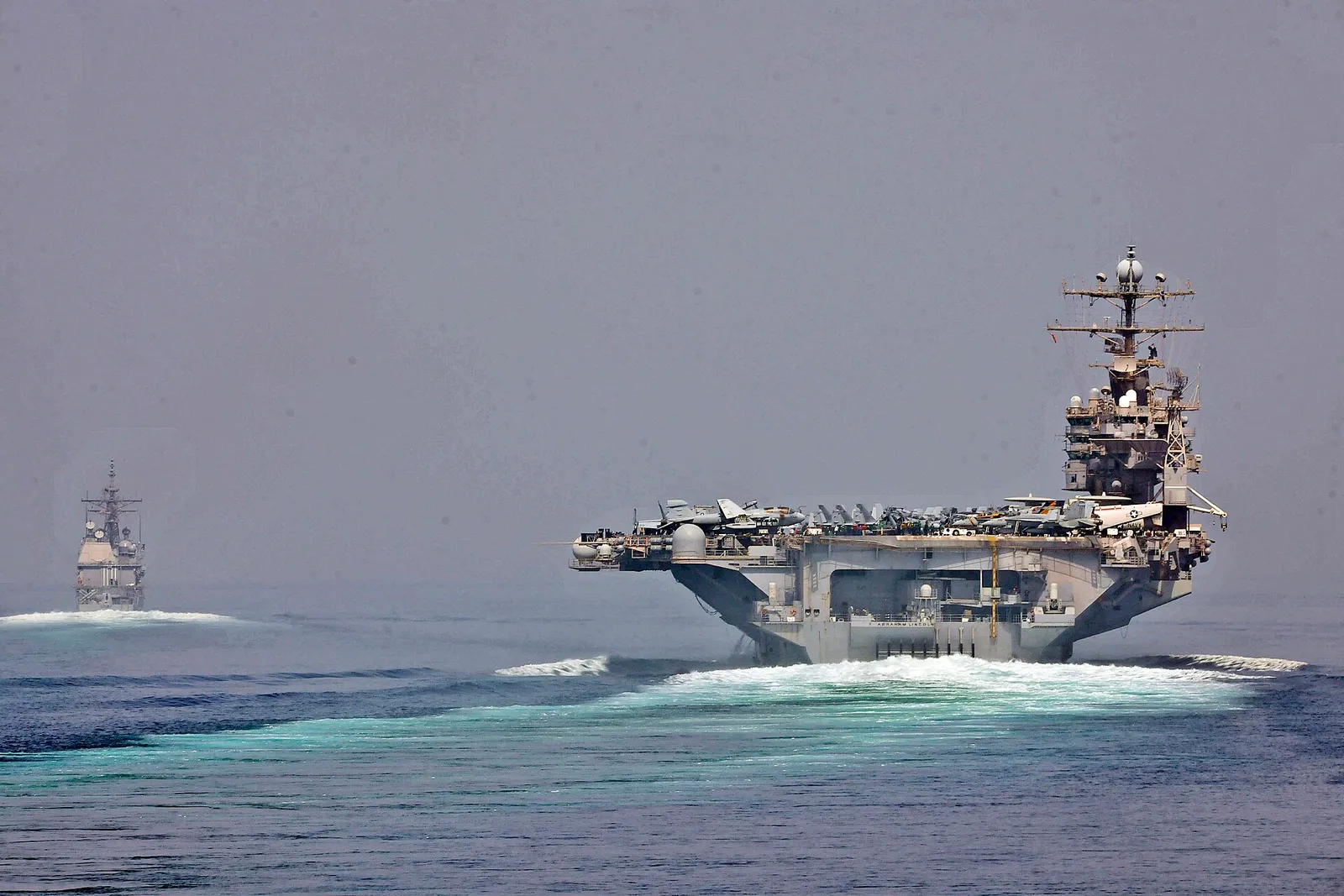
Traffic remains largely paralysed in a channel that normally carries about a fifth of the world's oil and liquefied natural gas exports.
Iran's price
Iranian officials say full reopening requires three things: the United States lifting its naval blockade, dropping its oil sanctions, and unfreezing Iranian assets held abroad.
That is a considerably larger ask than a shipping lane, and it explains why Oman is involved. Muscat has spent decades as the channel through which Tehran and Washington communicate when they are not speaking directly, and a technical maritime arrangement is the kind of thing that can be agreed while the larger dispute continues.
The sequence also matters. Washington announced its expanded sanctions this week, and Iran's answer to those has been to legislate about charging for passage and to threaten the Gulf's exports. A negotiation about corridors is running in parallel with an escalation about pressure, which is normal rather than contradictory.
The war and the memorandum
The war began on February 28 with American and Israeli strikes on Iran. A US-Iran memorandum of understanding in June established a framework for regulating the strait, which is the document this week's talks are trying to build on.
What we could not establish
We could not establish who laid the mines, how many ships are currently transiting, when a corridor might open, whether the United States has responded, or which Gulf states have agreed to take part. We verified this account from a single publication.