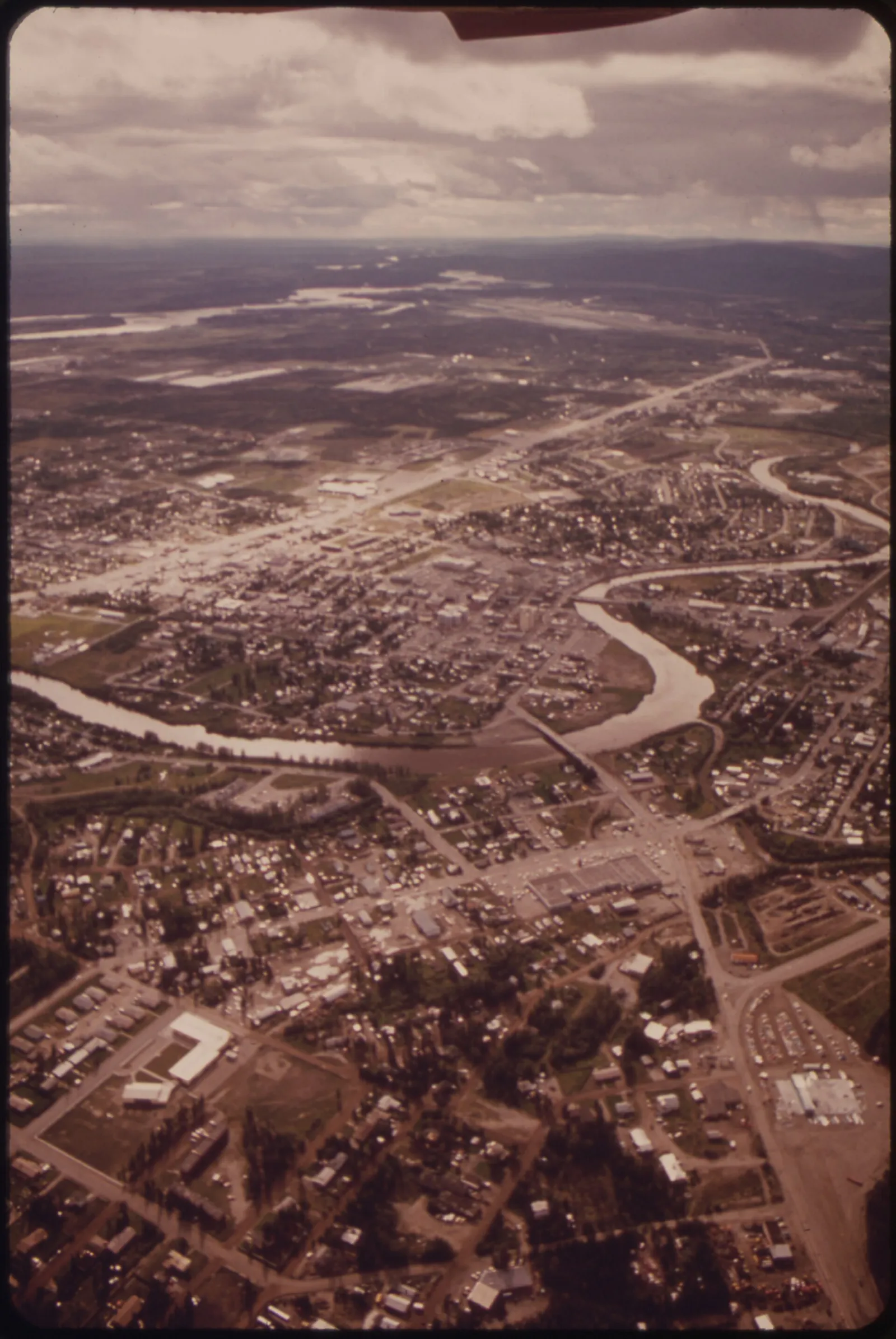
On a January night in Fairbanks, with the temperature near -40°F and the northern lights overhead, a cook slides a container of pad thai through a drive-thru window and the steam freezes before it clears the awning. The compact, low-overhead drive-thru Thai hut is the city's most distinctive culinary signature — and a clue to a food scene far richer than its setting would suggest.
Why Thai? Why here?
Fairbanks has roughly 30,000 residents and, by various counts, more than a dozen Thai restaurants and huts — among the highest concentrations of Thai food per capita of any US city, Fodor's Travel reported. The story is often traced to 1989, when a Thai immigrant opened one of the first Thai restaurants in town; word spread through immigrant networks, and others followed. The drive-thru hut format took hold because it suits both the climate and the economics: owners told Fodor's the startup costs are a fraction of a full-service restaurant's — a powerful draw for newcomers building a business in an expensive, isolated place.
More than meets the eye
The Thai boom is only part of the picture. A local food profile in the Alaska Current lists Tex-Mex, South American empanadas, Korean street food from a food truck and even, improbably, a Moldovan restaurant among the city's options. "There's a lot more than meets the eye about Fairbanks," the creator behind the profile said.
Several forces have pulled the world's cuisines to the interior. Fort Wainwright, a large Army post on the city's edge, and Eielson Air Force Base to the southeast bring a steady, internationally connected population of service members and families. The University of Alaska Fairbanks adds international students and faculty. And the Trans-Alaska Pipeline boom of the 1970s drew waves of workers — and their food cultures — some of whom stayed and opened businesses. Korean, Filipino and other Asian grocers now supply ingredients that were once nearly impossible to find this far north.
The cold logistics of feeding a remote city
Running a restaurant here is an exercise in logistics. Almost everything that can't be grown or caught locally must be flown or trucked in, adding cost at every step and leaving menus exposed to weather delays. One Thai-hut owner described opening in -40°F weather as simply "very difficult"; another keeps his hut warm with a small propane heater, per Fodor's.
Some operators turn the constraints into an advantage. Chena Hot Springs Resort, outside town, runs a geothermal-powered greenhouse that grows fresh greens year-round in defiance of the climate, one local guide notes. Other kitchens lean into Alaskan ingredients, pairing local salmon and halibut with Southeast Asian technique.
A scene of pleasure, not endurance
What makes Fairbanks's food culture distinctive is that it resists the usual story of remote-town deprivation. It is, by most accounts, a scene of genuine pleasure, driven by the competitive ingenuity of immigrant entrepreneurs who found in a cold, isolated city not an obstacle but an opening. The one honest gap, locals concede, is craft cocktails. But in a place where the real challenge is keeping your pad thai warm long enough to eat it in the car, that is easy to forgive.