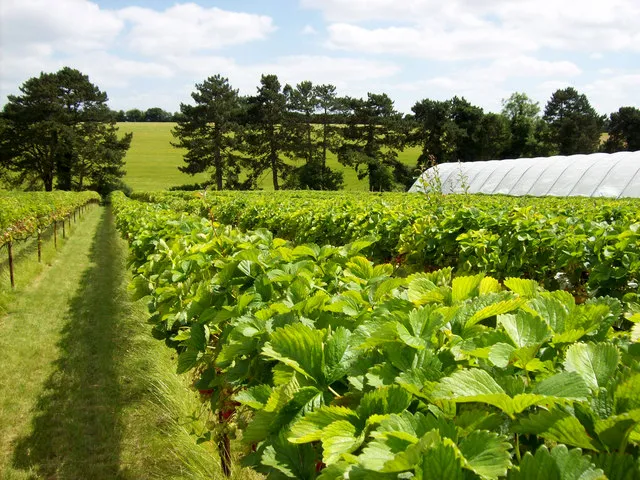
When British growers open their polytunnels each summer, the workers stooping over the rows are now far more likely to have travelled from Central Asia than from Poland or Romania. It is a shift that has unfolded in only a few years, and it traces directly to how the United Kingdom replaced the free movement of EU labour after leaving the bloc.
A scheme built to fill a gap
The Seasonal Worker visa route was piloted in 2019 to head off farm-labour shortages that growers feared would follow Brexit. It allows overseas workers to come to UK farms for up to six months, and it has expanded sharply since. According to the House of Commons Library, the scheme has scaled from a small pilot into the principal channel supplying hands to British horticulture.
The nationalities filling those places have changed dramatically. In 2019 the route was dominated by Ukrainian workers. After Russia's 2022 invasion and Ukraine's restrictions on men of fighting age leaving the country, that supply contracted. Central Asia filled the gap.
The new map of the harvest
The Migration Advisory Committee's review of the scheme, published in 2024, recorded that in 2023 the largest single source country was Kyrgyzstan, at 24 percent of grants, followed by Tajikistan at 17 percent, Kazakhstan at 15 percent and Uzbekistan at 12 percent. Ukrainian workers, who had made up roughly 90 percent of the route in 2019, fell below 10 percent.
The contrast with the pre-Brexit picture is stark. The Migration Observatory at the University of Oxford notes that before Brexit seasonal agricultural work was carried out almost entirely by EU citizens, who now make up only a small fraction of those arriving on the visa.
Numbers and caps
Around 33,000 visas were issued in 2023, below the quota of 45,000 for that period, the Migration Advisory Committee found. The committee reported that the horticulture quota was set at 43,000 for 2025 and that the scheme had been confirmed to operate at least through 2029, with the previous government signalling that numbers could be tapered over time to encourage automation and domestic recruitment.
Concerns over fees and welfare
The expansion has drawn scrutiny over how workers are recruited and treated. The Migration Advisory Committee warned that seasonal workers are "particularly susceptible to exploitation due to the nature of the work in often isolated rural areas, frequently with little or no English," and that some fear losing their visa if they complain.
The review also flagged evidence that some migrants pay significant fees abroad to unofficial agents, or take on loans and debt, before arriving. Workers face upfront costs including visa fees and flights, and the committee recommended that they be guaranteed at least two months' pay to offset the expense of coming to the UK. It noted that oversight remains fragmented across several agencies, with only a minority of farms inspected in 2023.
A dependent future
For now, the arrangement suits both sides: British farms keep their fruit picked, and workers from countries where wages are low can earn in a season what would take far longer at home. Yet the heavy reliance on a single distant region, combined with promises to taper visa numbers and push automation, leaves open the question of who will be in the fields a decade from now. What is clear is that, for this summer at least, much of Britain's harvest depends on hands that crossed continents to reach it.