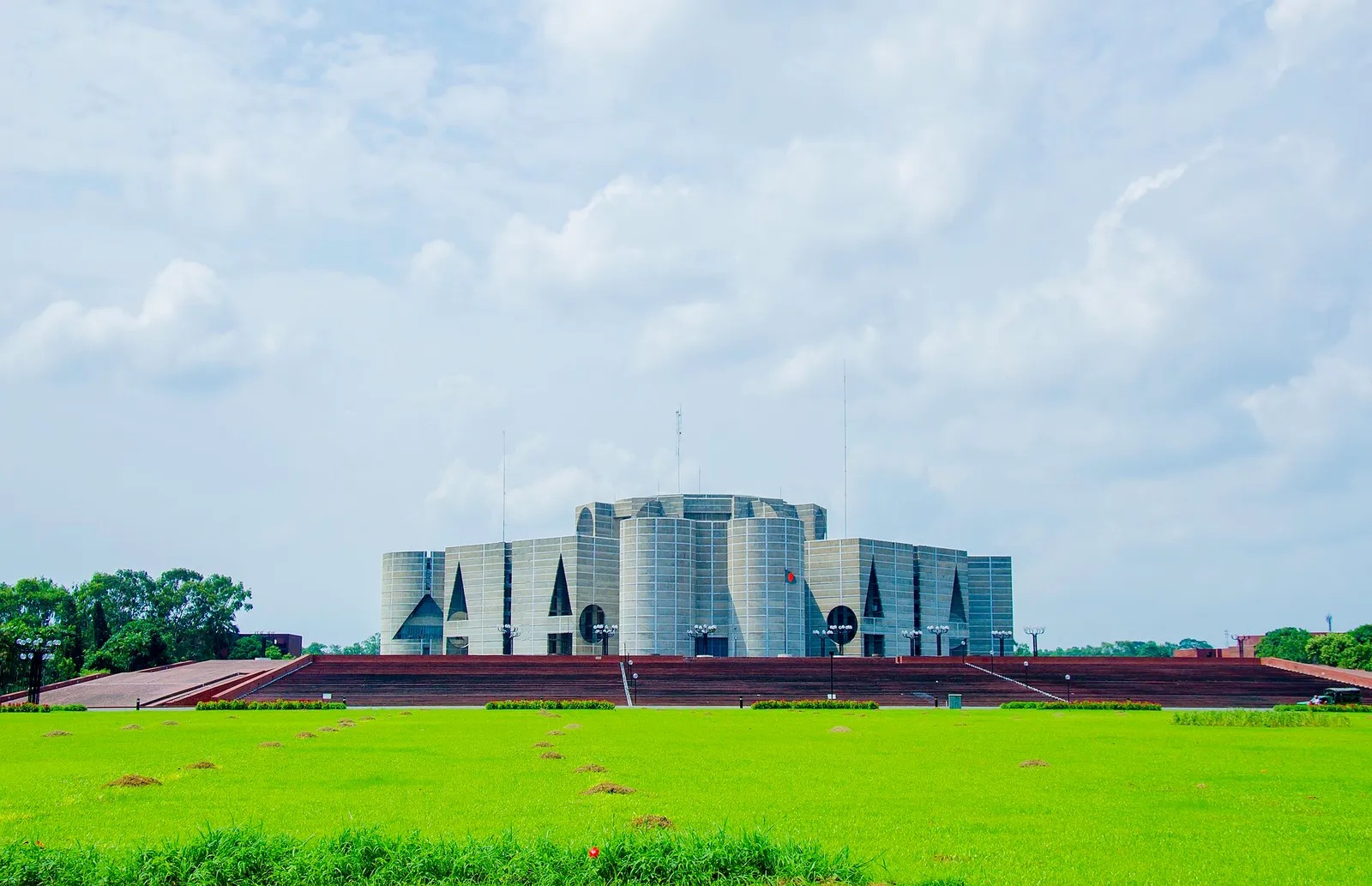
Tarique Rahman, who became Bangladesh's prime minister in February after his party won a landslide, was invited to India this month, ahead of the BRICS summit in September. The trip has not happened, according to Al Jazeera.
Dhaka's explanation points at one event. On August 5, Sheikh Hasina addressed the Foreign Correspondents' Club in New Delhi by video link and said she would return to Bangladesh. Bangladesh's foreign ministry said the address had "vitiated" the atmosphere and that "a propitious environment needs to be created for the visit".
Why one press conference can stop a state visit
Because of where Hasina is and what she is facing.
She fled Bangladesh after the student-led uprising of July 2024 and lives in exile in India. In November 2025 she was handed a death sentence in absentia. Bangladesh's foreign ministry has asked India to "expeditiously act on our request to extradite Sheikh Hasina and other fugitive criminals".
Rahman is the son of Khaleda Zia, Hasina's late political rival. So the current prime minister of Bangladesh is being asked to travel to a country that is hosting, and declining to hand over, the woman his government has condemned to death, days after she used a platform in that country's capital to announce she is coming back.
What each side is saying
Bangladesh is in no hurry. Humayun Kabir, Rahman's foreign affairs adviser, said there is "no rush" over the visit, and that the neighbouring country must "properly understand the reality of Bangladesh's July Mass Uprising, which took place through the sacrifices of more than 1,500 people".
India's public position is conciliatory in general and silent in particular. Its foreign minister, Subrahmanyam Jaishankar, framed the relationship in terms of mutual interest: "It has to work for them, it has to work for us," he said, adding that "there has to be a reasonable degree of my recognising and respecting what is their interest."
Dinesh Trivedi, India's envoy in Dhaka, urged moving on: "to forget the past. Keep the past and sort out the differences of the past. But move on. Don't get stagnant."
Asked about the postponement, the Indian foreign ministry's spokesperson Randhir Jaiswal said: "I have nothing to say right now."
The asymmetry underneath
Notice what the two sets of quotes are about. The Bangladeshi official is talking about the uprising and what India must understand about it. The Indian officials are talking about moving forward and mutual interest, and the spokesperson declines to address the specific issue at all.
Those are not two positions on the same question. One side wants the recent past acknowledged and a person returned; the other wants to proceed from here. A visit cannot easily be arranged across that gap, which is presumably why it has not been.
The two countries share a border of 4,096 kilometres, about 2,545 miles. Neither has the option of ignoring the other.
We verified this account from a single publication, which is an Al Jazeera feature rather than a news report, and it contains no trade figures.