
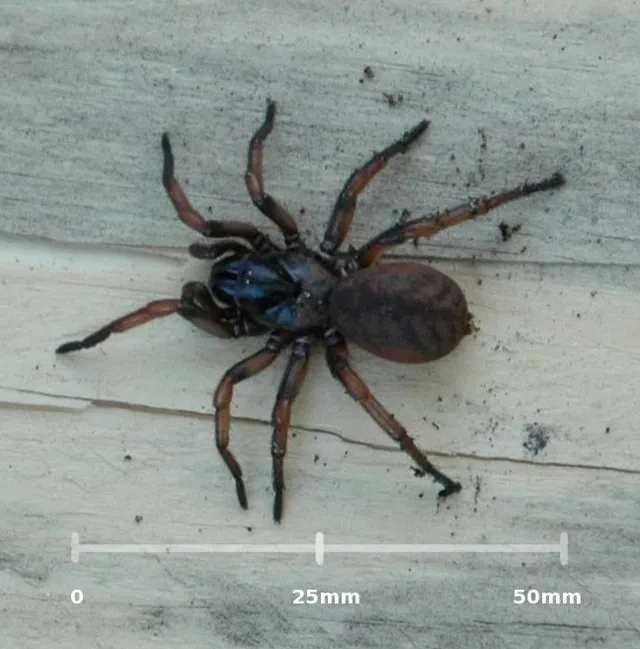
In the rainforests near Cooktown, in far-north Queensland, a spider barely worth a second glance has been doing something no other known spider does: building a catapult and letting its prey pull the trigger.
The animal, nicknamed the "ballista spider" after the ancient siege weapon, belongs to the genus Propostira and has not yet been formally named. A team led by researchers at Macquarie University in Australia described its hunting strategy in a study published on 22 June 2026 in the journal Current Biology.
A trap sprung by the victim
Most spiders sit at the centre of a web and pounce when something blunders in. The ballista spider works the other way around. According to the Macquarie University announcement, the spider constructs a vertical, cone-shaped snare from bundled silk lines — roughly 15 to 60 of them — strung close to the ground and loaded with elastic tension, like a drawn bow.
CC
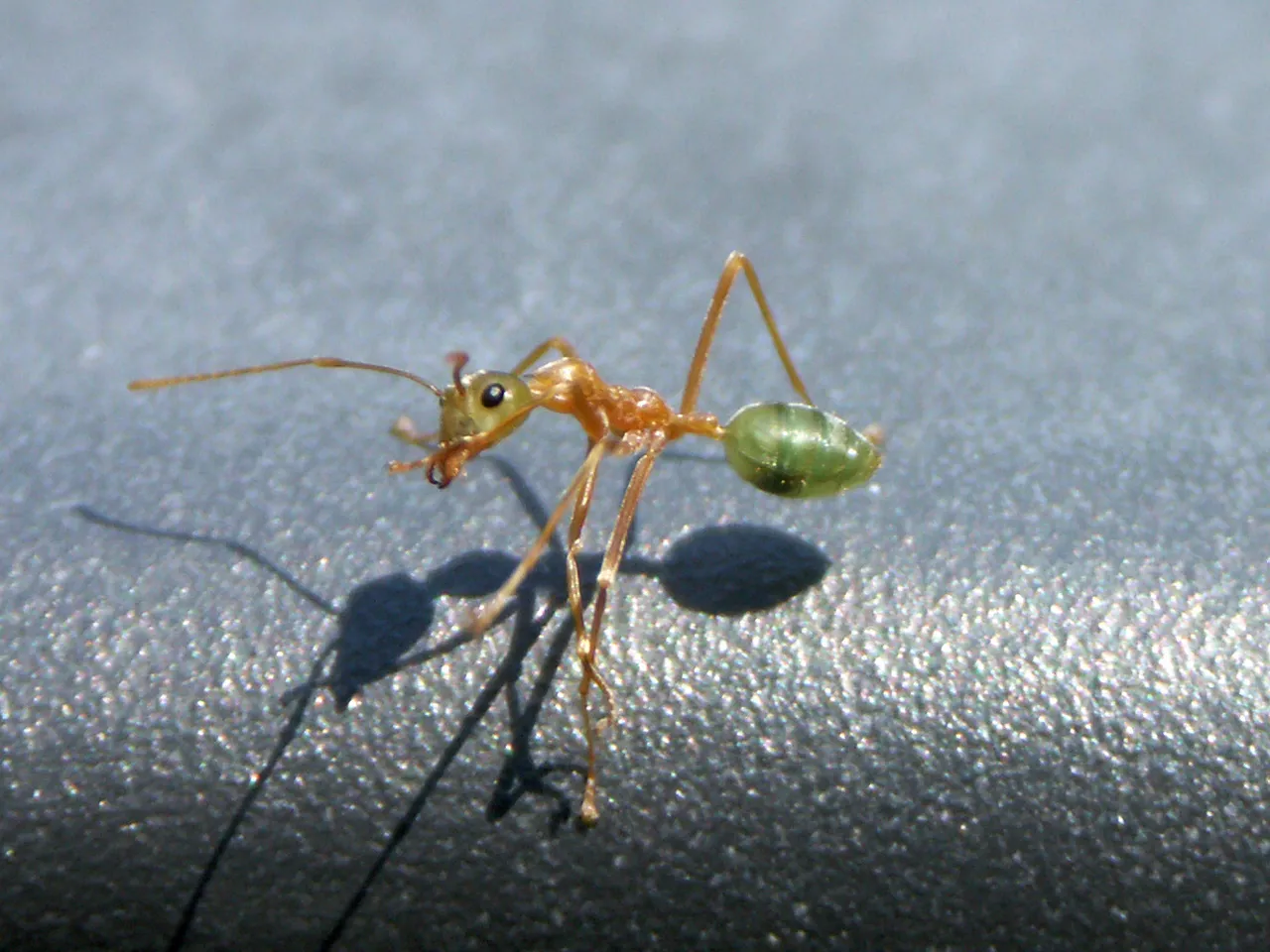
The target is a single, specific prey: the green tree ant (Oecophylla smaragdina), an aggressive species that defends its colony in force. When a worker ant bites at the silk cone, it severs the structure and releases the stored energy, flinging itself upward into a net the spider has built above.
"This seems to be the only case where a spider's web is designed to catch a single prey species, and where the mechanism is triggered by the prey rather than by the predator," said Professor Ajay Narendra of Macquarie University, quoted in The Conversation.
The researchers suspect the spider may bait its own trap. "We suspect during the final construction stage the spider adds a pheromone that specifically lures worker ants and induces an aggressive attack, triggering the snare," Narendra said in the same account.
Power on a vanishing scale
To capture the action, the team spent days and nights in the rainforest, filming the snares with high-speed and infrared cameras. The numbers they recorded are striking. The released snare launches an ant more than 30 centimetres upward at an acceleration the researchers measured at over 1,300 metres per second squared — a jolt the team compares to a severe car crash.
Scaled by mass, the silk itself outperforms any catapult known in nature, the study reports, storing and releasing energy with an instantaneous power density the authors describe as greater than that of other specialised silk-based biological catapults.
The researchers argue the extreme speed is not gratuitous. By yanking a biting ant violently away from its nest and foraging trails, the spider removes the victim before nearby nestmates can mount a rescue or counterattack — a real risk given how fiercely green tree ants defend one another.
A find years in the making
The spider was first noticed by Professor Greg Anderson, a scientist who also works as a spider taxonomist and photographer, before the Macquarie team set out to document its behaviour in detail. The study lists postgraduate researcher Pranav Joshi as an author alongside Narendra, with collaborators including Jonas Wolff of the University of Greifswald in Germany.
For now the spider remains scientifically unnamed, a placeholder Propostira species whose formal description is still to come. But its trick — a prey-triggered catapult fine-tuned for one dangerous quarry — already stands out as one of the more unusual hunting strategies documented in the spider world.