Walk into the Royal Botanic Gardens, Kew, this summer and the lawns are no longer empty. Set among the trees and Victorian glasshouses stand the great bronze forms of Henry Moore: hollowed reclining figures, interlocking shapes, and abstractions that seem grown rather than cast. It is, according to the Henry Moore Foundation and Kew, the largest outdoor presentation of Moore's work ever staged.
A garden full of bronzes
The exhibition, Henry Moore: Monumental Nature, runs at Kew Gardens in London from May 9, 2026 to January 31, 2027, with a companion presentation at Wakehurst in West Sussex, according to the Henry Moore Foundation.
At Kew, the Foundation says some 30 monumental sculptures are placed across the 320-acre UNESCO World Heritage site, with more than 90 additional works — bronzes, carvings, prints and drawings — shown indoors at the Shirley Sherwood Gallery of Botanical Art. Among the large outdoor pieces named in the reporting are Large Two Forms, Locking Piece and Three Piece Sculpture: Vertebrae. The placement is deliberate: the sculptures are positioned to be in dialogue with Kew's trees and historic vistas, so that the work both responds to and reshapes the space around it.
The man who made them
Henry Moore (1898–1986) is widely regarded as the pre-eminent British sculptor of the 20th century. Born in Castleford, Yorkshire, the son of a coal miner, he served in the First World War before training as an artist, according to Tate and Britannica.
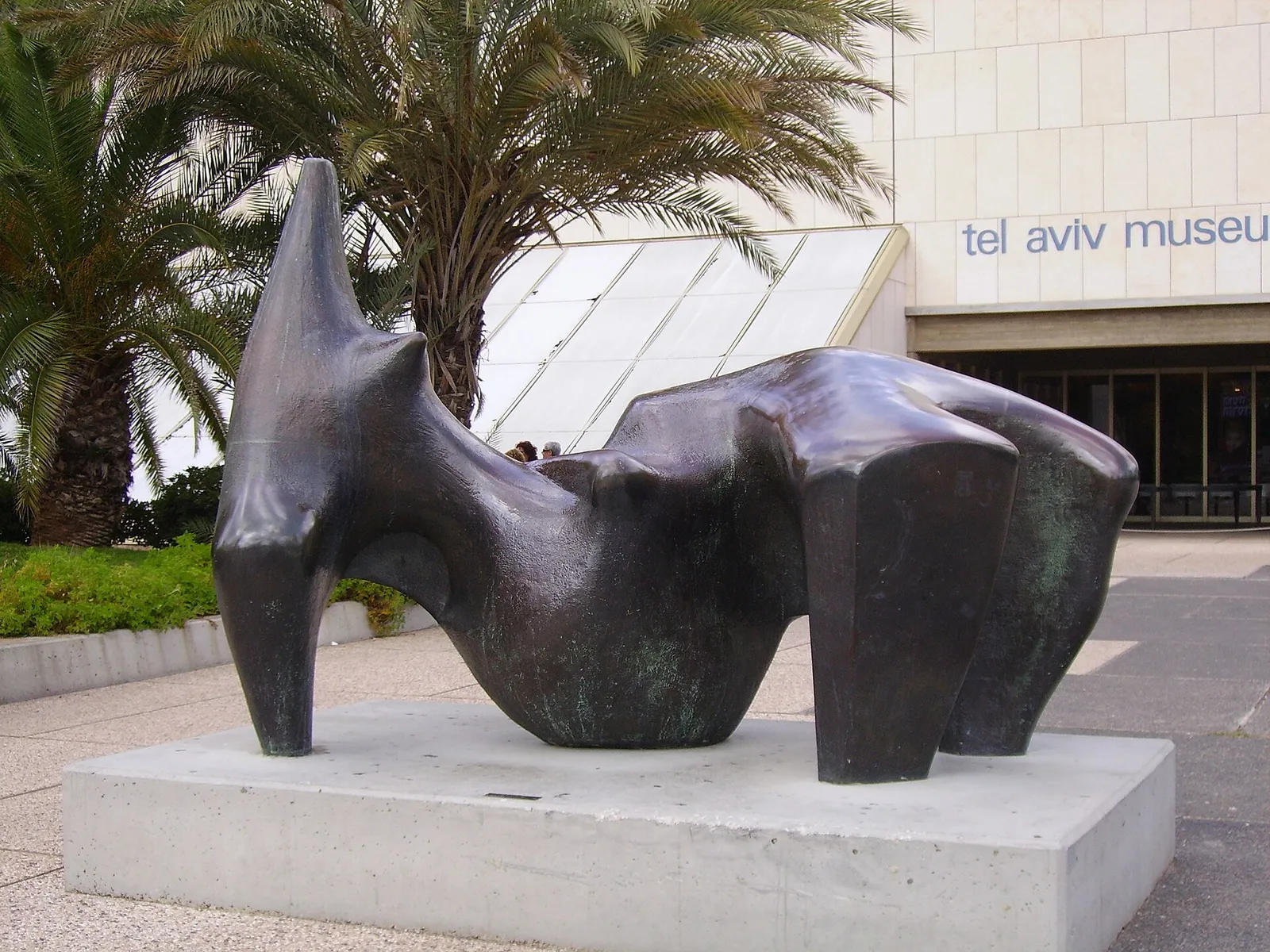
He is best known for semi-abstract monumental bronzes — most famously his reclining figures and mother-and-child groups — that abstract the human body into swelling, hollowed and pierced forms. Moore drew openly on the shapes of bones, pebbles, shells and weathered wood, and many interpreters have likened the undulating contours of his reclining figures to the hills of his native Yorkshire. His sculptures now stand as public works around the world.
Why the open air
Moore's affinity with nature is not a curatorial conceit imposed after the fact; it is something he stated plainly. "Sculpture is an art of the open air," he declared in 1951, adding that "daylight, sunlight, is necessary to it, and for me its best setting and complement is nature." The line has become a kind of motto for how his work is shown.
That conviction shaped his life. From 1940 until his death, Moore lived and worked at Perry Green in rural Hertfordshire, where he eventually acquired more than 70 acres and set up a series of studios, allowing him to test his pieces outdoors against changing light, weather and open countryside, the Foundation records.
There is a practical logic to it. Moore's forms are designed to be circled, their pierced openings framing sky, grass or branches; their surfaces, often left to weather into green and brown patinas, change with the light in ways a white gallery wall cannot offer. Seen in a garden, a hollow becomes a window onto landscape, and the sculpture and its setting begin to comment on each other — exactly the effect the Kew display is built to produce.
A lasting legacy
That philosophy outlived him. The Henry Moore Foundation, which Moore established to support sculpture and the arts, operates Henry Moore Studios & Gardens at Perry Green, where his preserved studios and outdoor bronzes remain open to visitors. The Foundation is the lender and co-organizer behind the Kew show.
Big outdoor surveys of Moore are not new — London's parks hosted open-air sculpture exhibitions involving his work in the postwar decades. But few settings make the argument as completely as a botanic garden. At Kew, the case for Moore in the landscape is not made in a wall text. It is made in the grass, under the sky, exactly where he always said it should be.