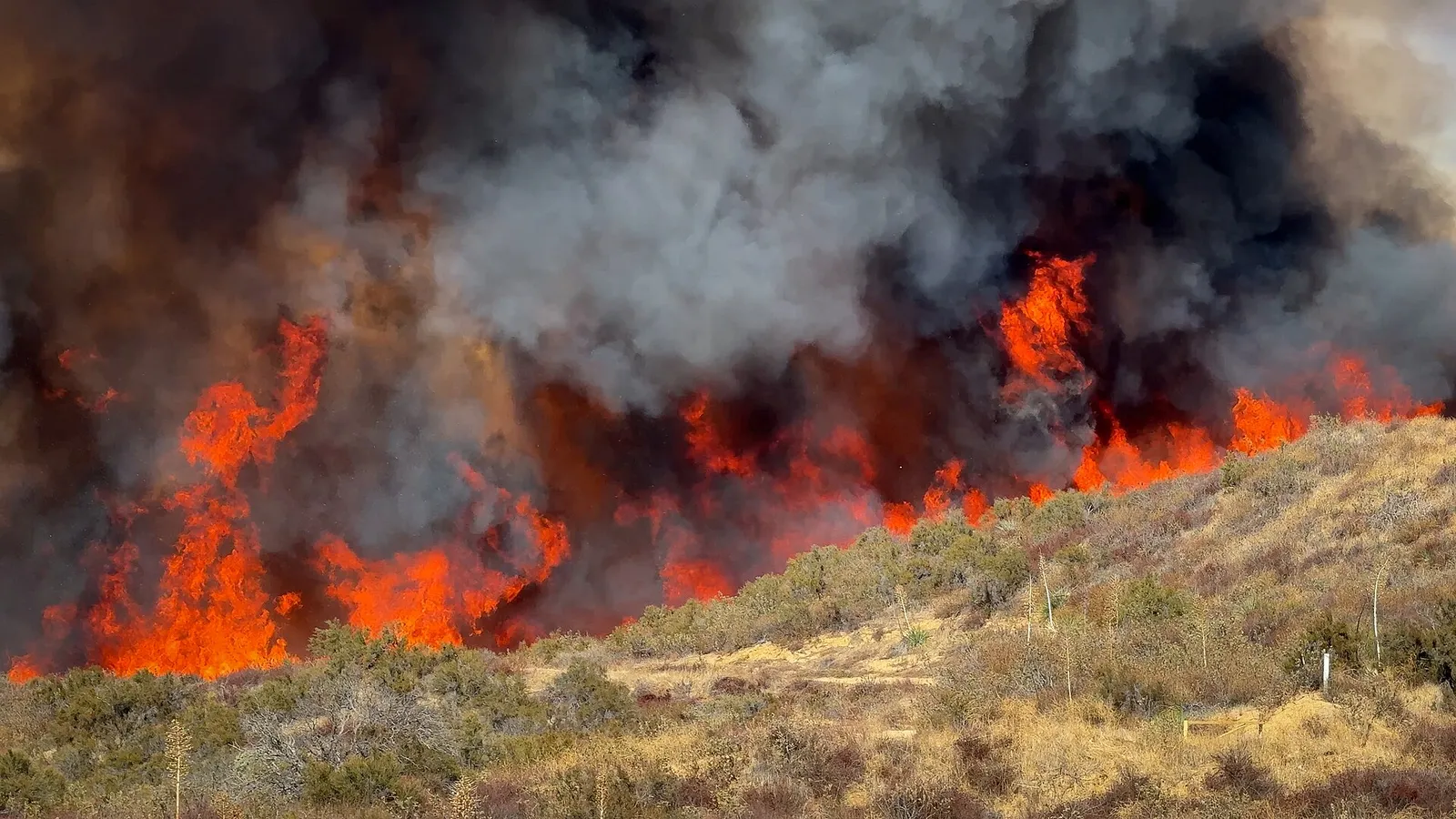
Spain and France are battling major wildfires amid a severe heatwave, with more fires feared as temperatures climb, Al Jazeera reports. Both countries are under warnings of very high fire risk.
Spain
The largest of the fires is in central Spain, and its scale is considerable.
According to Al Jazeera, a blaze in the Guadalajara region, about 100km north of Madrid, has burned some 32,000 hectares, making it one of the largest fires on record in the country. It comes after an earlier fire in southern Spain, less than two weeks ago, that killed 13 people, including several foreigners.
The conditions driving the fires are extreme. Al Jazeera reports that Spain's weather agency, AEMET, warned of "very high or extreme" wildfire danger across mainland Spain and the Balearic Islands, with temperatures forecast at 42 to 44 degrees Celsius (108 to 111 Fahrenheit) in Mediterranean areas, and with dry thunderstorms and Saharan dust worsening the situation.
Spain's prime minister, Pedro Sanchez, visited Guadalajara and used the moment to make an explicitly political argument. "Year after year we clearly see how climate change kills and destroys wealth in our communities," he said, calling for political unity on climate action, according to Al Jazeera. That framing is his; we report it as his stated position.
France
France is fighting fires on a smaller but still serious scale, against a backdrop of a deadly summer.
Al Jazeera reports that a fire in the Var region of southeastern France has burned 2,500 hectares, with another in the Hautes-Alpes; about 400 people have been evacuated and dozens of houses damaged. Helicopters have been dropping water on the Var fire, and a regional prefect has banned barbecues, cancelled fireworks and restricted outdoor work.
The context is grim. Al Jazeera reports that between June 17 and July 2, France recorded 5,764 excess deaths, a figure authorities described as "unprecedented." That toll is attributed to the extreme heat of that period rather than to the fires themselves, but it is the clearest measure of how dangerous this summer's conditions have already been.
The bigger picture
For a global audience, the significance is broader than these particular fires.
Southern Europe has entered a pattern of hotter, drier summers in which large, fast-moving wildfires have become a recurring feature rather than an exception, and the heat itself has become a leading cause of excess deaths. The immediate story is firefighters working in dangerous conditions to contain specific blazes. The longer one, which Sanchez was pointing to and which the death and burn figures underline, is that these events are arriving more often and more fiercely, and that the response, both firefighting in the moment and adaptation over time, is becoming a permanent summer demand on these countries rather than an occasional emergency.