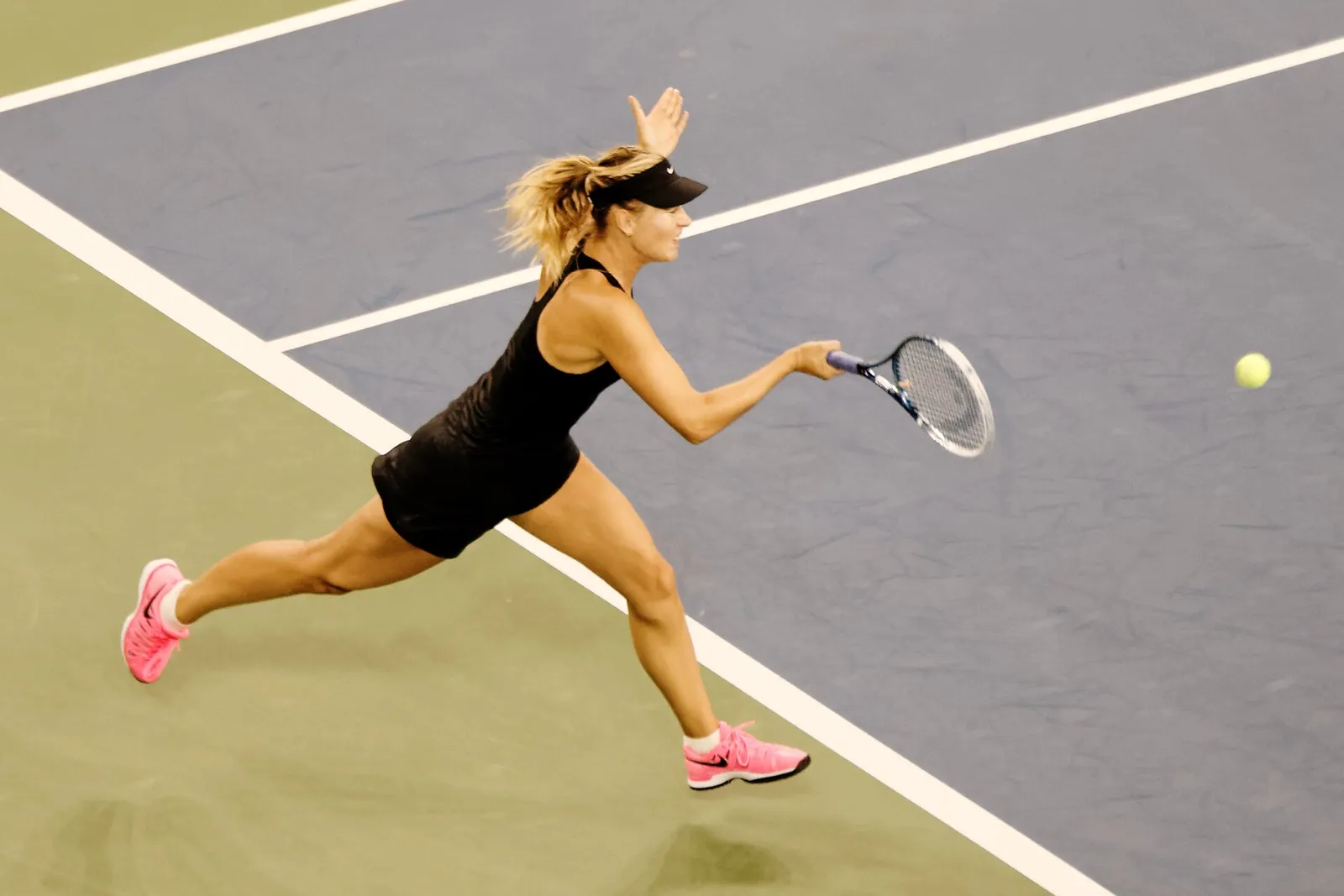
Jannik Sinner will not play the US Open. The world number one announced on Friday that a right knee injury sustained since he won Wimbledon has not healed in time, with the main draw due to begin on August 30.
"Even though I have been working hard with my team and my medical staff, we have now had to make the difficult decision that I will not be able to compete at the US Open this year," he said. He added that he was "very sad and disappointed, as New York has a special place in my heart".
What it does to his ranking, which is nothing
The ranking is not in question. Sinner holds a lead of more than 5,000 points over his nearest rival, which is a margin large enough that missing a Grand Slam does not threaten the top position.
That gap is worth sitting with, because it is the real measure of how the men's game currently stands. Tennis rankings run on a rolling 52-week points total, and a Grand Slam is worth 2,000 points to the winner. A player who can skip one and remain more than 5,000 clear has not merely been winning; he has been winning at a rate that leaves the rest of the tour competing for second place.
The draw
He is the sixth man to withdraw from the singles since the entry list was published, and six women have also pulled out. That is not an unusual number by the standards of a late-season Grand Slam, arriving as it does at the end of a long hard-court swing on the most punishing surface in the sport.
The temptation is to describe the tournament as blown open, and it is worth resisting slightly. A Grand Slam is seven matches over a fortnight, and even a dominant favorite is not a certainty over that distance. What Sinner's absence removes is not a guaranteed champion but the shortest odds, and it redistributes those odds across a field that was already capable of winning matches against him.
The knee
Neither the exact nature of the injury nor a timeline for his return has been made public beyond the description of a right knee problem requiring more recovery.
The unhelpful truth about knee injuries in tennis is that they are the ones that tend to recur. The sport's movement pattern, hard lateral changes of direction on unyielding surfaces, loads the joint repeatedly in exactly the way that turns a single problem into a chronic one. Withdrawing from a Grand Slam rather than playing at eighty percent is, on that reading, the conservative and probably correct decision, whatever it costs him this month.
The US Open begins on August 30 without him.