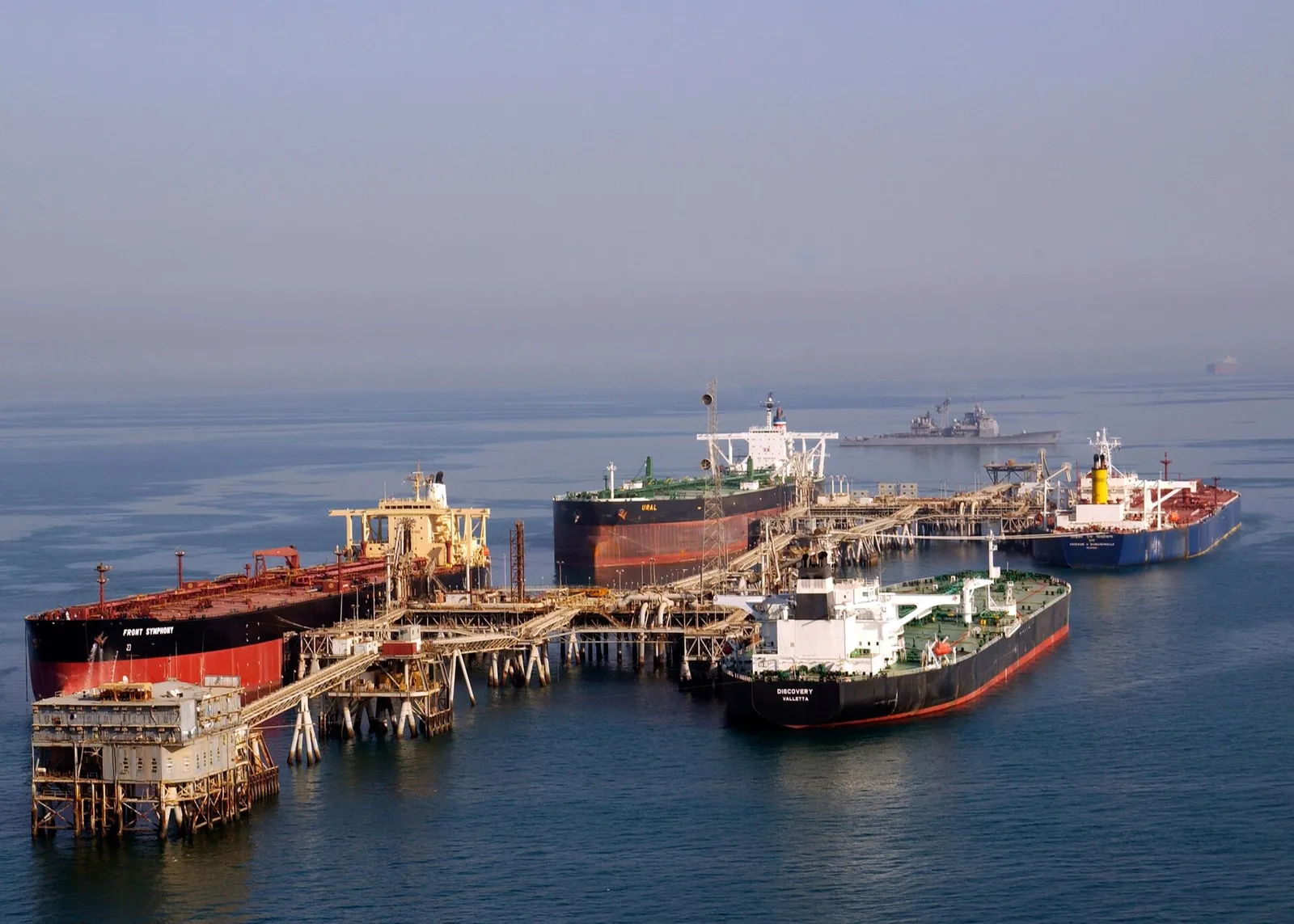
Brent crude fell more than 2 percent to $85.22 a barrel on Monday after the United States announced its Iran sanctions, having risen for the previous two weeks, Al Jazeera reports.
Gold rose 0.8 percent to $4,639.49 an ounce, its highest since mid-May. The Nasdaq fell 0.5 percent and the S&P 500 0.2 percent, while the Dow rose 0.2 percent. Among oil companies, BP fell more than 2 percent, ExxonMobil 0.9 percent, Chevron 0.8 percent and Shell 0.2 percent.
Oil falling on sanctions is not a mistake
The instinctive reading is that restricting a major producer's exports should raise the price. It often does. Here it did the opposite, and the likely reason is that markets had already priced in something more severe.
That is the sense of the assessment from Rachel Ziemba of the Center for a New American Security, who described the measures as "mostly incremental" and aimed at intimidating Iran's trading partners into cutting ties rather than at Iran directly. A package aimed at third parties is a slower instrument than one that removes barrels from the market on the day it takes effect.
Gold rising while oil fell fits the same picture: money moving toward safety without expecting an immediate supply shock.
The number households feel
Average US gasoline reached $4.09 a gallon on August 24, against $2.98 on February 28, the day the American and Israeli strikes on Iran began.
That is a rise of about 37 percent in under six months, and it is the figure sitting behind the Reuters/Ipsos poll we reported yesterday, in which support for the war fell to 31 percent. Monday's dip in crude will take weeks to reach the pump, if it holds.
Where the enforcement has to bite
China is the main destination for Iranian crude. This report puts it at roughly 90 percent of Iran's exports, at 1.4 million barrels a day in 2025. Yesterday's account gave 80 percent of shipped oil for the same year. We are flagging rather than reconciling the difference, since the two may be measuring different things and neither source explains its basis.
Either way the conclusion is the same. Sanctioned vessels are based in Singapore, China and Hong Kong, and whether this campaign works is a question about enforcement against Chinese buyers and Asian shipping, not about Iran.
What we could not establish
We could not establish which vessels or companies were designated, whether any government has agreed to join the measures, or how much Iranian crude is currently moving. We verified this account from a single publication.